When it comes to hybrid animals, mules and donkeys are among the most fascinating. While they share similarities, the differences between them are crucial for understanding their characteristics and uses. In this article, we'll delve into the distinctions between mules and donkeys, providing a detailed comparison and helpful tables to aid understanding.
Learn about mules and donkeys ( foals).
Mules are the offspring of a male donkey (jack) and a female horse (mare). They inherit desirable traits from both parents, combining the strength of a horse with the stamina of a donkey.
On the other hand, mules are produced by crossing female donkeys (jenny) with stallions (stallions). Although they share some similarities with mules, mules often exhibit different characteristics due to their lineage.
The origin of mules and donkeys
mule
Origin and History: The mule is a hybrid breed produced by crossing a male donkey and a female horse. The origins of mules can be traced back thousands of years, with evidence suggesting they were first bred in ancient Mesopotamia around 3000 BC. Their development was likely driven by the need for a strong animal capable of carrying heavy loads and enduring harsh conditions.
The unique combination of a horse's size and strength with a donkey's endurance and sturdiness made the mule extremely valuable in agriculture, transportation, and warfare. Ancient civilizations such as the Egyptians and Romans utilized mules for a variety of tasks, recognizing their intelligence and versatility. Over the centuries, selective breeding has continuously enhanced the mule's characteristics, making them indispensable in many cultures around the world.
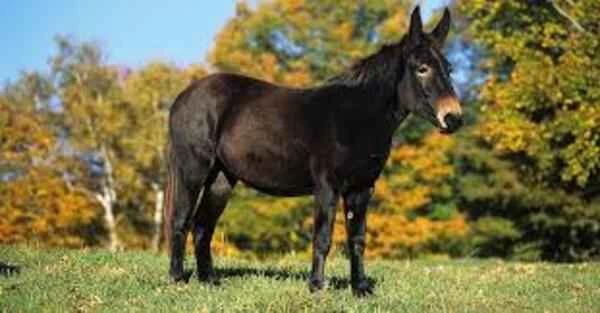
jennet
Origin and History: The mule is the offspring of a female donkey (jenny) and a male horse (stallion), and historical records about them are less abundant compared to those of the mule. They are likely a byproduct of the close coexistence of horses and donkeys in ancient agricultural societies. Due to the smaller size of the jenny and its different reproductive behavior, the domestication of mules was probably less common.
Historically, mules have been less popular than donkeys , primarily due to their smaller size and erratic temperament. In some cultures, they were used for similar purposes to mules, but never achieved the same level of popularity or practicality. Like mules, donkeys have also multiplied over time, although their numbers have been significantly smaller, and their impact on agriculture and transport has been less pronounced.
Both mules and donkeys originated from crossbreeding of donkeys and horses and have been valuable animals to human societies throughout history. While mules are widely recognized and utilized for their strength and versatility, donkeys remain relatively unknown, highlighting the fascinating complexities of hybridization in the animal kingdom.

The main differences between a mule and a donkey
| feature | mule | jennet(Donkey colt) |
|---|---|---|
| bloodline | Male donkey (male donkey) + Female horse (female horse) | Female donkey + stallion |
| appearance | They are usually large, like horses, with long ears. | It is smaller in size, more like a donkey, and has shorter ears. |
| temperament | It is usually easier to train and calm down. | They are usually more stubborn and harder to train. |
| Reproductive capacity | Usually infertile | They are usually infertile. |
| fur texture | Smoother, more like a horse's coat | Coarser, similar to donkey hair |
| Common uses | draft animals, pack animals, riding animals | Rarely used for work or riding |
| life | 25-30 years | 25-30 years |
| sound | It makes a sound called "neighing," similar to the braying of a donkey. | They will also hiss, but it may sound slightly different. |
In-depth analysis of differences
Lineage: Lineage is the most significant difference. Mules inherit the best qualities of horses and donkeys, while mules reflect a different combination of traits.
Appearance: Mules tend to be larger and more muscular, with characteristics of horses. However, donkey foals retain more of the characteristics of donkeys, and are therefore smaller and more compact.
Temperament: Mules are known for their intelligence and adaptability, making them easier to train. Donkey foals may exhibit more stubborn behavior, which can be challenging for inexperienced trainers.
Fertility: Mules and donkey foals are typically infertile due to differences in the number of chromosomes in their parents. This infertility is a common characteristic of hybrid breeds.
Fur texture: Mules' fur is usually smooth, similar to that of horses, while mules' fur is usually coarser, similar to that of donkeys.
Common uses: Mules are commonly used for agriculture and transportation due to their strength and endurance. Donkeys are less common and are not typically used for these purposes.
Lifespan: The lifespans of the two hybrid varieties are similar, ranging from 25 to 30 years, depending on care and environment.
Sound: The braying of a mule is usually deeper and louder than that of a donkey, which may be slightly higher in pitch.
Understanding the differences between mules and donkeys not only enriches our knowledge of these remarkable hybrid animals but also helps in their proper care and utilization. Whether you're considering using a mule for work or companionship, learning about their unique characteristics can enhance the relationship you build with these animals.
By understanding the differences between mules and donkeys, you can appreciate the diversity of hybrid animals and the fascinating ways they fulfill human needs.