The fastest long-distance flyer on Earth is the swift. The swift is a champion of long-distance flight, typically flying at 170 km/h; its top speed can reach 352.5 km/h, or 100 m/s. The swift has a pair of forked tails. This helps it avoid air resistance. Its head is round, resembling a ping-pong ball. Its long body allows it to fly as fast as an arrow.

The swift is a small climbing bird, most notably characterized by all four toes pointing forward. There are many species of swifts, with seven species found in China. Every March, they migrate from Africa or Southeast Asia. The most common is the Beijing swift, which often gathers in large flocks, soaring high into the sky to catch insects and nesting in the attics of traditional Chinese buildings with large roofs, hence its other name, "tower swift."

Swifts can fly over 800 kilometers a day. When foraging, swifts tirelessly fly back and forth, opening their large beaks to catch insects. They also drink water and bathe while in flight, and sometimes even mate in mid-air.
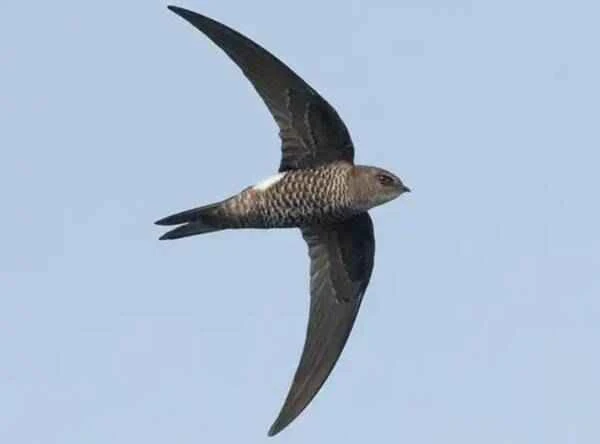
There are two reports about its speed: in 1942, the Soviet Union reported a speed of 170.98 km/h; while in 1934, during a flight of 3.22 km in the Khacha Mountains of northeastern India, a stopwatch measured the speed of this swift to be as high as 276.47 to 353.23 km/h.