Jellyfish are mysterious marine creatures, renowned for their transparent bodies, unique shapes, and enigmatic biological characteristics. However, the lifespan of jellyfish is one of the most intriguing and fascinating topics. The lifespan of jellyfish varies depending on factors such as species, environmental conditions, and life cycle; some jellyfish are even believed to possess the potential for "immortality." In this article, we will delve into the lifespan of jellyfish, including differences in lifespan among different species, factors influencing lifespan, and the famous phenomenon of "immortal jellyfish."
Jellyfish life cycle
Before understanding the lifespan of jellyfish, we first need to understand their life cycle. Most jellyfish go through two main life cycle stages: the polyp stage and the adult (or bell) stage . Each stage has a direct impact on the jellyfish's lifespan.
1. Polyp Stage
The jellyfish's life cycle begins in the polyp stage, a stationary larval stage. The polyp typically attaches to rocks or other hard surfaces on the seabed and reproduces asexually, producing numerous smaller jellyfish. This stage can last for months or even years, depending on the species and environmental conditions.
2. Adult Stage (Medusa Stage)
When jellyfish reach adulthood, they transform into the bell-shaped swimming jellyfish we commonly see. At this stage, they reproduce sexually. The lifespan of the adult stage varies considerably, ranging from a few hours to decades. For some species, the adult stage marks the end of their life cycle, while for others, adults may continue their lives through different mechanisms.
Lifespan of different jellyfish species
There are over 2,000 species of jellyfish in the world, and the lifespan of each species varies. Below are some common jellyfish species and their lifespan characteristics:
1. Moon jellyfish (Aurelia aurita)
Moon jellyfish are among the most common jellyfish species, found in temperate waters worldwide. They typically have a short lifespan, with the adult stage lasting approximately 6 months to 1 year. However, the polyp stage can last much longer, lasting several months or even years.
2. Box Jellyfish
Box jellyfish are known for their potent venom and are particularly common in the waters of Australia and Southeast Asia. Their lifespan is typically short, usually only a few months. However, due to their rapid growth and efficient predation, they can reproduce in large numbers within a short period.
3. Lion's Mane Jellyfish
The lion's mane jellyfish is one of the largest jellyfish species in the world, with its bell reaching up to 2 meters in diameter. This jellyfish typically has a lifespan of about one year. In cold waters, they can be active throughout the summer and autumn, completing their life cycle.
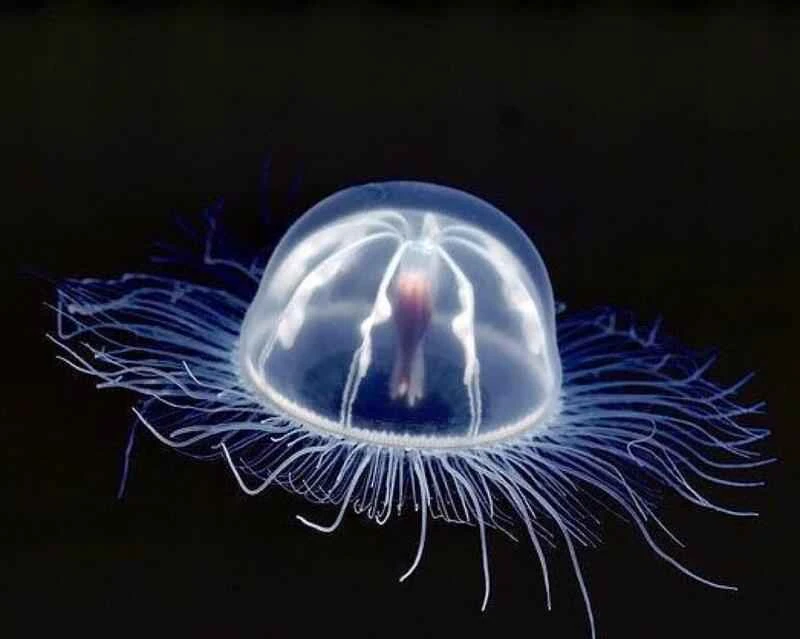
4. Immortal Jellyfish (Turritopsis dohrnii)
One of the most mysterious jellyfish is the immortal jellyfish, possessing incredible biological characteristics. This jellyfish can "reboot" its life cycle by reverting to its polyp stage. This ability to reverse aging theoretically grants them infinite lifespan, making them an important subject for scientists studying "biological immortality."
Factors affecting the lifespan of jellyfish
1. Environmental conditions
The lifespan of jellyfish is largely influenced by the environment. Factors such as water temperature, salinity, food supply, and water pollution can all affect the growth and survival of jellyfish. For example, jellyfish in temperate waters generally live longer than those in tropical waters because lower temperatures help slow down their metabolism.
2. Predators and natural enemies
Despite their large size and venomous tentacles, jellyfish still have natural predators. Sea turtles, certain fish, and seabirds prey on jellyfish. Predation pressure can significantly shorten the lifespan of jellyfish, especially for species without sufficient defense mechanisms.
3. Different stages of the life cycle
A jellyfish's lifespan is closely related to its life cycle stage. The polyp stage typically lasts longer than the adult stage because jellyfish are in a quiescent state during this stage, with slower growth and metabolism. Adult jellyfish, on the other hand, are more active, consume more energy, and are more likely to face survival challenges.
4. Differences in types
Different species of jellyfish have adopted different survival strategies during evolution. Some jellyfish increase their population size through rapid reproduction and short lifespans, while others adapt to environmental changes by extending their lifespans. The unique mechanism of the immortal jellyfish demonstrates an extreme example of lifespan extension in the biological world.
Immortal jellyfish: Possible immortal organisms?
The **immortal jellyfish (Turritopsis dohrnii)** is currently the only known organism capable of restarting its life cycle through "reverse aging." When faced with hunger, injury, or other environmental stressors, this jellyfish can transform from its adult stage into a polyp stage, allowing it to divide and reproduce again. This process theoretically allows the immortal jellyfish to live indefinitely, hence its nickname, "immortal jellyfish."
While the immortal jellyfish may not truly be "immortal"—as they are still susceptible to predation, disease, or harsh environments—their lifespan far exceeds that of other jellyfish, making them a focal point of scientific research. Scientists hope that by studying the immortal jellyfish's reverse growth mechanisms, they can find ways to slow aging or treat degenerative diseases.
The impact of jellyfish lifespan on ecosystems
The lifespan of jellyfish is not just a fascinating biological question; it also has a profound impact on marine ecosystems. Jellyfish play a vital role in the marine food chain, serving as both predators and a food source for other marine life. When jellyfish populations are abundant, they can control the abundance of plankton and small fish, and even influence the overall balance of the marine ecosystem.
Environmental changes such as global warming and ocean acidification may alter the life cycle and population size of jellyfish. For example, rising ocean temperatures can sometimes lead to jellyfish population explosions, negatively impacting fisheries, tourism, and marine biodiversity.
in conclusion
The lifespan of jellyfish varies depending on species and environmental factors, showcasing the complex survival strategies in nature. From the short-lived moon jellyfish to the mysterious "immortal jellyfish," each jellyfish species has its unique life cycle and survival methods. Although most jellyfish have short lifespans, they play an important role in marine ecosystems and provide valuable clues for human scientific research.
For scientists studying the lifespan, reverse aging, and regeneration capabilities of organisms, the study of jellyfish, especially the immortal jellyfish, may provide crucial insights into understanding aging and the continuation of life. By continuing to explore the lifespan and life cycle of these mysterious creatures, we can not only gain a better understanding of marine life but also provide new perspectives for solving human health problems.
The lifespan of jellyfish is shrouded in mystery and wonder, reminding us that the complexity of nature and the diversity of life forms still hold many unsolved mysteries waiting to be explored and discovered.