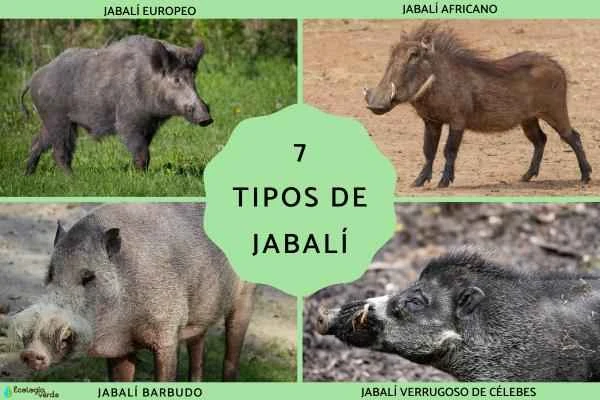
When it comes to wild boars, two animals stand out: the wild boar and the warthog. Both animals possess unique characteristics, but they also differ in many ways. This article will compare wild boars and warthogs in several aspects to see which one comes out on top. We will explore their physical characteristics, habitats, behaviors, diets, and more, providing a comprehensive overview of these two fascinating animals.
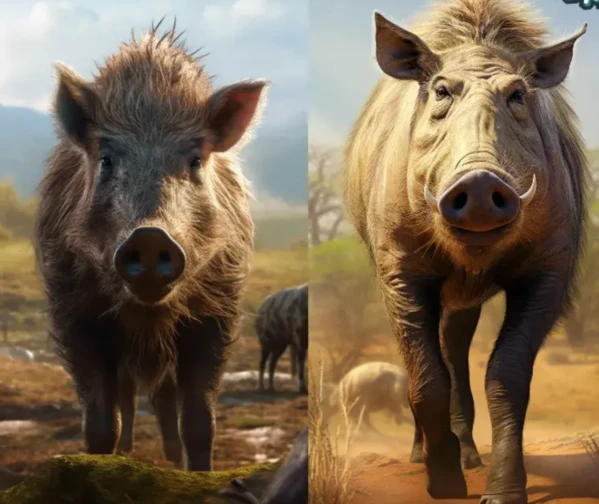
Overview of wild boars and warthogs
Wild boar: The wild boar (Sus scrofa) is an animal native to Europe, Asia, and North Africa. Known for their adaptability, they have been introduced to many other regions, including North America.
Warthog: The warthog (Phacochoerus africanus) is native to sub-Saharan Africa and is easily identified by its distinctive facial warts and tusks.
Comparison Table: Wild Boar vs. Warthog
| feature | wild boar | Warthog |
|---|---|---|
| Scientific name | Sus scrofa | Phacochoerus africanus |
| Habitat | Forests, grasslands and wetlands | savanna, grassland and woodland |
| weight | 150-300 lbs (68-136 kg) | 110-250 lbs (50-113 kg) |
| length | It can reach 6.5 feet (2 meters). | 3.5-5.5 feet (1.1-1.7 meters) |
| color | Dark brown to black | Gray to brown |
| Facial features | Flat, with relatively small fangs | Prominent warts and larger fangs |
| social structure | Living alone or in a small group | Living in a group called "sound ensemble". |
| diet | Omnivorous; feeds on roots, fruits and small animals. | Herbivorous; mainly feeds on grass and roots. |
| Reproduction | The breeding season is in late winter/spring. | Year-round reproduction; high level of maternal care |
| life | 10-14 years in the wild | 12-18 years in the wild |
| Protection status | No danger | No danger |
Detailed comparison
Physical characteristics
Wild boar: Wild boars are robust, with relatively flat faces and small tusks. Their fur is coarse and ranges in color from dark brown to black.
Warthogs: Warthogs are known for their distinctive facial warts and long tusks, which can reach up to 10 inches (about 25 cm) in length. They are stocky and have mostly gray or brown fur. The warts and tusks are more prominent in males during the breeding season.
Habitat
Wild boar: Wild boars are highly adaptable and can survive in a variety of environments, including forests, grasslands and wetlands, and are distributed in temperate and tropical regions.
Warthogs prefer open grasslands and savannas south of the Sahara and often use abandoned burrows of other animals (such as aardvarks or hyenas) as shelter from predators and harsh weather.
Behavior
Wild boars: Wild boars are generally solitary, but they can form small groups, especially sows and piglets. They are known for their intelligence and are able to use tools, such as digging roots.
Warthogs are social animals that live in groups called "sound packs," typically consisting of several sows and their young. Males are mostly solitary or form temporary single groups. They communicate through a variety of vocalizations and body language.
diet
Wild boar: Wild boars are omnivorous, with a wide range of diets including roots, fruits, nuts, and small animals. This diverse diet allows them to adapt to different habitats.
Warthogs: Warthogs are primarily herbivores, feeding mainly on grass, roots, and tubers. They have unique foraging behaviors, often lying on the ground to eat grass in order to more easily access their food.
Reproduction
Wild boars: The breeding season for wild boars is in late winter or spring. Sows typically give birth to 4-6 piglets after about 3-4 months of gestation.
Warthogs: Warthogs can breed year-round. Sows typically give birth to 2-4 piglets after a gestation period of about 5-6 months.
Protection status
Both wild boars and warthogs are listed as "Least Concern" by the International Union for Conservation of Nature (IUCN). However, in some areas, they still face threats from habitat loss and hunting.
Who is better?
When comparing wild boars and warthogs, it's clear that each animal possesses unique advantages and adaptations suited to its respective habitat. Wild boars are more adaptable and have a wider diet, while warthogs are highly social and possess distinctive physical characteristics that help them survive on the African savanna.
In a direct confrontation, it's not about who wins, but rather that each animal has its own strengths. Whether you're interested in the intelligence and adaptability of the wild boar or fascinated by the warthog's unique appearance and social structure, both animals are worthy of study. Understanding these differences will enrich our appreciation of the animal kingdom and our knowledge of the diverse life on Earth.