The Red-shouldered Hawk and the Red-tailed Hawk are two powerful and majestic birds of prey in North America. While they share some similarities, they each possess unique characteristics. This article will detail their physical features, habitats, diets, behavioral patterns, and key differences to help bird enthusiasts and wildlife observers more easily identify them.
What is a red-shouldered eagle?
Red-shouldered Eagle: Detailed Overview
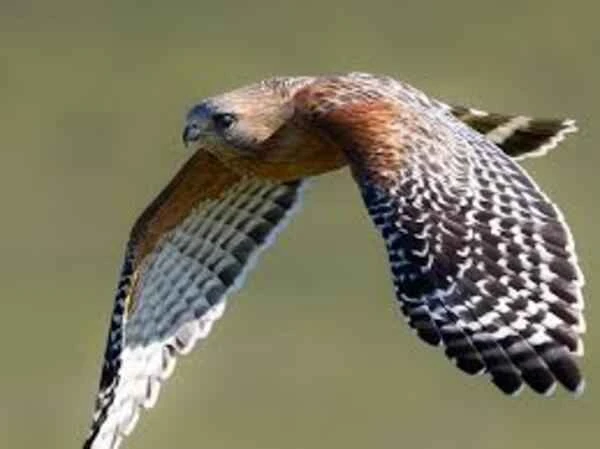
The Red-shouldered Hawk (scientific name: *Buteo lineatus *) is a medium-sized bird of prey, known for its reddish-brown shoulders and distinctive black and white checkered wings. They primarily inhabit woodlands in North America, particularly areas near rivers and wetlands. With their unique calls, agile flight, and vibrant colors, the Red-shouldered Hawk plays a vital role in the ecosystem and is a stunning subject for birdwatching.
Appearance features
The Red-shouldered Hawk is a medium-sized bird of prey. Adults are about 43–61 cm long, have a wingspan of about 94–109 cm, and weigh about 0.5 to 0.9 kg. Females are usually larger than males.
Color : Adult red-shouldered eagles have reddish-brown shoulders, black and white checkered patterns on their wings, orange-red stripes on their chest, distinct horizontal bars on their abdomen, and black and white stripes on their tails.
Young birds : Young red-shouldered hawks are significantly different in appearance from adults. They are usually lighter in color, with brown and white spots on their chest and wings, and lack the distinctive red shoulder markings of adults, which will only appear when they mature.
Habitat and Distribution
The red-shouldered eagle is mainly distributed in the eastern United States and along the Pacific coast, and also appears in parts of Mexico and Central America. Its habitat is characterized by:
Forest habitat : The red-shouldered eagle is adapted to living in deciduous or mixed forests and prefers areas with rich vegetation cover.
Near water : Red-shouldered eagles are commonly found around rivers, streams, swamps and wetlands, where they provide ample prey and safe habitats.
Its populations are distributed in the southeastern United States (such as Florida and Georgia) and along the Pacific coast (such as California to Oregon).
Diet and hunting methods
The red-shouldered hawk has a wide range of food sources and can adapt to different forest environments, mainly feeding on small mammals, reptiles, amphibians, and insects. The following is its diet composition:
Mammals : Small mammals, such as mice, voles, and rabbits, constitute the main part of their diet.
Reptiles and amphibians : The red-shouldered eagle is adept at hunting frogs, snakes, and even small turtles, especially near water sources.
Insects : During the warmer seasons, they also prey on insects such as grasshoppers and crickets.
Red-shouldered hawks typically wait for their prey on branches, then swoop down swiftly once they spot their target. Their "stalking and ambush" hunting method in dense forests has adapted them to the secretive woodland environment.
Behavior and vocalizations
One of the most distinctive features of the red-shouldered hawk is its call, which is usually a high-pitched, piercing, and repetitive "kee-yee, kee-yee" sound. Especially during the breeding season, both male and female hawks frequently call out to declare their territory.
Furthermore, the red-shouldered hawk is a highly social bird of prey. In certain environments, they can tolerate other individuals of the same species nesting nearby, and sometimes they will even cooperate with neighboring red-shouldered hawks to jointly protect their territory.
Reproduction and Nest Building
The Red-shouldered Hawk is a monogamous bird, with a stable mate-to-mate relationship, typically returning to the same nesting site annually. They prefer to build their nests high in trees, about 6 to 18 meters above the ground. Nest building is a joint effort between the male and female, with twigs as the main nesting material and leaves and bark lining the inside.
Egg laying : Female eagles lay 2–5 eggs per year, with an incubation period of about 33 days. During this period, both male and female eagles take turns incubating the eggs, but the female eagle is mainly responsible for it.
Breeding : The chicks will leave the nest about 6 weeks after hatching. During this period, the male bird is responsible for hunting to provide food, while the female bird is responsible for caring for and protecting the chicks.
Protection Status and Threats
The Red-shouldered Eagle is listed as "Least Concern" by the International Union for Conservation of Nature (IUCN), but its habitat faces threats such as deforestation and wetland drainage. Because the Red-shouldered Eagle is highly dependent on woodlands and water sources, urbanization has impacted its nesting and hunting grounds.
Role in the ecosystem
The red-shouldered hawk plays a vital role in controlling the population of small mammals, helping to maintain ecological balance. Its predation on rodents also benefits agriculture to some extent, as these animals can damage crops.
Summary of key characteristics of the red-shouldered eagle
Size : Length 43–61 cm, wingspan 94–109 cm.
Color : Reddish-brown shoulders, checkered wings, orange stripes on the chest.
Habitat : Woodlands, near water sources, mainly distributed along the eastern and western coasts of the United States.
Diet : Small mammals, amphibians, reptiles and insects.
Call : A repeated "kee-yee" sound, especially common during the breeding season.
Conservation status : Least Concern, but habitat is threatened by urbanization.
The red-shouldered eagle is an important member of the forest and wetland ecosystems of North America. Its sharp vision, distinctive calls, and diverse diet make it an irreplaceable force in nature.
What is a red-tailed eagle?
Red-tailed Eagle: A Comprehensive Overview
The red-tailed hawk (scientific name: *Buteo jamaicensis *) is one of the most common and recognizable birds of prey in North America. With its distinctive red tail and keen eyesight, this large, powerful predatory bird has adapted to diverse environments across the continent. Its varied diet and superb flying skills make it an excellent hunter and a stunning sight in the wild.
Appearance features
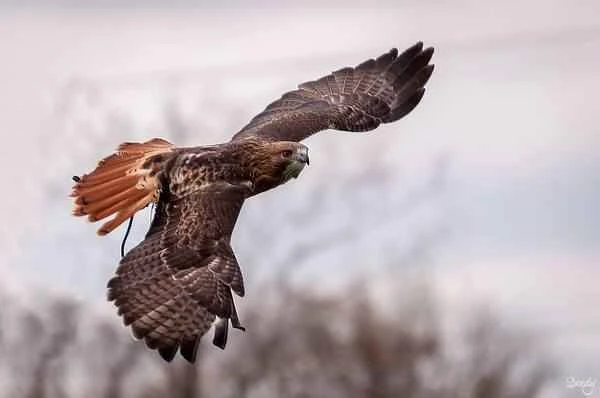
The red-tailed hawk is a large bird of prey, measuring approximately 45–65 cm in length, with a wingspan of approximately 110–145 cm, and weighing between 0.7 and 1.6 kg. Females are typically slightly larger than males.
Color : The most distinctive feature of an adult red-tailed hawk is its red tail feathers, from which the species gets its name. Its back and wings are typically brown, while its belly is lighter, often with prominent horizontal bands. The coloration of red-tailed hawks varies between regions, with some individuals being darker or lighter in color to adapt to their habitat.
Young birds : Young red-tailed hawks do not have the red tails of adults, but are brown with dark horizontal stripes. Red tail feathers usually appear after the first molt (about two years later).
Habitat and Distribution
The red-tailed hawk is highly adaptable and widely distributed, inhabiting various environments across North America, including grasslands, deserts, woodlands, mountains, and even urban areas. It is also found in Central America and the Caribbean.
Open areas : They prefer open areas, such as fields, plains and deserts, which make it easier to spot prey from a distance.
Urban adaptation : In cities, the red-tailed eagle has adapted to nesting in high-rise buildings and hunting small mammals in parks and other places, making it one of the few birds of prey that can thrive in urban environments.
Diet and Hunting
The red-tailed hawk has a diverse diet, enabling it to adapt to different habitats and food resources. Its main food is small to medium-sized mammals, but it also preys on birds and reptiles.
Mammals : Small rodents, such as mice, voles, and squirrels, are the main food source, as are rabbits.
Birds : Red-tailed hawks can catch some medium-sized birds, including pheasants and pigeons.
Reptiles : In warmer regions, they prey on reptiles such as snakes and lizards.
Red-tailed hawks typically employ a "wait-and-see" hunting strategy, perching high up and swooping down to precisely capture their prey once the target is spotted. They also hover in the air, using thermals to glide, conserving energy while scouting for prey.
Behavior and vocalizations
The red-tailed hawk is known for its distinctive call, often used in movies to represent birds of prey. Its call is high-pitched and hoarse, usually described as a "kee-eeeee-arr" tone, and is frequently emitted, especially during territorial defense or courtship.
Red-tailed hawks are usually solitary, but they appear in pairs during the breeding season and sometimes forage together. During the rearing period, they are very protective of their nests, often exhibiting aggression to safeguard the nest and chicks.
Reproduction and Nest Building
Red-tailed hawks are monogamous birds, typically forming long-term, stable pair bonds. Their nesting habits reflect their adaptability, and they may choose to nest in trees, on cliff edges, or even on tall buildings in cities. Both male and female birds build the nest together, which can reach a diameter of about one meter.
Egg laying : The female eagle lays 1-3 eggs at a time, and the incubation period is about 28-35 days. Both male and female eagles incubate the eggs, but the female eagle takes the lead.
Chicks : After hatching, chicks will stay in the nest for 6-7 weeks, during which time they will be fed by their parents until they start to try to fly after 42-46 days. However, they will still rely on their parents for food after leaving the nest.
Protection Status and Threats
The red-tailed hawk is classified as "Least Concern" by the International Union for Conservation of Nature (IUCN) due to its large and stable population in North America. However, it still faces threats from habitat destruction, illegal hunting, and collisions with vehicles and power lines. Nevertheless, its adaptability, particularly its thriving in urban environments, has helped maintain its overall population stability.
Role in the ecosystem
The red-tailed hawk plays a vital role in controlling the population of small mammals, helping to maintain ecological balance. By preying on small animals such as rodents, it indirectly helps reduce pests in farmland. Furthermore, the red-tailed hawk serves as a biological indicator of environmental health, reflecting the ecological condition of its habitat.
Summary of key characteristics of the red-tailed hawk
Size : Body length 45–65 cm, wingspan 110–145 cm.
Color : Red tail feathers (adult bird), brown back, light-colored belly with a girdle.
Habitat : Diverse, distributed in grasslands, woodlands, deserts, mountains and cities.
Diet : Small mammals, birds, reptiles.
Shout : The iconic "kee-eeeee-arr" scream, often used in the media.
Conservation status : Not endangered, highly adaptable, and thrives even in urban environments.
The red-tailed eagle is one of the most adaptable and widely distributed birds of prey in North America, and its resilience and diversity are admirable. Its superb hunting skills, striking flight posture, and distinctive calls have secured it an important ecological niche in various ecosystems.
Comparison of Red-shouldered Hawk and Red-tailed Hawk
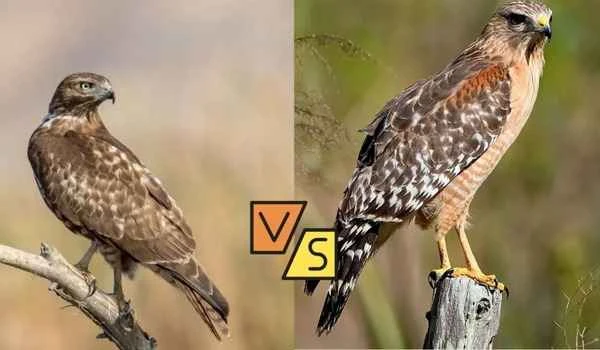
Although both species of eagle belong to the genus Buteo and share some common characteristics, they differ significantly in appearance, behavior, and habitat preferences.
| feature | Red-shouldered eagle | Red-tailed Eagle |
|---|---|---|
| body shape | 43-61 cm long; wingspan 94-109 cm | 46-66 cm long; wingspan 109-132 cm |
| color | Red shoulders, black and white checkered wings, and red stripes on the chest. | The tail is reddish-brown, the underparts are light-colored, and there is a dark belly band. |
| Tail | Narrow black and white stripes | Wide and uniform reddish-brown |
| Habitat | Woodlands, forests near water sources | Various open areas; grasslands, forests, deserts |
| feeding habits | Small mammals, amphibians, reptiles, insects | Small to medium-sized mammals, birds, reptiles |
| Cry | The high-pitched, repeated "kee-yee" | A hoarse "scream" or "kee-eeer" sound |
| Flight style | Agile, often gliding through the trees | Gliding with outstretched wings, its flight posture is stable and elegant. |
| Distribution range | Eastern and western coastal areas of the United States and parts of Mexico | Throughout North America, including urban areas |
Key Difference Analysis
Appearance differences : The red-shouldered eagle has reddish-brown shoulders and checkered patterns on its wings, while the red-tailed eagle has a distinctive red tail and dark stripes on its belly, and its back is V-shaped.
Habitat preferences : Red-shouldered eagles prefer dense forests with water sources, while red-tailed eagles are more adaptable and can live in open areas, forests, and even urban areas.
Diet and Predation : The red-shouldered eagle hunts in the woodlands, with its diet consisting more of amphibians and insects, while the red-tailed eagle prefers a diet primarily consisting of mammals.
Calls and Behaviors : The red-shouldered hawk's call is high-pitched and short, while the red-tailed hawk emits a hoarse "shout." The red-tailed hawk mostly glides over open areas, while the red-shouldered hawk often glides nimbly between trees.
Red-shouldered eagle
Population and Conservation Status : The Red-shouldered Hawk (scientific name: *Buteo lineatus* ) is classified as Least Concern by the International Union for Conservation of Nature (IUCN), meaning there is no significant threat to its survival globally. In North America, its population is estimated at approximately 1.1 million and remains stable. However, local populations may be affected by deforestation and urbanization, as the Red-shouldered Hawk prefers forested habitats near water sources.
Natural enemies : Adult red-shouldered eagles have relatively few natural predators due to their large size and strength, but their eggs and chicks are vulnerable. Major predators include large birds of prey such as great owls and eagles . Additionally, ground predators such as raccoons and snakes may climb into the nest to hunt.
Red-tailed Eagle
Population and Conservation Status : Similar to the Red-shouldered Hawk, the Red-tailed Hawk (scientific name: *Buteo jamaicensis *) is also listed as Least Concern by the IUCN, with an estimated population of about 2 million in North America, remaining healthy and stable. The Red-tailed Hawk is highly adaptable, thriving even in urban and suburban areas, which contributes to its stable population. However, it faces threats such as vehicle collisions, electric shocks from power lines, and occasional illegal hunting.
Natural enemies : Adult red-tailed hawks have few natural enemies, but their young are vulnerable to larger birds of prey, especially the great horned owl . In addition, ground animals such as coyotes and raccoons pose a threat to the chicks and eggs in the nest.
Comparison Table: Red-shouldered Hawk vs. Red-tailed Hawk
| feature | Red-shouldered eagle | Red-tailed Eagle |
|---|---|---|
| Protection level | No danger | No danger |
| Quantity estimation | Approximately 1.1 million | Approximately 2 million |
| Main natural enemies | Great owl, raccoon, snake | Great owl, raccoon, coyote |
| Population Threat | Habitat loss, urbanization | Vehicle collisions, electrical wires, electric shocks, illegal hunting |
Both species of raptors are currently thriving and highly adaptable, benefiting from existing conservation measures, but they face their own survival pressures and threats in different regions.
Which type of eagle is more common?
Because of its adaptability and ability to thrive in a variety of habitats, the red-tailed hawk is more common in North America. Although the red-shouldered hawk has a wide distribution, it is less common outside of woodlands due to its specific habitat requirements.
Both the red-shouldered hawk and the red-tailed hawk are unique birds of prey. The red-shouldered hawk primarily inhabits forest environments, preferring areas with abundant water, while the red-tailed hawk can survive in open areas and urban areas. They each play important roles in the ecosystem, helping to control the population of small animals and maintain ecological balance. Understanding these differences makes them easy to distinguish, whether in woodlands or open areas.