Keeping your freshwater aquarium clean is key to ensuring the health and happiness of your fish. But cleaning an aquarium is more than just scrubbing surfaces; it's about maintaining a balanced environment without harming the fish or the ecosystem. In this guide, we'll detail the steps to clean your freshwater aquarium , along with practical tips, tools, and long-term maintenance methods.
What should I do if the fish keep dying?
It's frustrating and heartbreaking when fish in your aquarium die frequently. But don't worry, identifying the underlying causes and taking steps to address them can help you solve the problem and prevent further losses.
1. Test water quality immediately .
Fish deaths are often related to poor water quality. Use water quality testing equipment to check for harmful ammonia , nitrite , and nitrate levels, as well as pH balance. If ammonia or nitrite levels are too high, immediately perform a 25% to 50% partial water change to dilute these toxic substances.
2. Check the conditions of the fish tank .
Overcrowding: Too many fish in the tank can increase stress and waste production. Ensure the fish have enough space to move around, generally following the rule of "one inch of fish, one gallon of water".
Inadequate filtration: Insufficient filter power will result in ineffective waste processing. Upgrade to a filter suitable for the aquarium size and number of fish.
Inappropriate temperature: Sudden or extreme temperature changes can make fish uncomfortable. Use a thermometer to ensure the water temperature is within the range suitable for the fish.
3. Check the feeding method
Overfeeding is a common problem, which can cause uneaten food to decompose and increase ammonia levels. Feed the fish only enough to eat in 2–3 minutes at a time, and remove any leftover food promptly.
4. Monitor for diseases or parasites
Observe the fish for signs of illness, such as white spots, fin rot, or abnormal behavior (such as surfacing to gasp for air). Isolate the sick fish and treat the aquarium with medication as needed.
5. Ensure proper circulation in the fish tank.
If your aquarium is newly set up, it may not have completed the nitrogen cycle yet. Without this process, beneficial bacteria cannot establish themselves to decompose waste. The cycle can be accelerated by adding water conditioners and bacteria starters.
Why don't fish always need an air pump?
Contrary to popular belief, an air pump is not an essential piece of equipment for a fish tank. Here are the reasons:
1. Sufficient oxygen supply can be achieved without an air pump.
If the aquarium's filtration system is powerful enough, it will increase the oxygen content in the water through surface disturbance, while releasing carbon dioxide.
2. The influence of aquarium size and fish type
Large aquariums: Aquariums with a capacity of more than 10 gallons can usually maintain a stable oxygen level through a good filtration system, without the need for an air pump.
Low-oxygen fish: Some fish, such as betta fish and climbing perch, have a labyrinth organ that allows them to breathe air directly from the water surface.
3. Necessary scenarios for air pumps
An air pump is required in the following situations:
The aquarium lacks sufficient surface disturbance.
The fish tank is too crowded, resulting in a high oxygen demand.
In high-temperature environments, warm water has a poor ability to dissolve oxygen.
What should I do if the water is still cloudy after changing and cleaning?
Even after thorough cleaning, the aquarium water may remain cloudy, which is a common problem. Here are the solutions:
1. Understand the reasons
Bacterial outbreak: A brief bacterial outbreak may occur after cleaning, as beneficial bacteria multiply rapidly to stabilize the environment, causing the water to become cloudy.
Stirring of substrate: Stirring of substrate during cleaning may cause fine particles to become suspended in the water.
2. Wait for natural purification.
If the cloudiness is caused by a bacterial outbreak, the water will usually clear up on its own within a few days. Avoid overreacting or changing the water again, as this may prolong the problem.
3. Check the filtration system
Ensure the filter is functioning properly. Consider upgrading to a filter with finer mechanical media to capture tiny particles. If the filter needs cleaning, always use aquarium water to protect beneficial bacteria.
4. Avoid overfeeding
Uneaten food will make the water more turbid. Strictly control the amount of food given and clean up any leftover food promptly after feeding.
5. Use water clarifiers
Water clarifiers are safe additives that can coagulate fine particles, making them easier to remove through filters. Use as directed by the manufacturer.
By addressing these common issues (fish deaths, air pump misuse, cloudy water), you can effectively maintain a healthy aquarium ecosystem. Remember, regular monitoring and proper maintenance are key to long-term success!
Why is it important to clean freshwater fish tanks?
Over time, waste, leftover food, and algae accumulate in the aquarium, causing water quality to deteriorate. Regular cleaning can:
To prevent the accumulation of harmful ammonia and nitrates.
Keep fish healthy and reduce stress.
Maintain the natural beauty of the fish tank.
Beneficial bacteria that support the maintenance of ecological balance.
Step-by-step guide: How to clean a freshwater fish tank
1. Prepare the tools
Cleaning a fish tank requires some specialized tools to ensure safety and efficiency.
Aquarium cleaning kit : The pre-installed tool kit simplifies the entire process.
Aquarium vacuum cleaner : an essential tool for cleaning substrate and siphoning water.
Aquarium scrubber : Used to remove algae from glass or acrylic surfaces.
Water quality testing kit : Tests ammonia, nitrates, and pH levels after cleaning.
Siphon pipe : Facilitates partial water changes.
2. First, remove the decorations and plants.
Remove decorative items such as stones, driftwood, and artificial plants, and wash them separately with warm water and a scrubbing tool. Avoid using soap or chemical cleaners, as these residues may be harmful to fish.
If there are live plants in the aquarium, do not pull them out to avoid damaging the root system.
3. Scrub the inside of the fish tank.
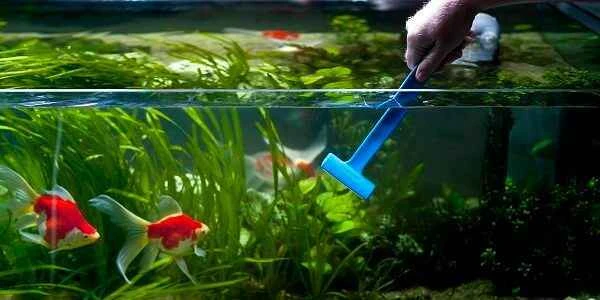
Use an aquarium scrubber or algae scraper to clean dirt from glass or acrylic walls. For stubborn algae, choose a dedicated algae removal tool.
4. Clean the substrate or base.
Substrate often becomes a breeding ground for uneaten food and waste. Gently remove debris using an aquarium vacuum cleaner, but do not remove too much substrate to avoid disrupting the ecological balance.
5. Perform a partial water change.
Replace 25% to 30% of the water using dechlorinated clean water. Partial water replacement can dilute harmful substances while preserving beneficial bacteria. Avoid complete water replacement unless absolutely necessary, as this can disrupt the ecosystem.
6. Clean the filter (only if necessary)
Cleaning is only necessary when the filter flow rate is significantly reduced.
Rinse the filter media with aquarium water (not tap water) to protect the beneficial bacteria that break down waste.
Cleaning frequency: How often should the fish tank be cleaned?
Daily : Check for uneaten bait and obvious debris.
Weekly : Test water quality, remove algae, and perform a partial water change.
Monthly : Deep clean decorative items, vacuum the substrate, and check the condition of the filter.
Common cleaning mistakes to avoid
Use soap or detergent : Never use soap, as even a small amount of residue can harm the fish.
Over-cleaning : Excessive cleaning may eliminate beneficial bacteria, thereby disrupting the ecological balance.
Complete water change : A complete water change will put a lot of stress on the fish.
Frequent filter cleaning : Cleaning too frequently may destroy the beneficial bacteria that maintain water quality.
Frequently Asked Questions
1. Do I need to remove the fish when cleaning the fish tank?
Usually, this is not necessary. When cleaning, try to keep the fish in the tank and use gentle handling to reduce their stress.
2. How to safely clean aquarium decorations?
Rinse the decorations with warm water and use the designated cleaning tools. Avoid using soap or boiling these items.
3. Can I clean a fish tank with live plants?
Yes, but be careful. Trim dead leaves and use gentle cleaning methods to avoid disturbing the plant's root system.
4. How to prevent algae buildup in a fish tank?
Control the duration of light exposure (no more than 8 to 10 hours per day).
Avoid overfeeding the fish.
Introduce algae to feed on fish or snails.
Additional Tips: DIY Fish Tank Cleaning Techniques
Vinegar solution : Use a diluted vinegar solution to remove stubborn stains from the glass (be sure to rinse thoroughly before refilling with water).
Use old aquarium water : Rinse with aquarium water when cleaning filters or decorations to protect beneficial bacteria.
Avoid overfeeding : reduce waste generation and decrease cleaning frequency at the source.
Methods to maintain water quality in the long term
Regular testing : Use a water quality testing kit to monitor ammonia, nitrates, and pH levels.
Adhere to the cleaning plan : maintain stable water quality according to weekly and monthly tasks.
Balance beneficial bacteria : Avoid cleaning all areas at once to ensure bacterial activity.
Cleaning a freshwater aquarium may seem tedious, but with the right tools and cleaning habits, the process can become simple and rewarding. By following this guide and using equipment such as aquarium vacuum cleaners, scrubbing tools, and water conditioners, you can create a clean, healthy, and beautiful aquarium environment for your fish.
Starting today, establish your cleaning plan to give your aquarium a fresh new look and ensure your fish live a happy and healthy life!