Warthogs ( Phacochoerus africanus ) are wild pig-like animals that live in the African savanna and savanna. They are known for their prominent long tusks, distinctive wart-like protrusions on their faces, and remarkable survival skills. Warthogs are not only an important part of the African ecosystem, but their unique appearance and behavior also attract a large number of tourists and researchers.
Classification and biological characteristics of warthogs
Classification of warthogs
Kingdom : Animalia
Phylum : Chordata
Class : Mammalia
Order : Artiodactyla
Family : Suidae
Genus : Phacochoerus
Species : Warthog ( Phacochoerus africanus )
Warthogs belong to the Suidae family and are closely related to domestic pigs and wild boars, but their appearance and habits are quite different.
physical characteristics
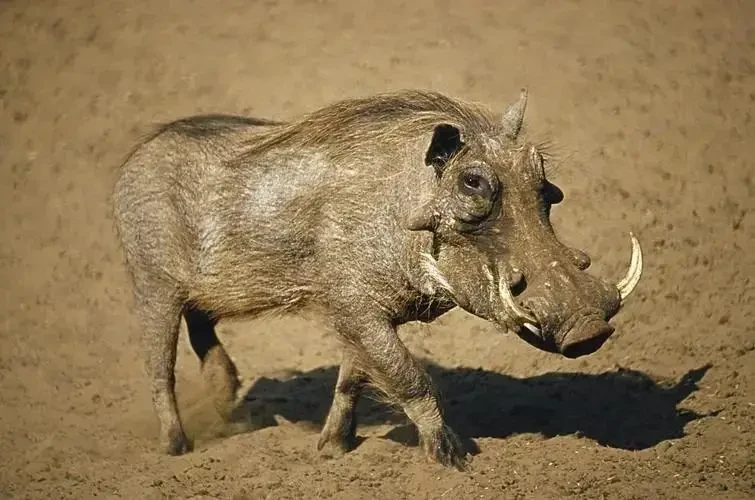
Facial protrusions : Warthogs have wart-like protrusions on their faces, which are their signature feature and are mainly used to protect their faces from injury during fights.
Long tusks : Both male and female warthogs have long tusks, which are more prominent in males. These tusks are important weapons for defense and competition for mates.
Size : Adult warthogs are about 90-150 cm long and weigh 50-150 kg. Males are usually larger than females.
Skin and hair : The skin is thick and rough, and the hair is sparse, adapted to a dry environment.
Behavior and Habits
Warthogs are diurnal animals, active during the day and resting in burrows or other shelters at night. They live in groups, usually consisting of females and their young, while males are mostly solitary.
Warthog Habitat and Distribution
main habitat
Warthogs are widely distributed in sub-Saharan Africa, especially in grasslands, savannas, and open forests. They are highly adaptable to their environment and can survive in areas where water resources are scarce.
Cave utilization
Warthogs often use burrows dug by other animals, such as aardvarks, as shelters. These burrows not only protect them from predators but also provide them with space to escape the heat and reproduce.
Geographical distribution
Warthogs are mainly distributed in countries in East and South Africa, such as Kenya, Tanzania, South Africa and Botswana.
They can be found in both arid regions and humid savannas.
Warthog Dietary Habits
food sources
Warthogs are omnivorous, but primarily plant-based. Their diet includes:
Grass : Warthogs prefer tender grass and are important herbivores.
Tubers and roots : Use powerful forelegs and fangs to dig underground plant tubers and roots.
Fruits and berries : Seasonal fruits are an important supplementary food for them.
Occasionally, they eat animal food : Warthogs will eat insects, bird eggs and small animals, but this makes up a small proportion of their diet.
Water intake and survival strategies
Warthogs can tolerate prolonged periods of water scarcity in arid environments, but they will drink large amounts of water when they find it and enjoy wallowing in mud to help cool down and expel parasites.
Warthog's natural enemies and survival threats
Main natural enemies
Warthogs face threats from a variety of natural predators, including:
Lions : As the top predators of the grasslands, lions often hunt warthogs.
Leopard : Especially in forest areas, leopards are the main natural enemy of warthogs.
Cheetah : Cheetahs are extremely fast and often prey on young warthogs.
Hyenas : Hyenas will gang up on lone warthogs.
Self-defense
Burrowing as a refuge : When faced with a threat, warthogs usually retreat into burrows, pointing their tusks toward the entrance for defense.
High-speed escape : Despite their bulky size, they are able to escape predators at astonishing speeds.
Threats of human activities
Habitat destruction : Agricultural expansion and urbanization have encroached on the habitat of warthogs.
Hunting : In some areas, warthogs are hunted for food or for the decorative purpose of their tusks.
Warthog Reproduction and Life Cycle
Reproductive habits
Warthogs typically have one breeding season per year, which usually occurs during the rainy season to ensure that the piglets grow up in an environment with abundant food. Females usually give birth to 2-8 piglets at a time.
cub growth
Warthog piglets are born small and unable to protect themselves, relying entirely on their mothers for protection and nursing. After several months, they begin to learn to forage for food and gradually become independent.
life
Warthogs have an average lifespan of 12-15 years in the wild, but can live for more than 20 years in protected environments such as zoos.
The role of warthogs in the ecosystem
The "cultivators" of the grasslands
Warthogs are known as "grassland tillers" because of their digging up of tubers and roots. This behavior helps to renew the soil and cycle nutrients.
Relationship with other animals
Warthogs often utilize burrows dug by other animals, such as aardvarks. They are also an important food source for predators like lions and hyenas.
The cultural symbolism and research significance of warthogs
Cultural symbol
In African culture, warthogs are often seen as symbols of intelligence and wit. In some African myths, they are described as the embodiment of wisdom.
Research and Protection
Ecological research : Warthogs are an important subject for studying grassland ecosystems, and their behavior and habits have a profound impact on ecological balance.
Conservation projects : In some countries, warthogs are listed as a species of concern, and habitat conservation efforts are underway.
A comparison between warthogs and Kapibala.
Although warthogs and capybaras live on different continents and in different ecosystems, they both play important ecological roles in their respective environments. Capybaras, which inhabit the wetlands of South America, are the world's largest rodents, while warthogs are an important species on the African savanna. Both are key areas of research and conservation due to their adaptability and social behaviors.
Conclusion: The importance of warthogs
Warthogs are not only remarkable animals on the African savanna, but their behavior and ecological role also provide valuable data for scientific research. By protecting warthogs and their habitats, we not only maintain the balance of the grassland ecosystem, but also preserve this symbol of African wildlife for future generations.