Armadillos are fascinating animals, attracting attention with their tough armor and unique behaviors. Among all armadillo species, some are small enough to fit in the palm of your hand. If you've ever wondered which is the smallest armadillo in the world, you'll find a surprising answer today! In this article, we'll provide a comprehensive overview of the smallest armadillo species, including their physical characteristics, habitats, and diet.
What is the smallest armadillo?
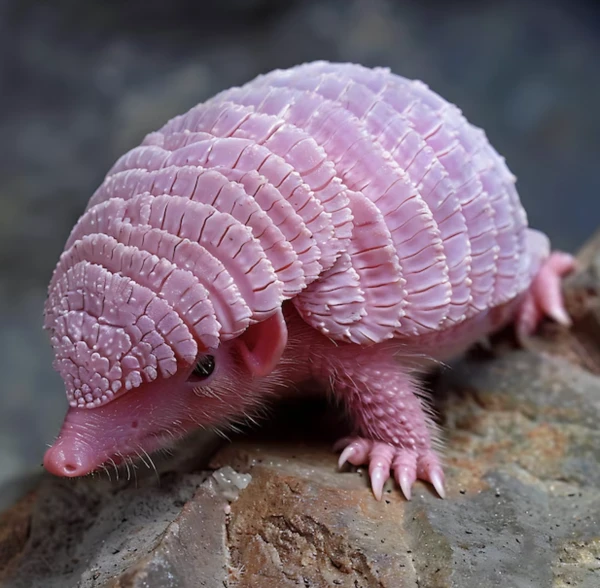
The world's smallest armadillo is the pink armadillo ( Chlamyphorus truncatus ). This tiny armadillo is mainly distributed in central Argentina and is known as the world's smallest armadillo because of its small size and unique appearance.
Physical characteristics of the smallest armadillo
Size : The smallest armadillo is only 5 to 6 inches (12 to 15 centimeters) long. It is very small compared to other armadillo species, which are usually over two feet (about 60 centimeters) long.
Weight : The pink armadillo weighs between 3.5 and 4.5 ounces (100 to 130 grams), making it one of the lightest of all armadillo species.
Appearance : The most distinctive feature of this armadillo is its pinkish shell, which covers only part of its body, while the rest is covered by soft fur, helping it to camouflage itself in the desert.
Where do the smallest armadillos live?
The smallest armadillo —the pink armadillo—is native to central and northern Argentina. They live in dry, sandy environments and are adept at digging burrows to find food and avoid predators.
Habitat
Deserts and semi-arid regions : The smallest armadillos prefer dry, sandy environments, can easily dig burrows, and can survive in extreme climatic conditions.
Underground habitat : These armadillos typically live underground, spending the day in their burrows to escape the heat and mainly coming out at night.
Dietary habits of the smallest armadillo
Pink armadillos are insectivorous animals, primarily feeding on insects. They use their sharp claws and powerful forelimbs to dig underground in search of food.
Main food : insects, insect eggs, ants and beetles.
Foraging method : They quickly search for food by digging holes, using their claws to dig rapidly in the ground to find food hidden underground.
Behavior and habits of the smallest armadillo
Despite its small size, the smallest armadillo exhibits very unique behavior. Its lifestyle primarily involves digging and living underground.
nocturnal
Like many armadillo species, the pink armadillo is nocturnal . They prefer to be active at night to avoid the hot daytime weather.
Living alone
The smallest armadillos are usually solitary. They do not live in groups but live alone, resting in their burrows during the day and foraging for food at night.
The conservation status of the smallest armadillo
Unfortunately, the smallest armadillo is currently listed as a near-threatened species, facing multiple threats including habitat loss, human activity, and climate change. Agricultural expansion and urbanization in Argentina have led to habitat destruction, resulting in habitat loss and reduced food sources.
Survival threat
Habitat destruction : The natural habitat of the smallest armadillo is facing a huge threat due to agriculture and urban expansion.
Climate change : Climate change has had an adverse impact on the survival conditions of its desert habitats.
Predator threat : Although they mostly live underground, larger predators can still pose a threat to them.
Interesting facts about the smallest armadillo
Rapid digging : Despite its small size, the pink armadillo is an excellent burrower, capable of quickly digging burrows to escape predators or find food.
Pink Armor : The smallest armadillo 's unique pink shell comes from its soft keratin layer, which differs from the hard shells of other armadillos. The pink armadillo's shell is soft and flexible, which helps it move more flexibly.
Rare sightings : Because they are nocturnal and spend most of their time underground, the smallest armadillos are rarely seen by humans in the wild.
Why is protecting the smallest armadillo so important?
The smallest armadillos play an important role in the ecosystem, particularly in controlling insect populations. They help maintain ecological balance by digging and preying on insects.
Ecological role
Insect control : As insectivorous animals, they play an important role in controlling insect populations and preventing overpopulation.
Soil aeration : By digging, they not only find food, but also help aerate the soil, which is beneficial to plant growth.
How can we protect the smallest armadillo?
To ensure the survival of the smallest armadillo , a range of conservation measures are needed, including protecting its habitat and addressing threats such as habitat destruction and climate change.
Habitat protection : Protecting the desert regions of Argentina, which are the main habitat of the pink armadillo.
Climate Action : Reducing the impacts of climate change and helping pink armadillos adapt to their habitats.
Raising awareness : Increase awareness among local communities and the public about the importance of protecting the smallest armadillo species .
Conclusion: The amazing world of the smallest armadillo
The smallest armadillo —the pink little armadillo—is a truly unique and fascinating animal. Despite their small size, they play a vital role in the ecosystem and face significant conservation challenges. By learning more about this remarkable species and supporting conservation efforts, we can ensure that the smallest armadillo continues to thrive in its natural habitat.