Scientific taxonomy of species
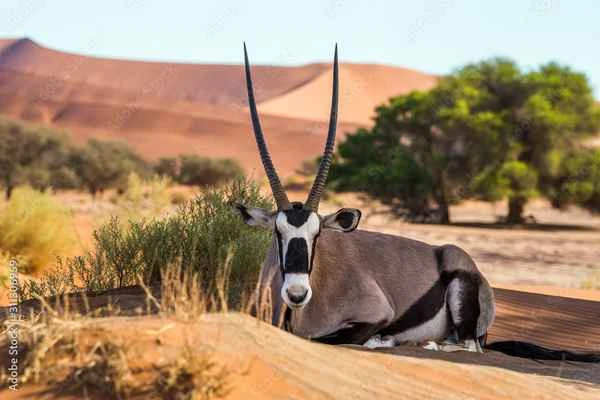
The Gemsbok (Oryx gazella), also known as the South African oryx, is the largest of the four oryx species, measuring approximately 190-210 cm in length and 110-130 cm in shoulder height. Weighing about 210-240 kg, it is the largest species in the genus Gemsbok. Both males and females possess long, straight horns. Distinguishing it from most antelopes, the horns of males and females are very similar, with sharp, sword-like tips, hence the name "gemsbok" (or "sword-like oryx"). It is a large oryx inhabiting arid regions of Africa. Belonging to the class Mammalia, order Artiodactyla, family Bovidae, subfamily Antelopeinae, it possesses exceptional adaptability and is one of the representative animals of the African grasslands and semi-desert regions.
Kingdom: Animal Kingdom
Phylum: Chordata
Class: Mammalia
Order: Artiodactyla
Family: Bovidae
Genus: Antelope
Species: Oryx gazella
Zoological History of the South African Gazelle
The Gazella was first described by European scientists in 1776, classified by the Swedish naturalist Carl Linnaeus. Its name, "gazella," comes from Arabic and means "antelope." In Africa, it lives alongside other species of antelope, forming a relatively complex ecosystem.
Morphological characteristics and physical properties of the South African oryx
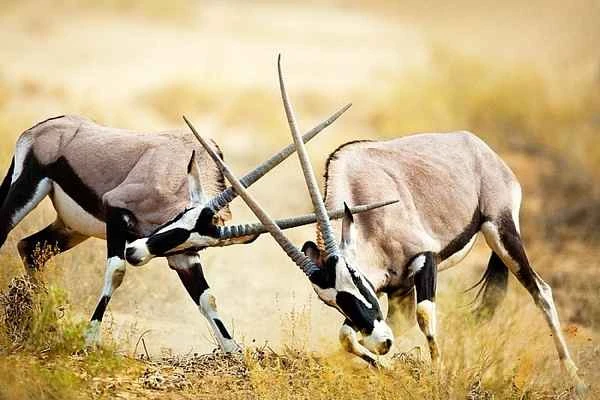
Appearance: The South African oryx is a robust animal, with adult males standing about 1.2 meters tall at the shoulder and reaching a length of about 2 meters. Its most distinctive feature is its two long, straight black horns, which can reach 80 centimeters to 1 meter in length. These horns are curved, creating a strong contrast that makes its appearance very unique.
Weight: Adult males weigh approximately 220 to 250 kg, while females are slightly lighter, weighing approximately 170 to 210 kg.
Lifespan: In the wild, the lifespan of South African oryx is about 15 to 20 years, but in captivity, they can live up to 25 years.
Global distribution and habitat of the South African oryx
The South African oryx is mainly distributed in South Africa, Botswana, Namibia, and Zimbabwe, and prefers to live in arid, semi-desert, or sparse grassland areas. They can survive in water-scarce environments and even tolerate prolonged droughts.
Habitat: South African oryx primarily inhabits desert and semi-desert regions, with typical habitats including the Kalahari and Namib Deserts. These areas are characterized by sparse vegetation, arid climates, and extreme diurnal temperature variations.
South African antelope ecology and behavior
The South African oryx is an animal highly adapted to harsh environments. They possess highly developed physiological mechanisms that enable them to maintain their body's water balance under extreme climatic conditions. Their daily activities typically take place in the early morning and evening, avoiding the intense midday sun.
Social Behavior: South African oryx typically live in groups, ranging in size from a few to dozens of individuals. A strict hierarchy exists within the group, with males responsible for territorial disputes and defense.
Migration patterns: They do not usually migrate long distances, but they will adjust their range of activity as they search for food and water.
South African oryx daily activities and social behavior
South African oryx exhibits a high degree of alertness in its daily activities. Their social behaviors include collective foraging and predator avoidance. Females typically play a nurturing role within the group, while males are primarily responsible for defense and territorial protection.
Diet and foraging strategies of South African oryx
The South African oryx is a herbivore, primarily feeding on grasses, shrub leaves, and branches. They are highly drought-tolerant, allowing them to survive for extended periods in arid environments. Their diet is extremely diverse, adapting to different types of plants, and they can even consume some plants with high water content, such as certain desert plants.
Foraging strategies: They typically forage at dawn and dusk. Due to the aridity of their habitat, South African oryx sometimes obtains water by eating plants with high water content, reducing their dependence on water sources.
South African oryx breeding
The breeding season for South African oryx typically occurs during the rainy season, when females give birth to one cub. The cub is then carefully cared for by its mother. The breeding season usually lasts for several months, during which males compete with other males for territory and mates to demonstrate their dominance.
Current Status of South African Gazelle Conservation
According to the International Union for Conservation of Nature (IUCN) assessment, the South African oryx is currently classified as "Least Concern." However, habitat loss and climate change continue to threaten its survival.
Protection level: Least Concern
Population status: In Africa, the population of South African oryx is relatively stable, but in some areas, especially where habitat destruction has occurred, their numbers have declined.
Major threats and predators of the South African oryx
The main threats to the South African oryx come from human activities, particularly habitat loss and increasing drought. Their primary natural predators include large predators such as cheetahs, African wild dogs, and lions. Despite their high alertness and ability to escape quickly when facing predators, they still find it difficult to completely avoid capture.
South African antelope conservation measures
To protect the South African oryx, several countries and regions have implemented conservation measures, including protecting their habitat in nature reserves and national parks. In addition, local communities have conducted population monitoring and habitat restoration efforts.
Ecological value of the South African antelope
South African oryx plays a vital role in maintaining the ecological balance of grasslands and semi-desert regions. They are a food source for many predators and also help control plant population growth.
South African oryx culture
In the cultures of some African tribes, the South African oryx is seen as a symbol of strength and endurance. Its distinctive appearance and tenacious survival skills have made it an important figure in local traditions and stories.
Economic value
Although the population of South African oryx is relatively stable, their beautiful appearance and wildlife viewing value give them significant economic value in the tourism industry. In some countries, sightseeing tours attract large numbers of tourists to observe these beautiful animals.
closely related varieties
| Species name | Distribution area | Weight (kg) | Angle length (cm) | Main features |
|---|---|---|---|---|
| South African gazelle (Oryx gazella) | South Africa, Botswana, Namibia, etc. | 170-250 | 70-100 | Large in size, with straight and long horns, adapted to desert environments. |
| Arabian oryx (Oryx leucoryx) | Arabian Peninsula | 70-100 | 50-70 | Small in size, with short and curved horns, it has been re-bred. |
| Oryx beisa | East Africa | 100-200 | 50-90 | Featuring iconic black and white stripes, and small in size |
Conclusion
The gemsbok of South Africa plays a vital role not only in the ecosystem but also has a profound impact on culture and the economy. With strengthened conservation measures, we have every reason to believe that they will continue to thrive in this vast expanse of desert and grassland.