The forest wolf (Canis lupus), commonly known as the gray wolf , is a wild canid respected for its ferocity. Despite its intimidating appearance, forest wolves typically avoid interaction with humans, even though they are known for preying on a variety of animals, from caribou to rabbits .
About the Timberwolves
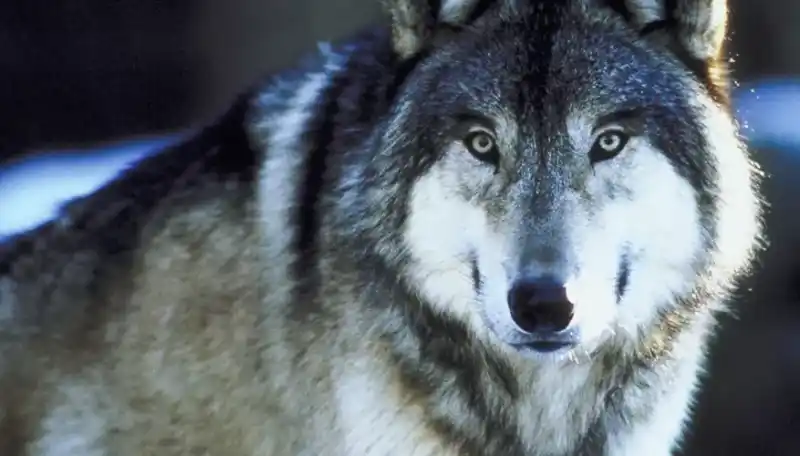
Timber wolves are commonly referred to as gray wolves , but their coat coloration can vary. While they are typically brownish-gray with a slightly yellowish-beige tinge on their belly and face, they can also have black , brown , and white fur. These majestic animals typically measure 3 to 5 feet in length, with males usually much larger than females. Male timber wolves weigh between 70 and 145 pounds, while females typically weigh between 60 and 100 pounds.
In terms of appearance, the Timberwolves resemble domestic dog breeds such as the Alaskan Malamute and the German Shepherd . A wolf pack typically consists of five to nine wolves, and their breeding season is between January and February.
| Timberwolf characteristics | Details |
|---|---|
| color | Brownish-gray, with a yellowish-beige belly, and fur that is black, brown, or white. |
| size | 3 to 5 feet in length |
| male weight | 70 to 145 pounds |
| female weight | 60 to 100 pounds |
| wolf pack size | There are usually 5 to 9 wolves |
| Breeding season | January to February |
Geography: Where do wolves live?
Historically, the forest wolf was the most geographically widespread of all animal species. This is no longer the case, according to the IUCN Red List of Threatened Species , as their range has drastically shrunk over time. Forest wolves are now extinct in many parts of North America and Western Europe . However, they can still be found in parts of Canada , Alaska , Asia , and Europe .
Other countries where tigresses have been found include China , Germany , Romania , Greenland , France , and Armenia . In the United States, tigresses currently inhabit only a few states, such as Michigan , Wisconsin , Montana , and Alaska .
| Timberwolf distribution area | Discovered areas |
|---|---|
| North America | Alaska, Michigan, Wisconsin, Montana, and parts of Canada |
| Europe | Germany, Romania, France, Armenia |
| Asia | Russia, parts of China |
| other | Greenland |
Natural habitat of the forest wolf
Timber wolves are highly adaptable animals, capable of living in a wide variety of habitats. They typically inhabit environments far from human settlements. These versatile creatures thrive in coniferous forests , grasslands , forests , tundra , scrubland , meadows , mountains , and even deserts . Their adaptability to different environments is one of the reasons why timber wolves can survive in such diverse areas, although their numbers are declining in some regions.
| Timber Wolf Habitat | Habitat type |
|---|---|
| forest | A dense forest with many trees and shrubs |
| Taigalin | cold northern forests |
| tundra | Arctic and subarctic regions |
| grassland | Grasslands and open fields |
| mountain range | Rocky and hilly terrain |
| desert | dry, arid landscape |
Timberwolves' diet
As carnivorous animals, wolves primarily prey on large animals, including musk oxen , bison , elk , moose , wild boar , and reindeer . They are skilled hunters, relying on pack dynamics and endurance to take down large animals. In addition to these prey, they occasionally scavenge the decaying remains of dead animals.
In areas where prey is scarce, wolves may also rummage through garbage cans for food. They can survive on any food they find, especially in colder climates.
| Timberwolves' diet | Prey type |
|---|---|
| Main diet | Musk ox, bison, elk, moose, wild boar, reindeer |
| Occasional diet | Rotting animal carcasses and garbage |
| hunting behavior | Hunting in packs, relying on physical strength and strategy |
in conclusion
The forest wolf , or gray wolf , is an extraordinary animal capable of adapting to a wide variety of habitats. Despite their shrinking range over time, they remain an important part of the ecosystems of North America , Europe , and Asia . These wolves are carnivores, feeding on large prey and employing exceptional hunting skills. Whether living in forests , coniferous forests , or deserts , the forest wolf 's resilience and adaptability remain awe-inspiring.