Have you ever wondered just how aggressive mantises really are? These seemingly quiet and elegant insects actually possess a powerful hunting instinct and aggression. Mantises are not only amazing hunters in nature, but their aggressive behavior often surprises people. So, just how aggressive are mantises? In this article, we will delve into the aggressiveness of mantises and why they exhibit such a strong hunting instinct.
How aggressive are praying mantises? They are natural predators.
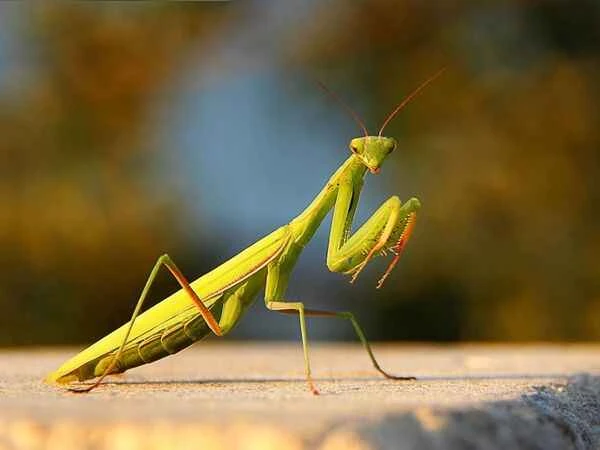
Praying mantises are considered among the most aggressive insects in the world, renowned for their agile movements and precise hunting techniques. When a praying mantis prepares to attack, its forelegs swiftly extend and seize its prey with almost no hesitation. This rapid movement and their sharp forelimbs make praying mantises highly efficient predators of other insects.
How aggressive are praying mantises? Do they only attack their prey?
Although praying mantises primarily prey on insects, their aggression extends beyond hunting. They also exhibit territoriality, especially during the breeding season, when males become more aggressive in competition for mates.
Furthermore, some species of praying mantises will not hesitate to attack humans or other animals when threatened. Although their aggression is not usually directed at humans, their reaction may be surprisingly strong if you try to catch or disturb them.
How aggressive are praying mantises? What are their attack methods?
The praying mantis has a very unique attack method, relying primarily on its powerful forelegs. When a mantis spots prey, its forelegs swiftly extend, grasping the prey like pincers and subduing it with rapid movements. The mantis's forelegs can not only quickly capture prey but also effectively cut and tear it apart.
When threatened, the praying mantis raises its forelegs, adopting a defensive posture and appearing more ferocious. If it feels threatened, the mantis may also attack its enemy with rapid movements or attempt to defend itself using its sharp forelimbs.
The relationship between the mantis's aggressiveness and humans
While praying mantises don't attack humans unprovoked, they may become aggressive if you try to catch them or keep them as pets. This attack won't cause fatal injury, but the mantis's forelimbs are powerful enough to inflict damage, especially when they feel threatened.
Why are praying mantises so aggressive? It's due to their innate hunting instincts.
The praying mantis's aggressiveness can be traced back to its predatory nature. Praying mantises are carnivorous insects, feeding on small insects, spiders, and other prey. To effectively capture their prey, they have evolved a powerful and precise attack instinct. Their forelimbs are not only sharp but also capable of making precise, instantaneous grabbing movements, allowing them to hunt with virtually no delay.
Furthermore, the mantis's aggressiveness is closely related to its living environment and reproductive behavior. Their aggressive behavior helps increase their predation success rate, while also helping them protect their territory and compete for mates.
In summary: How aggressive are praying mantises?
In general, praying mantises are highly aggressive insects, especially when hunting. They use their powerful forelimbs to capture prey and exhibit strong aggression when threatened. While praying mantises pose no threat to humans, their attack power should not be underestimated if you accidentally anger them.
If you encounter a praying mantis, it's best to avoid direct contact to avoid provoking it. Understanding their behavior and attack methods can help you better coexist with these mysterious insects.
How aggressive are praying mantises? In this article, we'll explore the praying mantis's aggressive instincts, attack methods, and how they exhibit a strong predatory drive. Learn more about the habits of praying mantises!