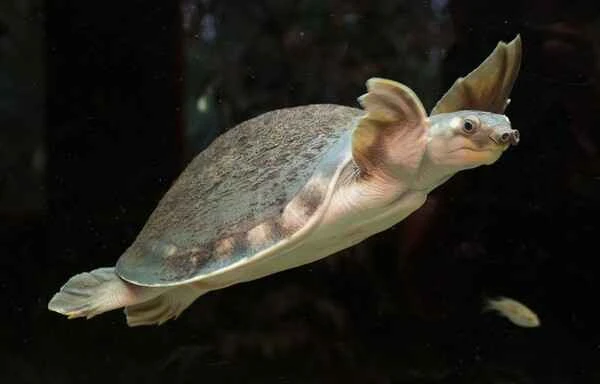
The pig-nosed turtle (scientific name: *Carettochelys insculpta*) , also known as the flying river turtle, New Guinea turtle, Oceanian pig-nosed turtle, and two-clawed softshell turtle , is a unique and fascinating species that stands out in the reptile world due to its distinctive appearance and behavior. This article will delve into the scientific classification, physical characteristics, distribution, behavior, and diet of the pig-nosed turtle, and will detail its conservation status, the threats it faces, and the efforts made to protect this species.
Scientific classification of pig-nosed turtles
The pig-nosed turtle belongs to the family Carettochelyidae, with the scientific name *Carettochelys insculpta*. It belongs to the order Testudines and, like most turtles, is an aquatic reptile. Unlike many turtles, the pig-nosed turtle is a freshwater species, native to the rivers and lakes of Australia and New Guinea.
Kingdom: Animalia
Phylum: Chordata
Class: Reptilia
Order: Testudines
Family: Carettochelyidae
Genus: Carettochelys
Species: Carettochelys insculpta
Foreign names: pig-nosed turtle (Carettochelys insculpta), Fly River turtle, pitted-shelled turtle, Warrajan
Physical characteristics of pig-nosed turtle
Pig-nosed turtles have very unique physical characteristics that are crucial for understanding their behavior and ecological adaptations.
Appearance: Pig-nosed turtles get their name from the "pig-snout"-like protrusion on their shells. Their shells are flat, smooth, and typically light-colored, ranging from light brown to dark brown. Unlike many other turtles with hard shells, the pig-nosed turtle's shell is relatively soft.
Size and weight: Adult pig-nosed turtles are generally 40 to 60 centimeters (about 16 to 24 inches) long and weigh about 5 to 15 kilograms (11 to 33 pounds), with males usually slightly smaller than females.
Lifespan: In the wild, pig-nosed turtles can live up to 50 years. In captivity, if they are well cared for, they can even live to be over 60 years old.
Global distribution and habitat of the pig-nosed turtle
Pig-nosed turtles are mainly distributed in freshwater rivers and lakes in northern Australia and New Guinea. They thrive in slow-moving, clear waters, environments that provide abundant aquatic plants and habitats.
Distribution: Mainly distributed in Australia (Northern Territory, Queensland) and New Guinea.
Habitat: Pig-nosed turtles live in freshwater rivers, estuaries, and swamps, and they prefer environments with clear water and abundant aquatic plants.
Ecology and Behavior of Pig-nosed Turtles
Understanding the ecology of pig-nosed turtles is crucial to understanding how they interact with their environment. They exhibit a range of unique behaviors that help them survive in freshwater ecosystems.
Habitat preferences: Pig-nosed turtles are semi-aquatic animals that mainly live in shallow waters. They usually like to swim in the water or sunbathe on rocks and wood on the shore.
Social behavior: Unlike some turtles, pig-nosed turtles are usually solitary, only gathering together during the breeding season. In their daily lives, they typically act alone or in small groups.
Daily activities: Pig-nosed turtles are diurnal animals, spending most of their daytime foraging, swimming, or basking in the sun.
Migration patterns of pig-nosed turtles
Pig-nosed turtles do not exhibit long-distance migrations like some sea turtles. However, they may move between different freshwater areas, usually due to seasonal changes and the distribution of food resources.
Migratory behavior: They do not migrate long distances, but move according to seasonal changes or in search of new foraging grounds.
Seasonal migration: During seasonal floods, pig-nosed turtles may migrate to different areas in search of food or suitable habitat.
Pig-nosed turtle's diet and foraging strategies
As omnivores, pig-nosed turtles have a very diverse diet, which helps them maintain a balanced nutritional intake. Their diet includes:
Aquatic plants: They feed on a variety of aquatic plants, including algae and floating plants.
Small invertebrates: Pig-nosed turtles feed on insects, crustaceans, and mollusks.
Fruits: Sometimes fruits and seeds that have fallen into the water are also eaten.
Foraging strategy: Pig-nosed turtles use their pig-snout-like protrusions to stir up mud and sand on the bottom of the water to help them find food. This behavior is crucial for their survival in freshwater environments.
Pig-nosed turtle breeding
Pig-nosed turtles typically breed during the warmer months, usually from November to March, which coincides with the wet season in tropical regions. Females nest on beaches, usually laying 10 to 20 eggs at a time. The incubation period is approximately 60 to 80 days.
Egg-laying behavior: Female pig-nosed turtles return to the same breeding grounds every year, similar to the behavior of many other turtle species.
Hatching: After hatching, baby turtles need to crawl from the nest to the water's edge, a process fraught with danger, as many baby turtles become prey for predators during this stage.
Conservation Status and Measures for Pig-nosed Turtles
Due to habitat destruction, pollution, and illegal fishing, the pig-nosed turtle is listed as a vulnerable species by the International Union for Conservation of Nature (IUCN). Major threats include:
Habitat destruction: Deforestation, agricultural development, and urbanization have severely damaged their habitats.
Illegal fishing: Due to demand in the pet market, the illegal fishing of pig-nosed turtles is a serious problem.
Protective measures
To protect the pig-nosed turtle, relevant organizations and governments have taken a series of protective measures, including:
Habitat protection: Efforts to protect and restore wetlands and freshwater rivers in Australia and New Guinea.
Legal protection: Implement strict laws and regulations to combat illegal fishing and trading.
Research and monitoring: Continuously monitor the population size of pig-nosed turtles and evaluate the effectiveness of conservation measures.
Ecological and cultural value of pig-nosed turtles
Pig-nosed turtles play a vital role in ecosystems. By consuming aquatic plants and small animals, they help maintain ecological balance and promote healthy water quality. This species also holds a place in the indigenous cultures of Australia and New Guinea, where it is considered a symbol of nature.
The economic value of pig-nosed turtles
Although the pig-nosed turtle is a protected species, it still has some economic value, especially in the following areas:
Ecotourism: The pig-nosed turtle attracts a large number of tourists for ecotourism due to its unique appearance and behavior.
Scientific value: The pig-nosed turtle provides a valuable opportunity for research in turtle biology, conservation, and freshwater ecology.
Close relatives of the pig-nosed turtle
The following is a comparison between the pig-nosed turtle and its related species:
| Species | division | body shape | Habitat | Protection level |
|---|---|---|---|---|
| Pig-nosed turtle | Pig-nosed turtle family (Carettochelyidae) | 40–60 cm | Freshwater Rivers | Vulnerable |
| sea turtle | Cheloniidae (sea turtle family) | 90–110 cm | ocean waters | Vulnerable |
| Green sea turtle | Cheloniidae (sea turtle family) | 100–150 cm | ocean waters | endangered |
| flat-backed sea turtle | Cheloniidae (sea turtle family) | 70–90 cm | coastal waters | Insufficient data |
Conclusion: Protecting the pig-nosed turtle
The pig-nosed turtle is a unique species with significant ecological value. While its lifespan and behavior make it a fascinating subject of study, it faces a survival crisis due to environmental threats. Through ongoing habitat conservation, legal regulation, and scientific research efforts, we can hope to secure the future of this unique species.