Sweet potatoes are one of the world's most important food crops, providing humans with abundant carbohydrates and dietary fiber. However, sweet potato cultivation faces numerous threats from pests and diseases, among which the sweet potato weevil (Cylas formicarius) is a highly destructive pest. Although they do not directly harm humans, their damage can indirectly impact human lives through agricultural production, food safety, and economic losses . This article will discuss in detail the damage caused by the sweet potato weevil and its control measures.
1. Basic characteristics of sweet potato weevils
1.1 What is the sweet potato weevil?
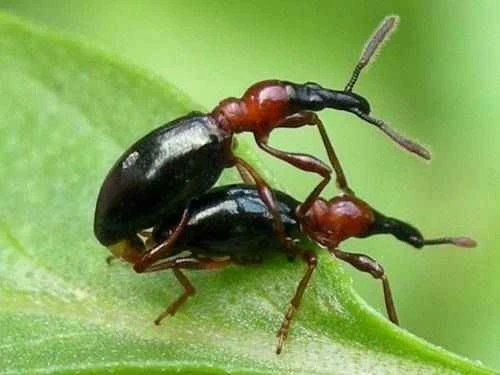
The sweet potato weevil, scientifically known as *Cylas formicarius *, is a weevil pest that specifically damages sweet potato crops . They are small, black or dark blue, and are named for their ant-like appearance.
1.2 Life Cycle of Sweet Potato Ants
The life cycle of the sweet potato ant weevil consists of four stages: egg, larva, pupa, and adult .
Egg stage (3-7 days) : The female lays her eggs in cracks in the sweet potato tuber or stem.
Larval stage (10-15 days) : After hatching, the larvae will bore into the inside of the sweet potato, causing the tuber to rot.
Pupal stage (7-10 days) : The larvae pupate in the soil or tubers.
Adult stage (3-6 months) : Adults can move around on sweet potato leaves and stems, feeding on the plants and looking for new egg-laying sites.
The adult insects have strong flight capabilities and can spread rapidly in sweet potato fields, increasing the difficulty of control.
2. Harmful effects of sweet potato ants on humans
Although sweet potato ants do not directly attack humans, their impact on agriculture, food safety, and the economy ultimately affects human quality of life and health.
2.1 Damage to agricultural production
(1) Damages sweet potato growth
The larvae of the sweet potato ant bore into the tuber , causing black, tunnel-like holes in the skin and rendering the sweet potato unmarketable. Furthermore, the larvae's activity inside the sweet potato can cause secondary infections , leading to mold and bacterial rot , ultimately spoiling the entire sweet potato.
(2) Affects sweet potato yield
Severely damaged sweet potato plants will turn yellow and wilt , eventually failing to grow normally, resulting in a yield reduction of 30%-70% , or even a complete crop failure .
During the storage of sweet potatoes, the rotting of the affected tubers can spread further, affecting the overall storage conditions of the warehouse and causing even greater losses.
2.2 Impact on food safety
(1) The impact of contaminated sweet potatoes on human health
Rotten sweet potatoes may produce harmful molds, such as aflatoxin , which can cause liver damage and may increase the risk of liver cancer if consumed over a long period of time.
Sweet potatoes eaten by sweet potato weevils have a poor taste and may contain bacteria or insect eggs . Eating them may cause gastrointestinal discomfort or even food poisoning.
2.3 Economic Losses and Social Impact
(1) Farmers' economic losses
Sweet potatoes are a major source of income for many farmers, but the infestation of sweet potato ants has led to a decline in yields and reduced farmers' income.
Due to severe pest infestations, farmers need to invest more funds in pesticide control, improve planting methods, and strengthen storage management , which increases agricultural costs.
(2) Market supply decreased, and prices rose.
Large-scale infestations of sweet potato ants can reduce the supply of sweet potatoes, thus affecting market prices.
As sweet potatoes are a staple food, rising prices could impact the lives of people in regions where they rely on sweet potatoes as a primary food source.
(3) Risk of cross-regional transmission
Sweet potato weevils spread rapidly through the circulation, transportation, and planting of affected sweet potatoes , potentially impacting the sweet potato industry in multiple regions and increasing government disease prevention costs.
3. Control measures for sweet potato ant weevils
To address the serious damage caused by the sweet potato ant weevil, comprehensive control measures are needed, including agricultural control, biological control, physical control, and chemical control .
3.1 Agricultural control (ecological management)
Crop rotation : Avoid planting sweet potatoes continuously on the same plot of land to reduce insect egg residue.
Healthy seedlings : Select uninfected seed potatoes to avoid introducing pests into the field.
Bury the damaged sweet potatoes deeply : Clean up the damaged sweet potatoes in time and bury them deeply to reduce the spread of pests.
3.2 Biological control (using natural enemies)
Releasing parasitic wasps (such as egg parasitic wasps) can effectively control the reproduction of sweet potato weevils.
Infecting sweet potato weevils with pathogens (such as Bacillus thuringiensis) can reduce their population size.
3.3 Physical control (barrier and trapping)
Cover with insect-proof netting : Cover the surface of sweet potato fields with insect-proof netting to reduce the chance of adult insects laying eggs.
Using light traps : Use trapping lights at night to reduce the number of adult insects.
3.4 Chemical control (pesticide control)
Use low-toxicity, high-efficiency insecticides , such as imidacloprid and abamectin, but strictly control pesticide residues.
Using biological pesticides reduces environmental pollution and harm to human health.
4. Conclusion
While the sweet potato weevil does not directly harm humans, its impact on agricultural production, food safety, and the economy cannot be ignored. It can lead to decreased sweet potato yields, food contamination, reduced farmer incomes , and even affect market supply and price stability. Therefore, a comprehensive approach , encompassing agricultural management, biological control, and physical and chemical methods, is essential to effectively control the sweet potato weevil and ensure stable sweet potato production.