Sharks are representative of cartilaginous fish, belonging to the subclass Elasmobranchii within the class Chondrichthyes of the phylum Chordata. They primarily live in the ocean, although a few species can adapt to freshwater environments. They are generally medium to large in size, fast swimmers, and formidable apex predators in the ocean. So, do you know which sharks are among the largest in the world today?
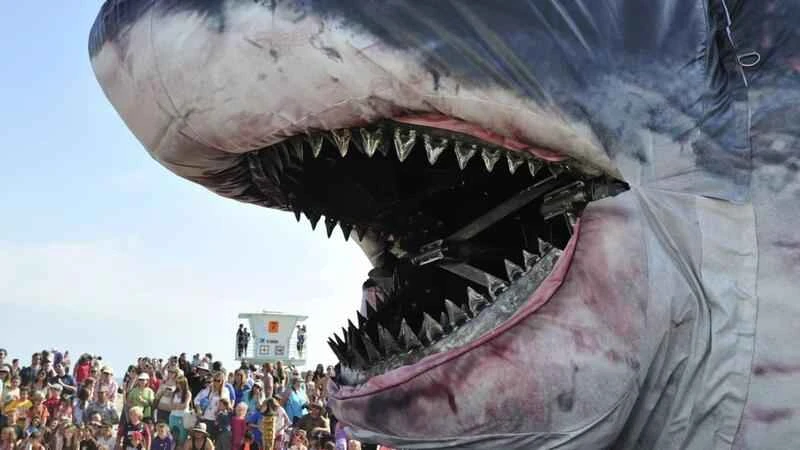
Today, we'll introduce you to ten of the world's largest shark species: whale shark, basking shark, great white shark, Pacific sleeper shark, weasel shark, porpoise shark, bull shark, lemon shark, goblin shark, and pelagic whitetip reef shark. Let's learn about the unique features of these marine giants.
1. Whale shark (9-12 meters)
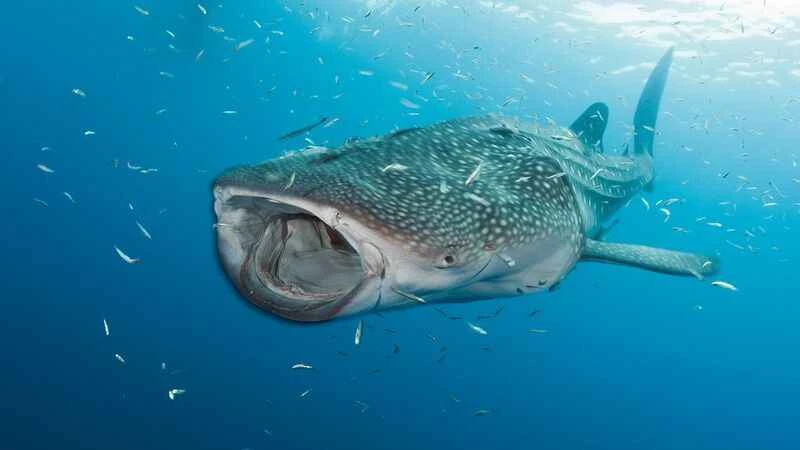
Whale sharks are the largest known sharks and the largest fish in the world. They typically range in length from 9 to 12 meters, with some records showing giants reaching 20 meters in length and weighing up to 12,500 kilograms. Whale sharks have a mouth about 1.5 meters wide, containing 300 to 350 rows of tiny teeth and 10 filter-feeding structures specifically designed to filter plankton and small fish from the seawater.
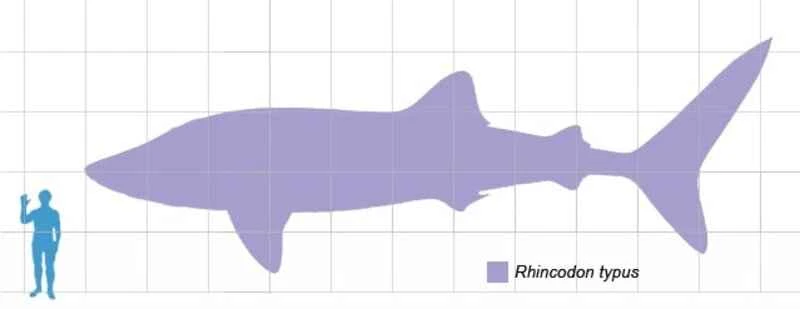
Despite their enormous size, whale sharks are gentle and never attack humans unprovoked, earning them the nickname "gentle giants of the ocean." They are often used by scientists as role models in marine science education to dispel the stereotype that "sharks are necessarily ferocious." In fact, whale sharks often interact amicably with divers and are among the most beloved marine creatures for diving enthusiasts.
2. Basking shark (6.7-8.8 meters)
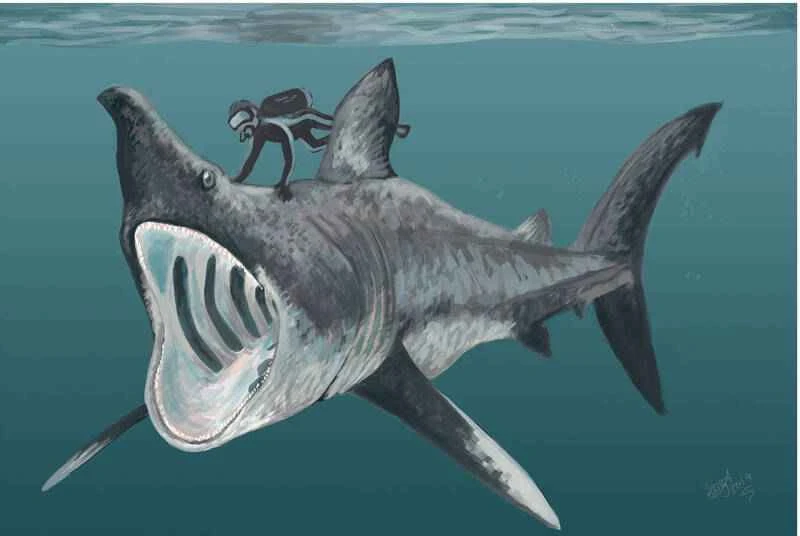
The basking shark is the second largest living fish after the whale shark and one of the largest sharks in the world. Adult basking sharks typically range in length from 6.7 to 8.8 meters and weigh approximately 6 tons. The largest basking shark specimen ever recorded was found in 1851 in a herring net in the Bay of Fundy, Canada. This individual measured 12.27 meters in length and weighed 19 tons, making it the largest shark ever recorded.

The basking shark possesses an exceptionally large mouth, which can open to a width of 1 meter, used to ingest large quantities of plankton. One of its most distinctive features is the deep, wide gill slits on either side of its head, almost encircling the entire head, with well-developed gill rakers that effectively filter out tiny organisms from the water. The basking shark has relatively small eyes and a slender body, giving it a seemingly gentle appearance; in reality, it is a large, filter-feeding shark with a docile temperament that will not actively attack humans.
3. Great white shark (4-5.9 meters)
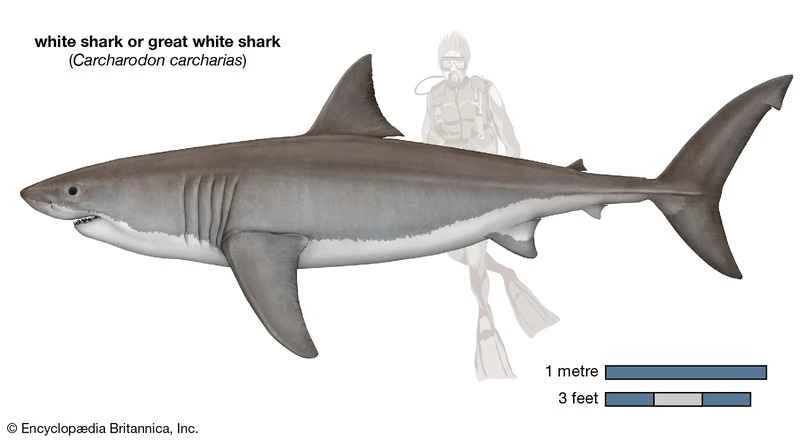
The great white shark, also known as the man-eating shark, is one of the largest predatory fish on Earth. Adult individuals average between 4 and 5.9 meters in length and weigh up to 2000 kilograms, with females typically being larger and heavier than males. The largest recorded individual reached a length of 7.2 meters and a staggering weight of 3200 kilograms.
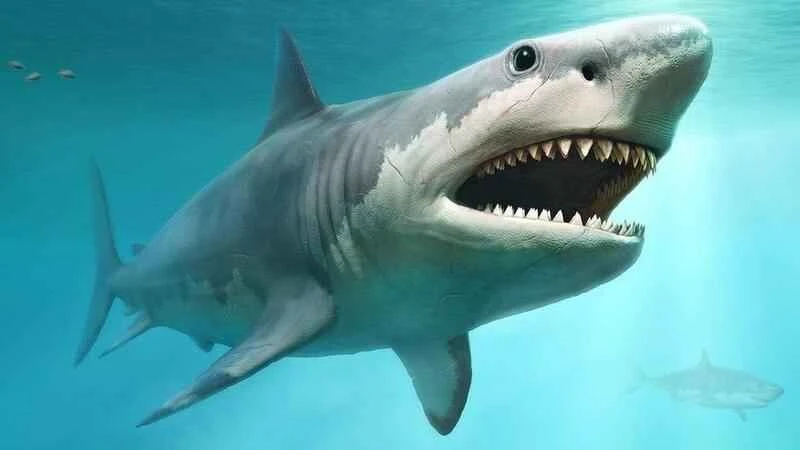
The great white shark possesses awe-inspiring triangular teeth with sharp, serrated edges. Each tooth can reach 10 centimeters in length and is a crucial weapon in its powerful hunting ability. As a top predator in the ocean, it sits at the very top of the food chain with virtually no natural enemies. It is not only the "ruler" of the deep sea but also plays an indispensable role in the marine ecosystem.
4. Pacific sleeping shark (4.4 meters)
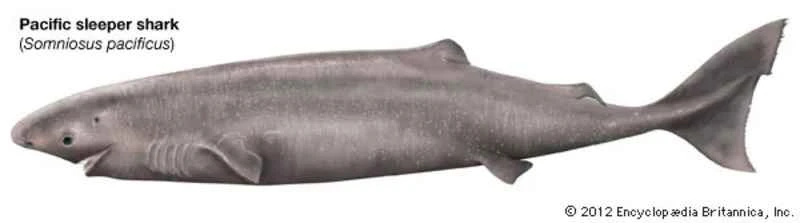
The Pacific sleeper shark is a large shark that mainly inhabits deep-sea areas, reaching depths of up to 2,000 meters. Adult individuals typically reach a length of about 4.4 meters, but some research has mentioned that some can reach as long as 7 meters.

In 1990, a giant Pacific sleeper shark was lured into and successfully captured in Tokyo Bay, Japan, and the entire process was recorded. The shark was estimated to be about 7 meters (23 feet) long, comparable in size to the famous great white shark, and possibly even larger in some cases.
5. Tiger shark (4 meters)
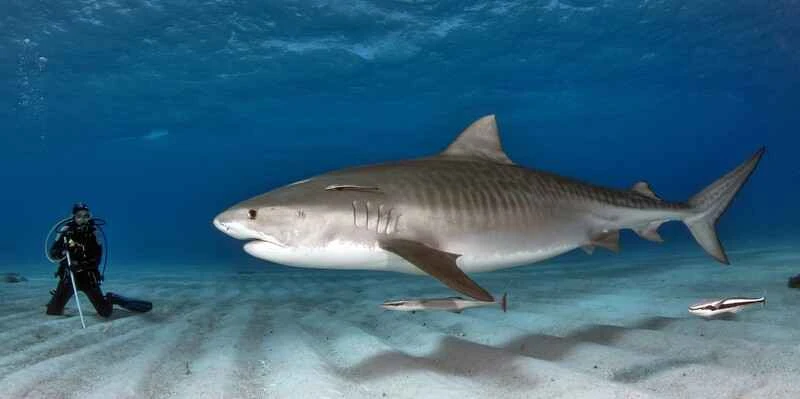
The tiger shark, scientifically known as *Symplocos cubitus*, is one of the larger members of the shark family. Adult tiger sharks typically reach lengths of about 4 meters and weigh between 400 and 635 kilograms. However, according to the World Fish Database, there have been reports of individuals reaching 6 meters in length and weighing 807 kilograms, and even sightings of tiger sharks measuring 9.2 meters in length. While their exact lifespan is not yet known, the scientific community generally believes they can live for at least 12 years.
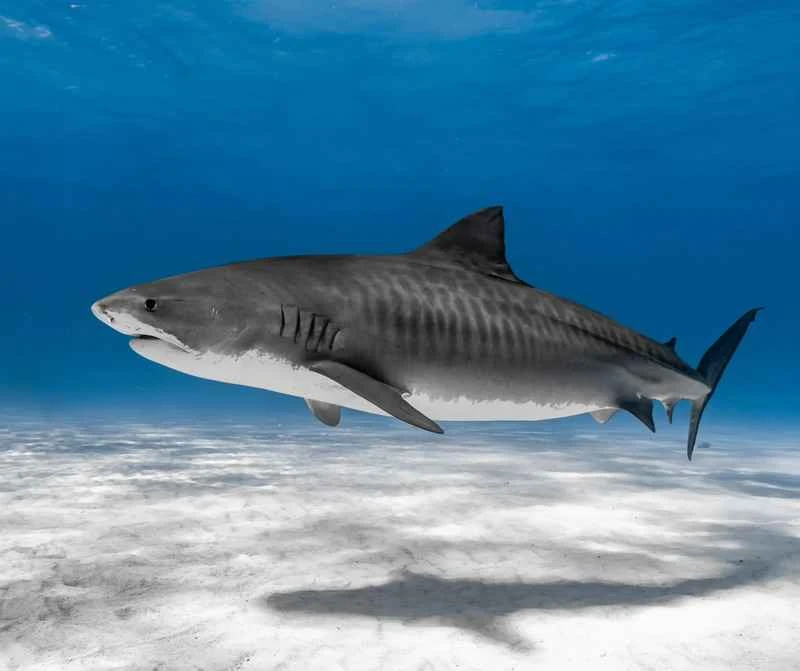
The ferret shark is known for its ferocity and extreme aggression, with numerous recorded attacks on humans. Due to its large size, high swimming speed, and unpredictable attack behavior, the ferret shark is often listed alongside the great white shark and the white shark as one of the "most dangerous shark species."
6. Rat shark (3.7 meters)
The porpoise shark, also known as the Atlantic mackerel shark, is one of the larger pelagic sharks in the family Porpoiseidae. They are robust and muscular, with a deep blue back and a pure white belly. Their snouts are pointed and conical, giving them a very streamlined appearance. Adult porpoise sharks can reach 3.7 meters in length and typically weigh between 160 and 250 kilograms.
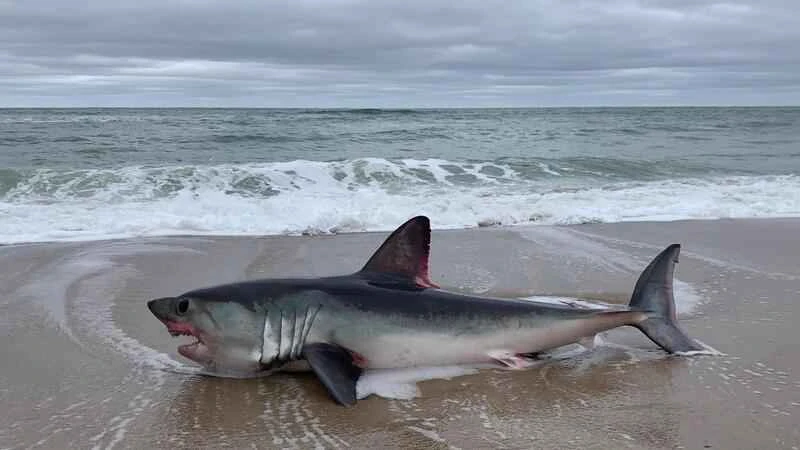
The porpoise shark is widely recognized as the "king of speed," considered one of the fastest sharks in the ocean, capable of leaping out of the water and performing dolphin-like jumps. Known for their incredible speed, they primarily feed on medium-sized ray-finned fish such as mackerel, herring, sailfin lizardfish, and knifefish.
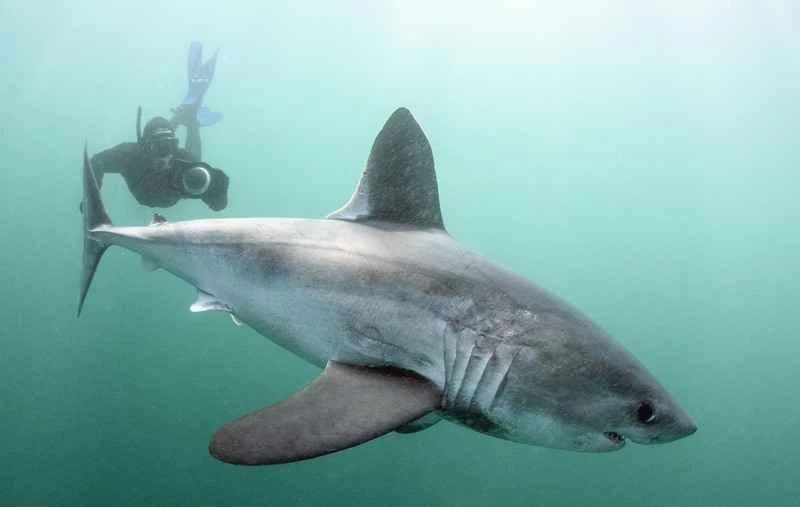
Although porpoise sharks are not as frequently recorded attacking humans as great white sharks, they have indeed attacked swimmers, divers, surfers, and even small boats without any apparent provocation, and are therefore considered one of the potentially dangerous sharks.
7. Bull shark (2.1-3.5 meters)
Bull sharks are large, imposing sharks, named for their robust physique, broad, flat snout, and fierce temperament. Their scientific name is *Caryopsis glomeratus*, and they are also known as bull sharks or bull white-eyed sharks.
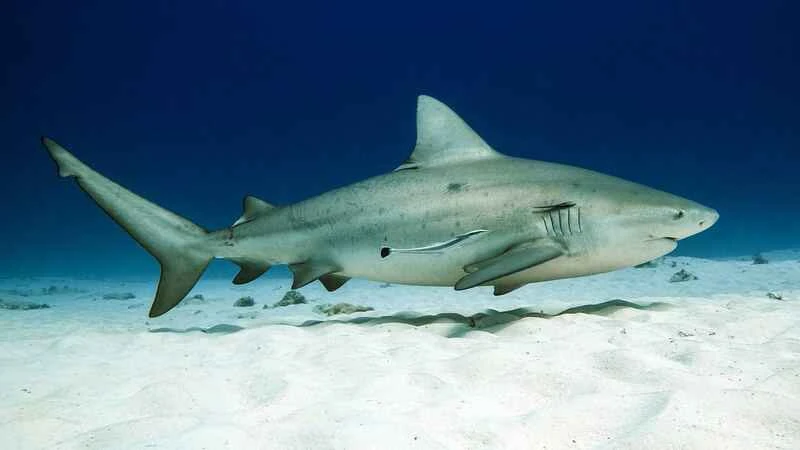
This shark has a very robust physique. Males typically reach 2.1 meters in length and weigh about 90 kilograms, while females are even larger, reaching up to 3.5 meters in length and weighing over 230 kilograms. Bull sharks have a darker upper body and a lighter lower body, with a gray back and a white belly, exhibiting typical marine camouflage.

What makes the bull shark truly unique is its remarkable adaptability, allowing it to move freely between saltwater and freshwater. It is one of the few known sharks capable of living in both saltwater and freshwater environments, with records showing it venturing into rivers thousands of kilometers inland. This unique ability has broadened the bull shark's distribution and increased opportunities for human contact with it, resulting in a remarkably high "appearance rate" in global shark attack statistics.
8. Lemon shark (2.4 to 3 meters)
The lemon shark is a medium-sized shark named for its pale yellow to yellowish-brown body color, which resembles that of a lemon. They belong to the Carcharhidae family and are one of the most common shark species in tropical and subtropical waters.

Adult lemon sharks typically range in length from 2.4 to 3 meters, with some individuals reaching over 3.6 meters. They have a robust body, a flat head, and a tail fin that is less than half the length of their overall body, giving them a strong and powerful appearance.

Lemon sharks exhibit a distinct habitat shift throughout their lives. Juveniles primarily inhabit lagoons surrounded by mangroves and flat, shallow sandy areas, where the currents are gentle and food is plentiful, making them ideal nurseries. As they age, they gradually migrate to open waters up to 400 meters deep, expanding their range to a wider extent.
9. European sharp-snouted shark (2 to 3 meters)
The European sword-nosed shark, also known as the European sword-nosed shark, is a medium to large-sized shark species. Individuals typically range in length from 2 to 3 meters, with the largest recorded specimen found in the waters off Tasmania, Australia, measuring approximately 3.9 meters. Scientists speculate that the species could theoretically reach a maximum length of 5.4 to 6 meters.
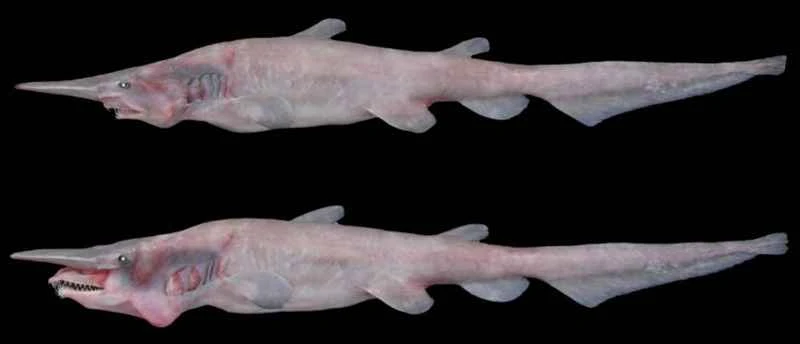
One of the most striking features of this shark is its unusual pinkish-red body, created by the translucency of its skin, which allows blood vessels to show through, resulting in this unique color. This color is extremely rare among sharks, making the European sharp-snouted shark highly recognizable.
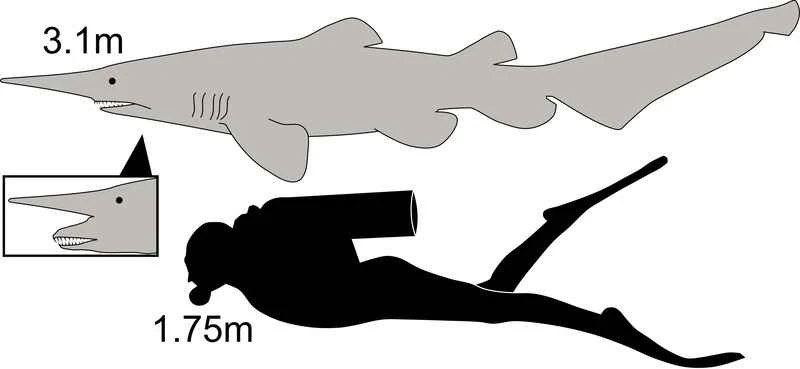
In addition, the European sharp-snout shark has another surprising physiological characteristic: its liver is unusually large, weighing up to about a quarter of its body weight. The reason for such a large liver is currently inconclusive in the scientific community. Some scholars speculate that it may be related to its deep-sea lifestyle, buoyancy regulation, or energy reserves, but further research is needed to reveal its specific function.
10. Oceanic whitetip reef shark (1.7-2 meters)
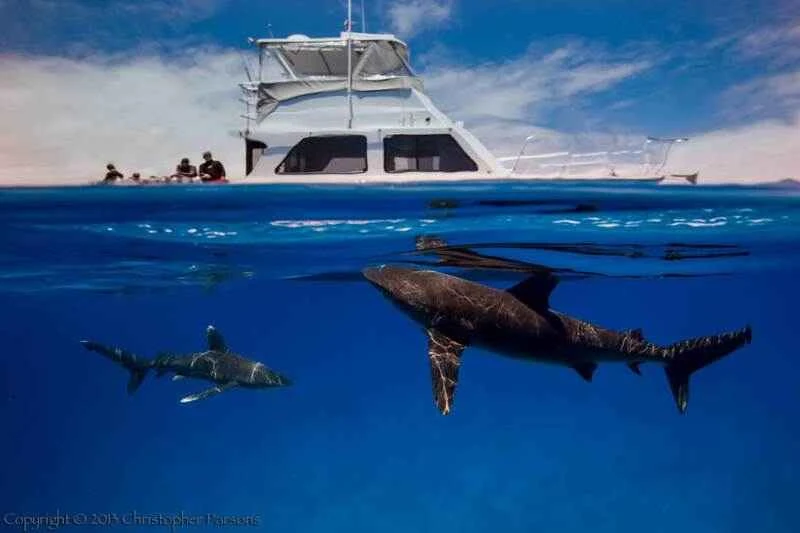
The whitetip reef shark, also known as the longfin shark or the spotted white-eyed shark, is a large shark that lives in the surface layer of tropical and warm waters. They are robust in shape, and their most distinctive feature is their pair of long, slender pectoral fins with rounded tips and white edges, which are very eye-catching, hence the name "whitetip".
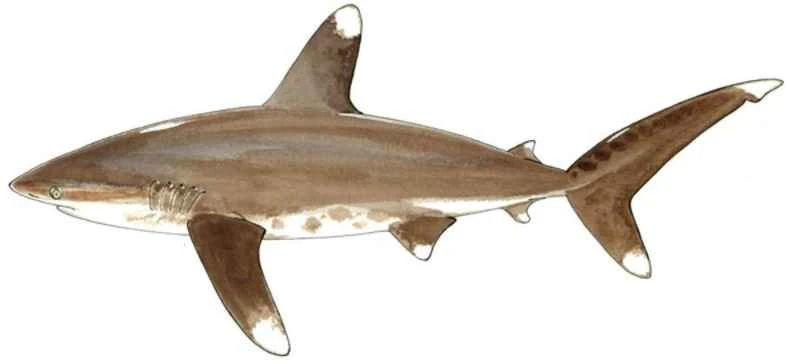
Among the many species of sharks, the pelagic whitetip reef shark is a medium to large-sized species. According to known records, the largest individuals can reach 4 meters in length and weigh up to 170 kilograms. Females are usually slightly larger than males, with sexually mature males measuring 1.7 to 1.9 meters in length, while females are between 1.8 and 2 meters.

The list of the world's ten largest sharks is primarily based on medium to large-sized sharks. The length and weight of the sharks were compiled using search engines like Baidu, and the list is ranked according to their body length. This ranking is for reference only. If you have any questions, please feel free to comment/criticize at the end.