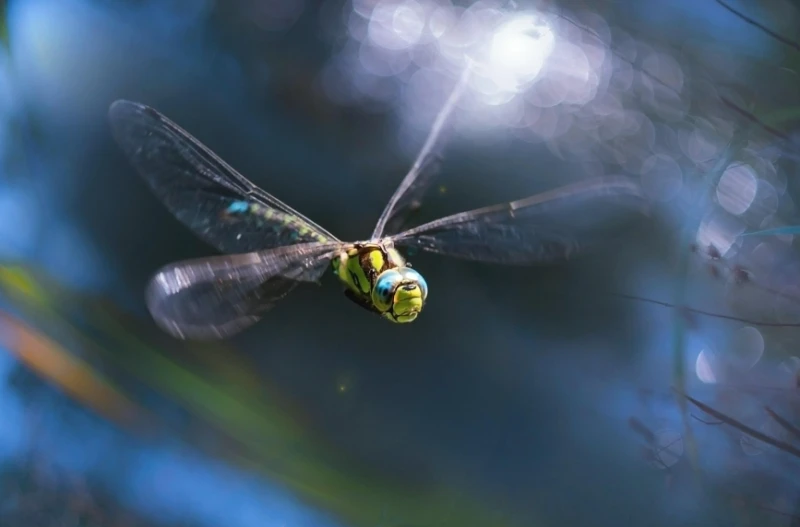
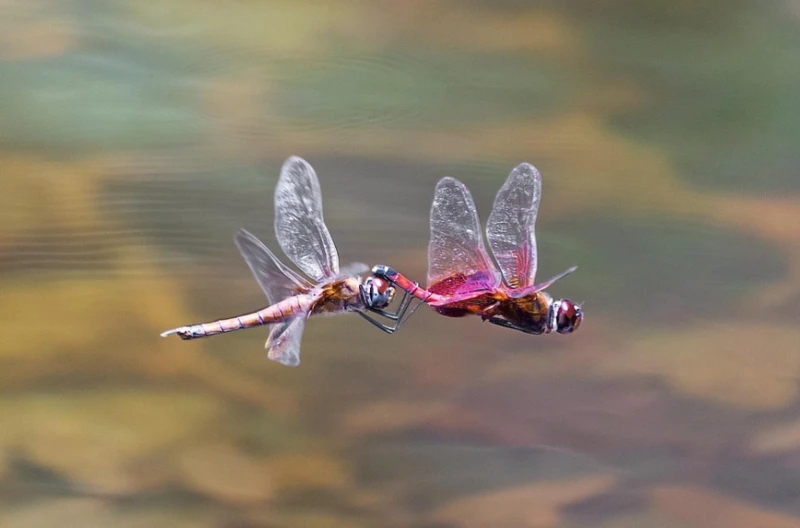
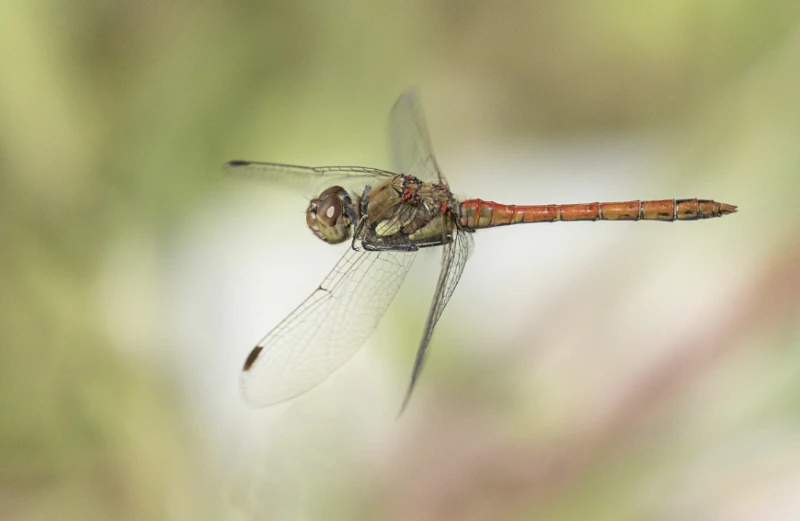
On tranquil ponds or above lush green meadows, dragonflies can often be seen gracefully hovering in the air, seemingly frozen in time. This immediately brings to mind helicopters; could their design have been inspired by dragonflies? Today, let's uncover the mystery of how dragonflies hover in mid-air.
Dragonflies fly using their wings, so let's first learn about their wings.
I. Unique wing structure
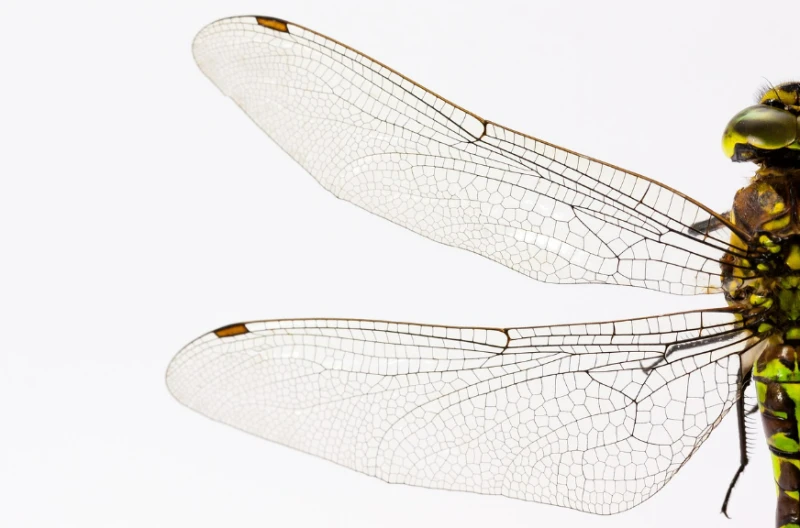
Dragonfly wings are a masterpiece of evolution, as thin as gauze yet incredibly strong. Their wings are covered with intricate, net-like veins, which act like steel beams in a building, providing strong support for the thin wings and preventing them from deforming even when flapping at high speeds. This unique structure not only gives the wings strength, but also incredible flexibility.
Unlike other insects, each of a dragonfly's wings is controlled by an independent muscle. This means it can precisely adjust the movement of each wing, changing its angle, flapping frequency, and amplitude at will. This high degree of autonomy is key to dragonflies' ability to hover and perform various complex flight maneuvers.
II. Highly efficient flight muscles
Dragonflies' ability to hover relies on their well-developed flight muscles. These muscles are the core of their flight power; they can contract and relax rapidly, driving the flapping of their wings at an extremely high frequency. Each flap generates powerful force, providing the dragonfly with lift.
What's even more amazing is the high degree of coordination between the flight muscles of a dragonfly. Different muscles can work together precisely according to the needs of flight. The coordination of muscles is especially crucial when hovering, as they must precisely control the movement of the wings to maintain stable lift and ensure that the dragonfly remains perfectly still in the air, like a ballet dancer gracefully twirling through the air, with every movement meticulously choreographed.
III. Special Flight Techniques
When a dragonfly hovers, it rapidly flaps its wings, creating a high-pressure area beneath them. This high-pressure area acts like an invisible hand, steadily supporting the dragonfly in the air, with the resulting lift perfectly balanced by its own weight. To maintain this balance, the dragonfly must constantly fine-tune the magnitude and direction of the lift.
Dragonflies achieve precise control of lift by subtly altering the angle and frequency of their wing flapping. Even the smallest adjustments allow them to remain stable in the air. In addition, dragonflies possess a natural "flight navigation system." Their antennae and other sensory organs can detect changes in the surrounding airflow in real time, much like sensors on an airplane, providing dragonflies with crucial flight information. Once they detect disturbances in the airflow, dragonflies can react quickly, adjusting their flight attitude and maintaining a hovering state.
The mystery of dragonflies hovering in the air is a microcosm of nature's countless ingenious designs. It allows us to witness the amazing power of biological evolution and the infinite wisdom hidden in nature. The next time you see a dragonfly gracefully hovering in the air, take a moment to appreciate this small miracle of flight and feel the wonder and beauty of nature.