Did you know that one of the most amazing light sources on Earth doesn't come from the sun or light bulbs, but from living organisms themselves ? This phenomenon, known as bioluminescence , is one of nature's most astonishing wonders. Many animals, fungi, bacteria, and even plants emit light for defense, courtship, or predation.
What is bioluminescence?
Bioluminescence is a phenomenon in which a chemical reaction produces light . Its mechanism involves a molecule called luciferin, which releases photons (light energy) when it reacts with oxygen . To initiate this process, an enzyme called luciferase is also needed, which catalyzes the reaction.
Over 80% of bioluminescent organisms live in the ocean . In the deep ocean or dark regions, bioluminescence offers numerous benefits to these organisms, such as:
Defend against predators;
Disguise yourself as other creatures to confuse the enemy;
Luring prey closer;
Sending a courtship signal;
Disguise or hide in the backlight.
Sometimes, simply the movement of water or its contact with an object can trigger a luminous reaction, forming a blue or green band of light.
Examples of bioluminescence
Bioluminescent animals on land:
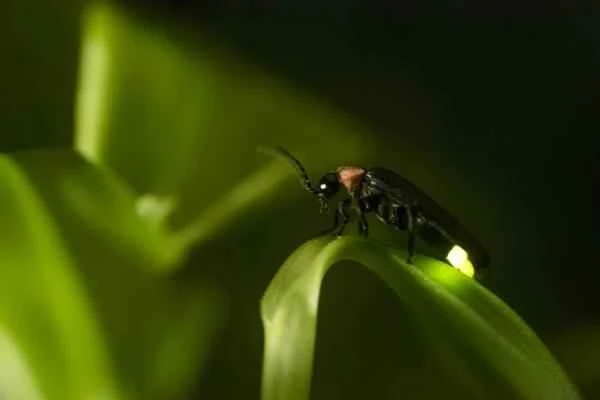
Fireflies (Lampyridae family) : They attract mates on summer nights by using their glowing abdomens;
New Zealand luminous mosquito larvae (Arachnocampa luminosa) : Commonly found in caves;
Millipedes of the genus Motyxia : use bioluminescence as a warning signal;
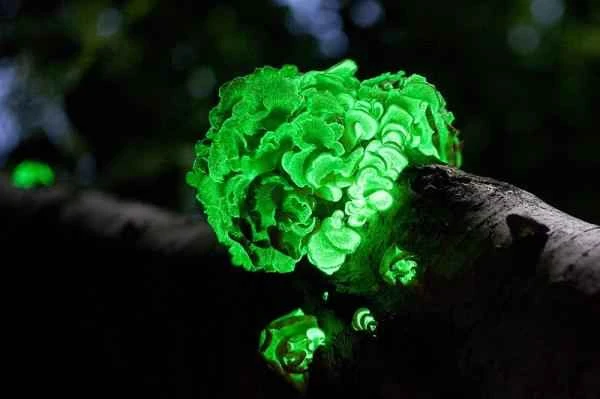
Mycena lucentipes mushroom : a small, bioluminescent fungus that grows in dead wood in the rainforests of Brazil and Puerto Rico;
Other plants and fungi that can "glow at night".
Bioluminescent organisms in the ocean:
Ostracoda : A crustacean the size of a sesame seed that uses bioluminescence for courtship;
Dinoflagellates (such as Pyrodinium bahamense) : flash whenever the water is disturbed;
Deep-sea "green bomb bug" : It releases green light sacs as a form of interference when threatened;
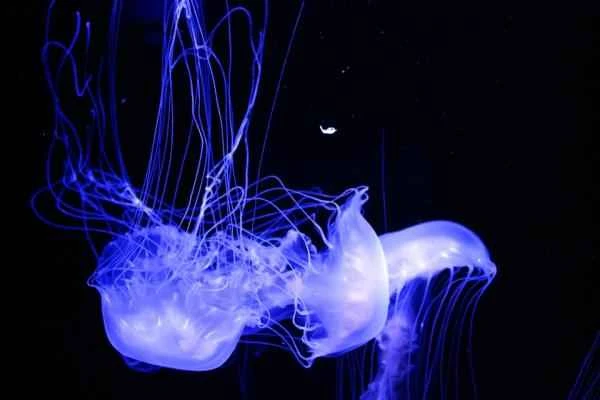
Jellyfish (such as Aequorea victoria) and comb jellies (such as Mnemiopsis leidyi) : utilize photoproteins to emit light;
Firefly squid (Watasenia scintillans) and vampire squid (Vampyroteuthis infernalis) : attract prey with light;
Bioluminescent shrimp (such as Sergestes similis) : can adjust the intensity of their light emission according to the brightness of the surrounding water.
Deep-sea bioluminescent fish (such as the stingray of the Stomiidae family) : emit a distinctive red glow;
Radiolaria : live in colonies on marine siliceous skeletons;
Bioluminescent bacteria : can form a symbiotic relationship with fish to act as "bait".
Where can you observe bioluminescence?
When large numbers of bioluminescent organisms move simultaneously, the seawater appears to be illuminated by starlight. This spectacle can be seen in many parts of the world.
Holbox, Mexico : The beach along the Yucatan Peninsula turns blue at night;
Punta Renitas Beach, Costa Rica : shimmering blue light after sunset;
Vieques, Puerto Rico ;
Koh Rong Island, Cambodia ;
Toyama Bay, Toyama Prefecture, Japan ;
Waitomo Caves, New Zealand .