In parts of Asia and Oceania, the murky waters, a mixture of seawater and freshwater from estuaries, harbor the world's largest reptile—the saltwater crocodile. This reptile, once numbering in the thousands in some areas, has suffered a drastic decline in numbers due to habitat degradation and human hunting, even facing extinction in some places. Fortunately, in other regions, its population has remained stable and it is not endangered overall.
If you would like to learn more about the detailed characteristics of saltwater crocodiles and their habitats, please continue reading this in-depth analysis.
Key characteristics of saltwater crocodiles
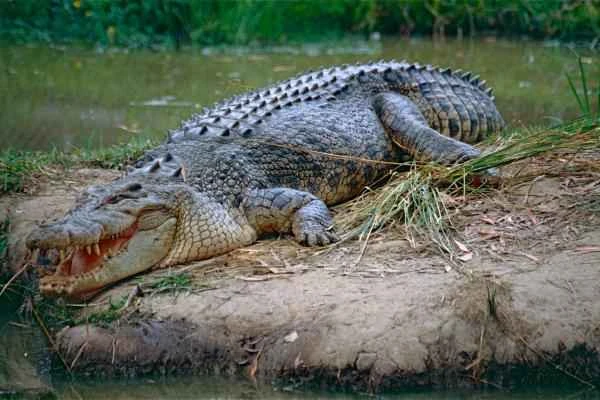
The saltwater crocodile (scientific name: *Crocodylus porosus *), also known as the marine crocodile, is the largest species of crocodile. Its notable characteristics include:
Significant differences in body size between sexes : males are typically 3 to 5 meters long, with some even exceeding 6 meters, and are significantly larger than females, demonstrating obvious sexual dimorphism.
Varying body colors : Adult saltwater crocodiles are mostly olive green to brown, with some individuals being darker. The belly is cream-colored. Juvenile crocodiles are lighter in color, with black stripes and spots, and gradually change color as they age.
A wide mouth and strong teeth : The mouth is wide and contains up to 66 teeth, the longest of which can reach 13 centimeters.
Powerful bite force : Saltwater crocodiles possess the strongest bite force in the animal kingdom, enabling them to easily capture and tear apart large prey.
Unique scale structure : The body is covered with oval scales and small bony plates, sometimes with some areas lacking bony plates.
Amazing swimming speed : With the powerful propulsion of its tail, it can swim at speeds of up to 43 km/h, and a single tail swing can propel it 4 meters.
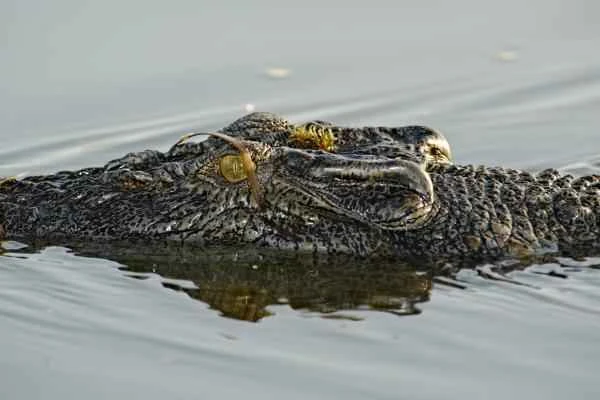
Excellent underwater vision : The eyes are covered by a transparent nictitating membrane, allowing them to remain open underwater.
Saltwater crocodile habitat distribution
Saltwater crocodiles primarily inhabit the warm waters of the eastern Indian Ocean and the western Pacific Ocean, including vast areas of India, Papua New Guinea, and Australia.
Historically, saltwater crocodiles were also distributed in:
Cambodia
Thailand
Seychelles
Vietnam (less than 100 remain)
Saltwater crocodiles can tolerate a wide range of salinity, from 0% to 35%, and there are even records of them adapting to extreme environments with salinity as high as 70%. This allows them to survive freely in diverse environments such as swamps and estuaries. Generally, saltwater crocodiles do not venture more than 150 kilometers inland, as terrain barriers limit their further dispersal.
Saltwater crocodile diet
Saltwater crocodiles have a very wide diet, including a variety of prey ranging from crustaceans, fish, reptiles, and birds to mammals. Typical prey include:
mangrove crabs
sea turtle
Big Bat
Stray dogs (Dinger dogs)
pig
buffalo
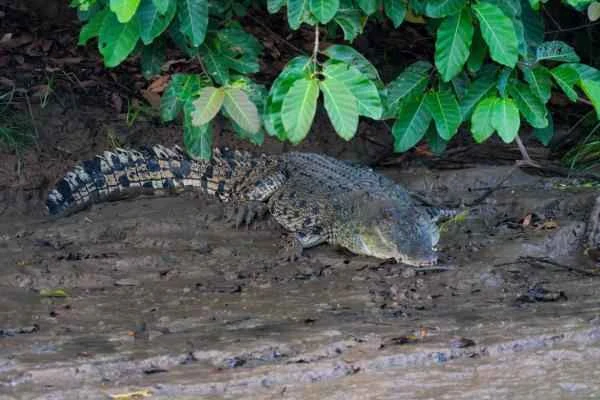
The larger the individual, the larger the prey, and they may even prey on horses or humans. Their hunting methods include both active pursuit and ambushes, waiting for prey to approach the water before launching a sudden attack. Saltwater crocodiles' skin color provides effective camouflage, making them difficult for prey to spot. They can dive for extended periods, waiting for prey to approach; small prey can be swallowed whole, while larger prey are dragged into the water and drowned with their powerful bites. Due to their limited stomach capacity, excessively large prey are usually hidden in mangroves and slowly consumed.
Saltwater crocodile breeding and raising young
The breeding season is from November to May of the following year, with peak activity in January and February. Males mark their territory and attack intruders; larger males are more likely to mate. Both males and females reach sexual maturity relatively late, with females taking 10 to 12 years and males about 16 years.
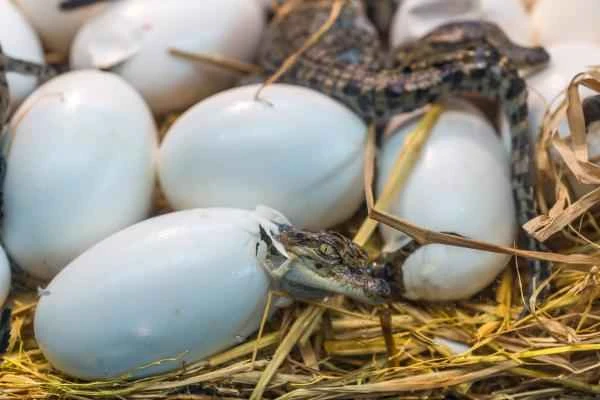
Female crocodiles lay 40 to 60 eggs at a time, building their nests on high embankments made of mud and plant debris. The nests are designed to prevent flooding and utilize the heat generated by the decaying matter to promote incubation, which lasts about 90 days. The mother crocodile guards the nest to protect it from predators. The ambient temperature during incubation determines the sex of the embryos: around 31°C produces males, while other temperatures produce females.
When baby crocodiles hatch, they make sounds to attract their mothers. The mothers then use their mouths to carry them to safe waters and care for and protect them for several months.
Behavioral characteristics of saltwater crocodiles
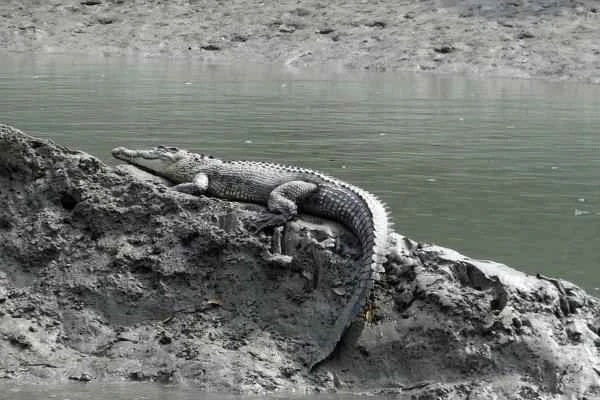
Saltwater crocodiles are mostly nocturnal, but they will also hunt during the day if they encounter food. As cold-blooded animals, they need to regulate their body temperature by basking in the sun. When their body temperature is too low, they climb ashore to bask in the sun; when it is too high, they dive into the water to cool down, only exposing their nostrils and eyes to breathe. Saltwater crocodiles use roars and various sounds to communicate territory and attract mates, and young crocodiles also vocalize to maintain the group.
If you'd like to learn more about saltwater crocodiles and other fascinating wildlife, please visit our "Wildlife" section on our website.
References
1. Estuarine Crocodile. Australian Museum. Access URL: https://australian.museum/learn/animals/reptiles/estuarine-crocodile/
References
Wayman, E. 2002. “Crocodylus porosus” (online), Animal Diversity Website. Accessed April 4, 2022, URL: https://animaldiversity.org/accounts/Crocodylus_porosus/
Crocodylus porosus – Saltwater crocodile, estuarine crocodile. Species Profile and Threats Database. Australian Government. Department of Agriculture, Water and Environment. Access URL: http://www.environment.gov.au/cgi-bin/sprat/public/publicspecies.pl?taxon_id=1774