In the animal kingdom, our conventional understanding of animals is often challenged by some unusual exceptions. A blue tongue is a very special and rare physical characteristic, and many animals gain a survival advantage through this special adaptation.
Do you know what color a polar bear's tongue is? Do animals with blue or purple tongues really exist? This article will introduce five animals with blue tongues, explaining the function of their blue tongues and the scientific principles behind them.

Why do some animals have blue tongues?
Animal body color often serves certain adaptive functions. A blue tongue may have the following functions:
UV protection : A blue or dark tongue can help protect against harmful UV rays from the sun.
Camouflage and deception : Using color distribution to create camouflage patterns to interfere with the vision of predators.
Warning signals : Potential threats are indicated through "intimidation" or intraspecific identification.
Genetic mutation : A partially blue tongue is a manifestation of a genetic mutation.
The blue tongue color may be caused by special regulation of arterial blood flow, deposition of eurocyanin, or concentration of melanin.
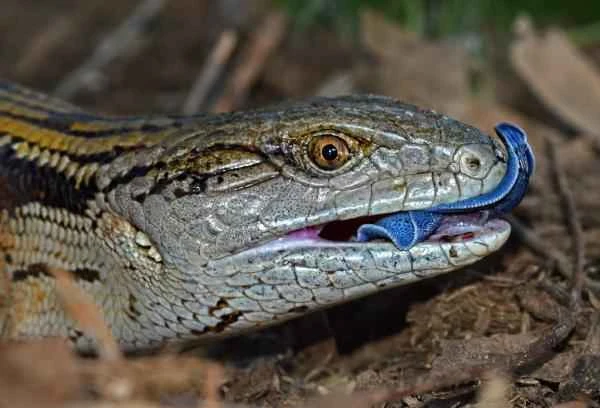
1. Blue-tongued lizard (Tiliqua scincoides)
Blue-tongued lizards are known for their vibrant blue tongues, which are darker at the tail and lighter at the tip. When threatened, they open their tongues wide, sometimes even extending them to the sides, amplifying the blue area to intimidate predators. Their blue tongues are even close to ultraviolet blue, a color that is even more noticeable to predators.
2. Shar Pei
The Shar Pei originated in China, and its blue or black tongue is considered an auspicious symbol that can ward off evil spirits. Its tongue, gums, and the inside of its mouth are all blue-black. The blue tongue comes from the fact that the tongue has two layers of blood vessels; the arterial layer, containing deoxygenated blood, makes the tongue appear dark. This is a normal genetic trait and does not affect its health.
Besides the Shar Pei, another breed with a blue tongue is the Chow Chow, which is also loved by dog enthusiasts for its tongue color.

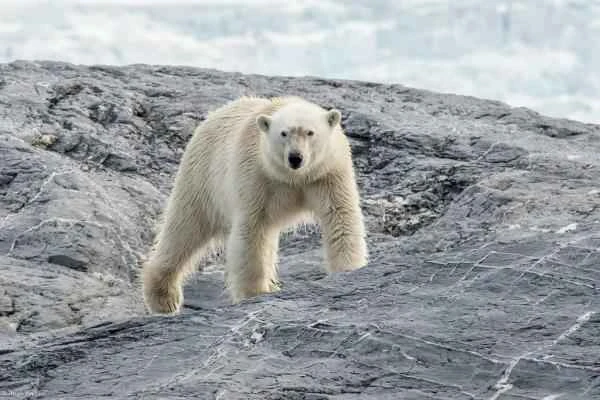
3. Polar bear (Ursus maritimus)
Polar bears have a unique tongue color; they are pink at birth and gradually turn bluish-black as they age. Their black skin helps absorb sunlight and provides warmth, while the bluish-black tongue also reduces the damage to their mouths from the intense Arctic ultraviolet radiation. Tongue color varies between individuals, ranging from pink with blue spots to deep black.
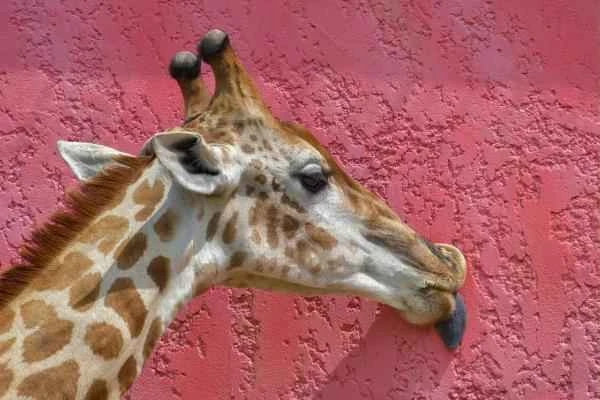
4. Giraffe (Giraffa spp.)
Giraffes' tongues are blue, purple, or even almost black, mainly because they are rich in melanin. Giraffes need to use their tongues to eat leaves for long periods of time every day, and the blue-black pigment effectively prevents their tongues from being damaged by the sun, protecting their lives on the African savanna.
5. Okapia johnstoni
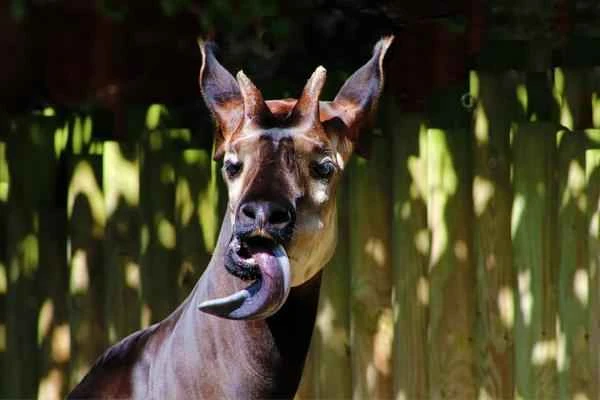
Okapis are close relatives of giraffes, possessing shorter necks and striped legs, and also have a bluish-black tongue. This 30-centimeter-long tongue is not only used for picking leaves, but also serves as a "tool" for cleaning their eyes and ears. The dark tongue also provides sun protection.
Bluetongue animals are not only a wonder of nature, but also a unique adaptive strategy they have developed in the face of fierce competition for survival. Understanding their habits and physiological characteristics will help us better protect these precious species.
If you would like to learn more about bluetongue animals and other wildlife, please visit our "Wildlife" section.
References
World Organisation for Animal Health (OIE) Bluetongue Disease. Accessible at: https://www.oie.int/en/disease/bluetongue/
Badiane, A., Carazo, P., Price-Rees, SJ, Ferrando-Bernal, M., & Whiting, MJ (2018). Why bluetongue? Lizards may be directionally displaying ultraviolet light. Behavioral Ecology and Sociobiology, 72(7), 1-11.
Bechshoft, T. (2021). Why are polar bears black? (See: https://polarbearsinternational.org/news-media/articles/why-polar-bears-have-black-skin)