The monkey ranks ninth in the traditional Chinese zodiac, corresponding to the earthly branch Shen . There are currently 277 known species of monkeys. Molecular evidence suggests that monkeys originated at the end of the Cretaceous period, but this record has not been fully confirmed. The oldest primate that can be identified, or the earliest monkey in the world, is believed to be *Altiatlasius*, based on ten isolated cheek teeth and a fragment of juvenile dental bone from the Paleogene of Morocco. *Altiatlasius* has been identified as belonging to the group *Eopsidae*.
Atlas monkey fossils
Monkeys have been mentioned in ancient Chinese literature and legends, such as in the *Classic of Mountains and Seas* and the *Huainanzi*. In Western culture, descriptions of monkeys also appear in ancient Greek and Roman texts. With the development of modern science, monkeys have been formally named and classified as an animal category. Modern biology classifies monkeys into the order Primates, which includes many different species, such as macaques, orangutans, and gibbons.
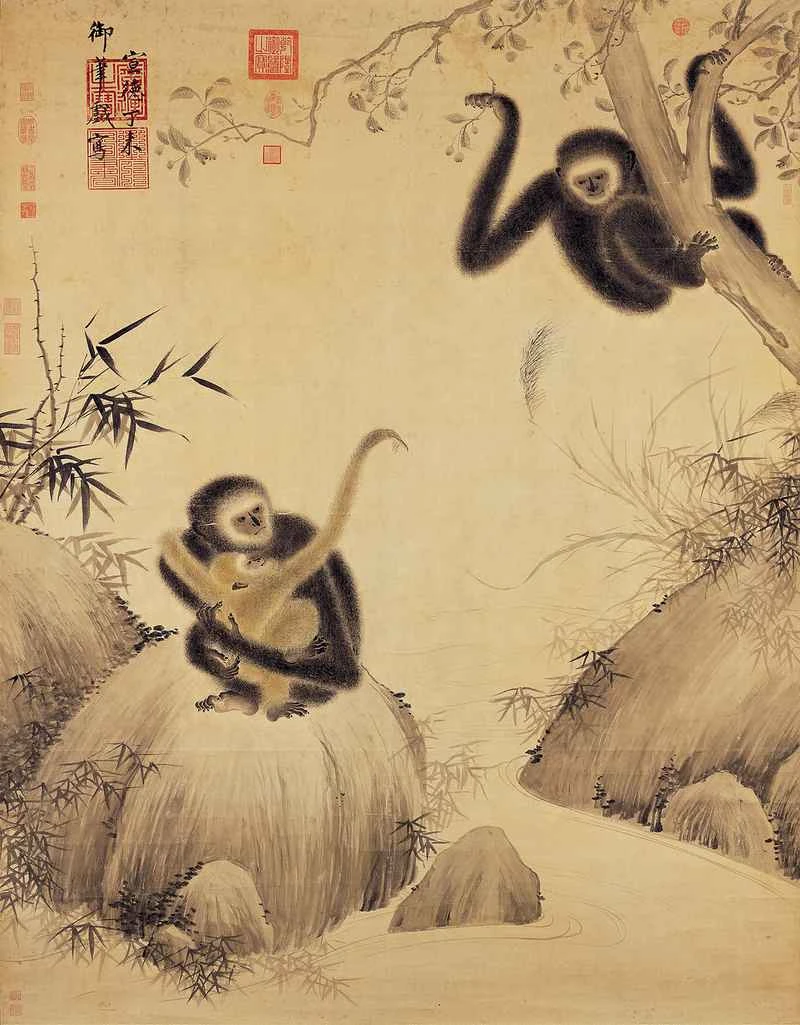
Gibbons at Play , painted by the Xuande Emperor in 1427.
So, which monkeys are known for their good looks? Which monkey is the most beautiful? Today, we'll be listing the top ten most beautiful monkeys in the world. Let's take a look!
1. Deutschland's long-tailed macaque
The white-rumped macaque is endemic to the rivers and swamp forests of central Africa. Also known as the white-rumped macaque, red-fronted macaque, and white-bearded macaque, it is the largest species in the macaque family and one of the most widely distributed arboreal primates in Africa.
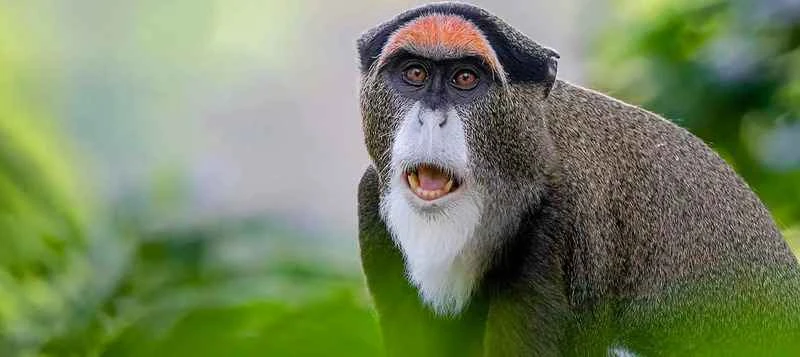
Besides its size, it differs from other monkeys in its orange crown and white whiskers. Its fur is gray with spots, its head is black, and it has an orange band with a white border on its forehead; its upper lip and chin are covered with blue and white hair; a narrow white band runs across its thighs, and its tail and limbs are darker in color; it has a tuft of white hair on its chin, making it look like an old scholar, so it is affectionately known as the "scholar monkey".
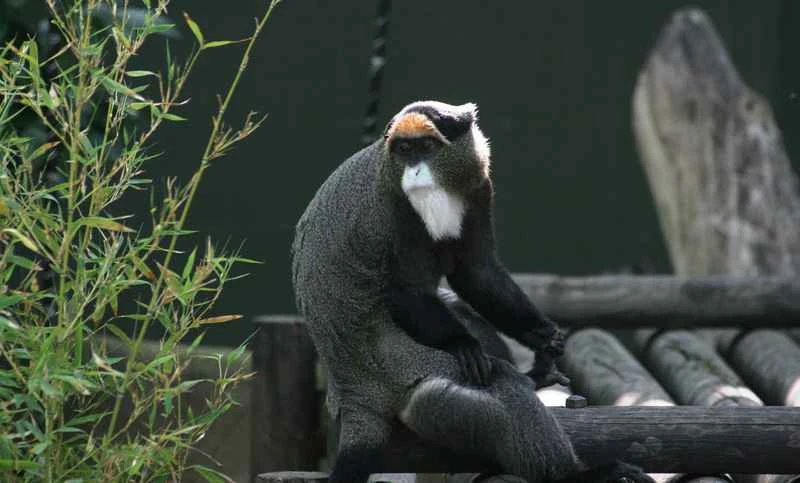
Due to their small size, Deutschland's macaques mainly live in trees and only occasionally come down to the ground to find food. They have excellent climbing abilities, making them difficult to catch even for the most agile animals.
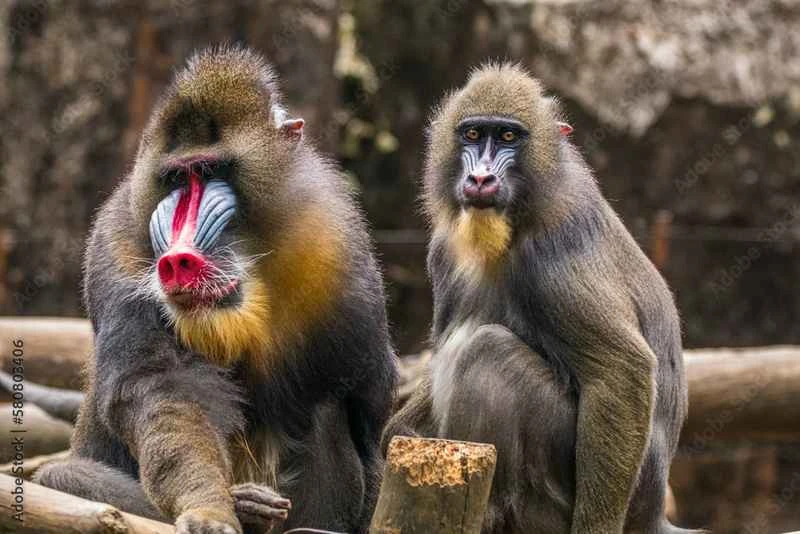
2. Mandrill
The mandrill, also known as the painted-face baboon , is the world's largest monkey , primarily inhabiting the tropical rainforests of southern Cameroon, Gabon , Equatorial Guinea , and the Congo . They have large, long heads and olive-colored fur. Males have more vibrant facial markings, which, as they mature , resemble the distinctive patterns of Peking Opera masks. Their rump, rich in blood vessels, is purple, and these colors become even more pronounced when they are agitated, making them quite striking.
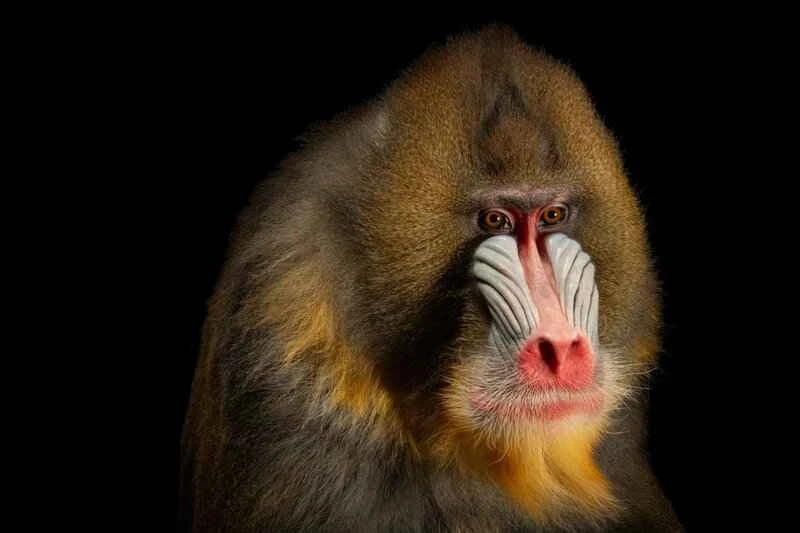
Mandrills live in a matriarchal society, with each group consisting mainly of a few female mandrills. A group typically has only one adult male mandrill, while most other adult males live solitary lives. Their natural predator is the leopard , but adult mandrills are fierce, and leopards dare not easily provoke them.
3. Golden monkey
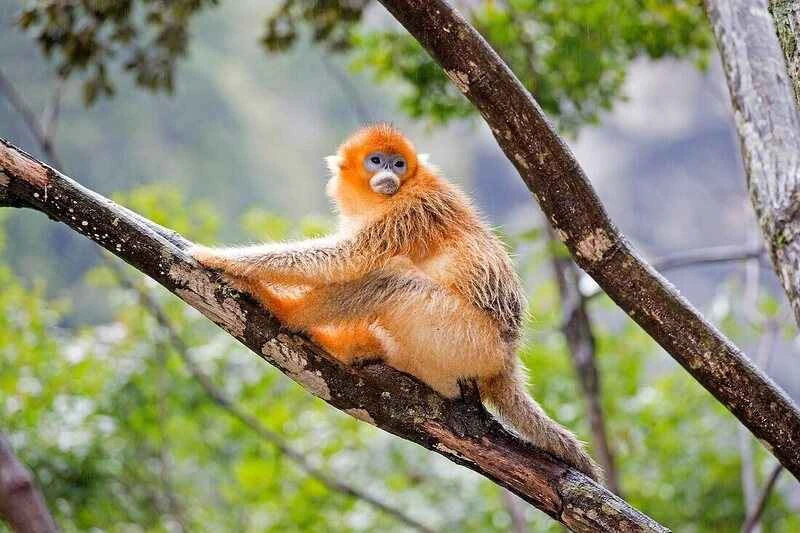
The golden snub-nosed monkey ( scientific name : *Rhinopithecus *) is a species of snub-nosed monkey. There are five species, three of which ( Yunnan snub-nosed monkey , Guizhou snub-nosed monkey , and Sichuan snub-nosed monkey ) are found in the southwestern mountainous regions of China, while the Vietnamese snub-nosed monkey is found in northern Vietnam. The Burmese snub-nosed monkey is found in northern Myanmar. All species are rare and endangered.
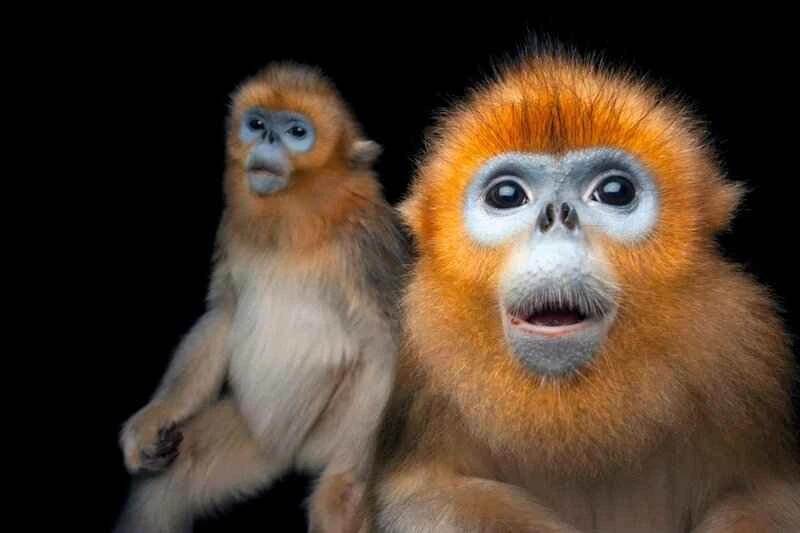
Golden snub-nosed monkeys have soft fur and nostrils that are almost parallel to their faces, commonly known as "upturned noses." This characteristic is an adaptation to the hypoxic environment of high altitudes. The degeneration of the nasal bridge helps reduce breathing resistance in thin air . This is an evolutionary adaptation to the hypoxia of high altitudes. They are covered with yellow silky fur that can be more than 30 centimeters long. Adult golden snub-nosed monkeys look magnificent and beautiful, while baby golden snub-nosed monkeys are very cute and adorable.
4. White-rumped langur
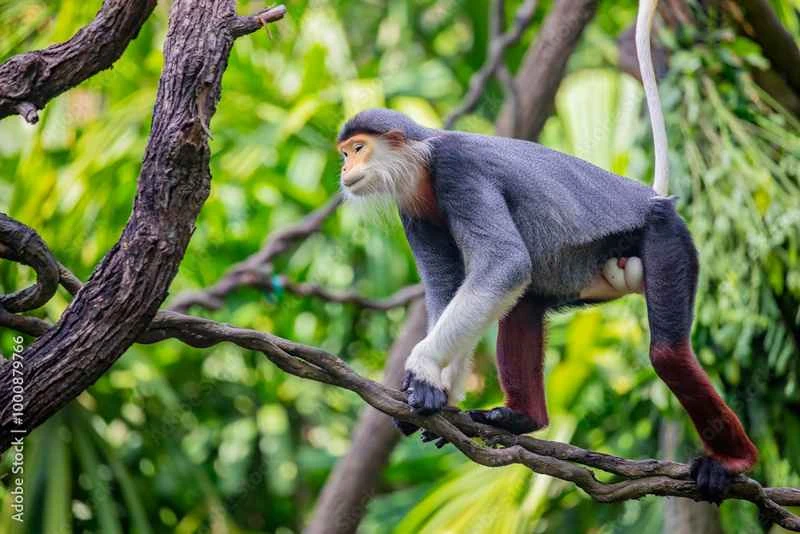
The white-rumped langur is a monkey with an exceptionally vibrant array of colors , hence its other names: yellow-faced langur , hairy-rumped langur , and rainbow langur . It gets its name from the white triangular area at its base and is a remarkably beautiful monkey. Its appearance resembles a Buddha with a grey upper body, black lower body , chestnut-red knees and ankles, white forearms, black hands and feet, a golden face, pinkish-blue eyelids, and a white tail , making it one of the most colorful primates.
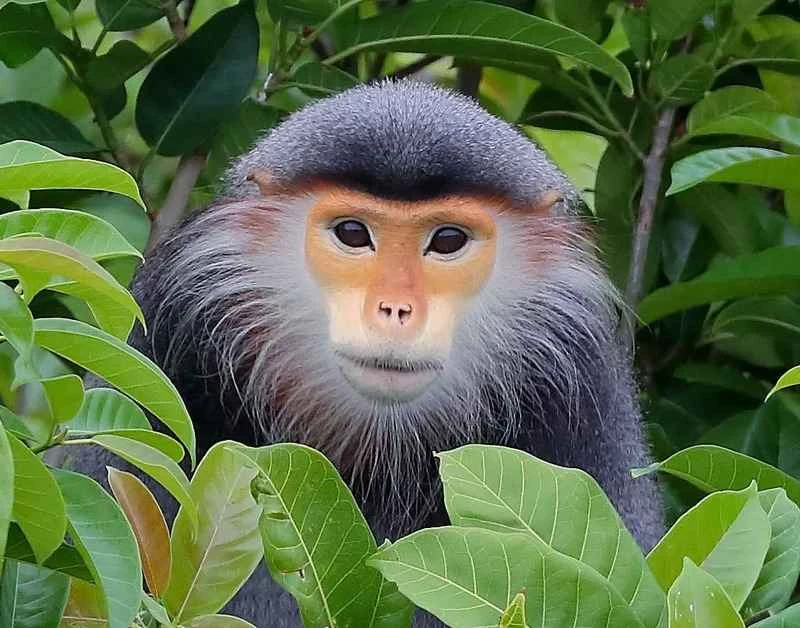
It is distributed in Vietnam , Cambodia , Laos , and southwestern China in Southeast Asia . It can be found from plains to deciduous forests and rainforests at altitudes of up to 2,000 meters . It is a Class I protected animal in China.
5. Emperor Tamarinus
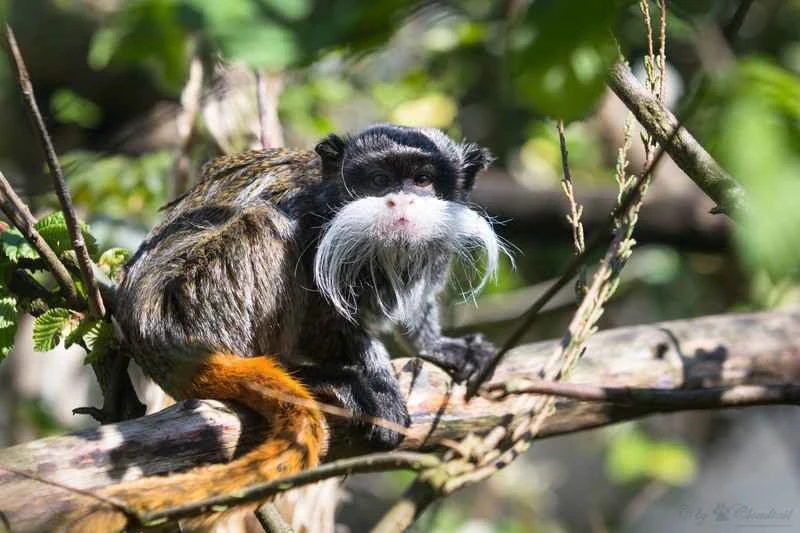
The emperor tamarin , also known as the emperor marmoset , is a species of marmoset . It is called "emperor" because its beard resembles that of German Emperor Wilhelm II. This name was originally a joke but later became its official scientific name .
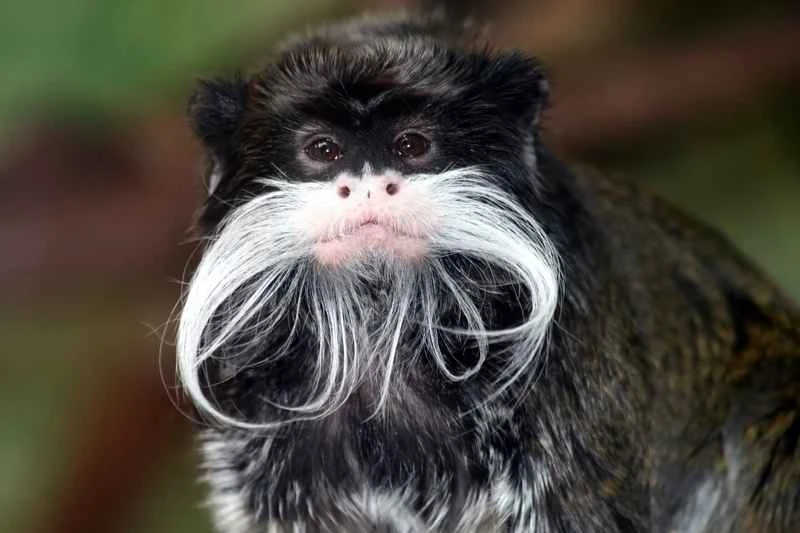
The emperor marmoset inhabits the southwestern Amazon basin, eastern Peru , northern Bolivia, and the Acre and Amazon regions of Brazil . Its most distinctive feature is its two long, white whiskers, giving it a refined and endearing appearance. Due to habitat shrinkage, degradation, and overhunting by humans in recent years, the emperor marmoset's endangered status has been steadily increasing.
6. Wiesel's crowned lemur
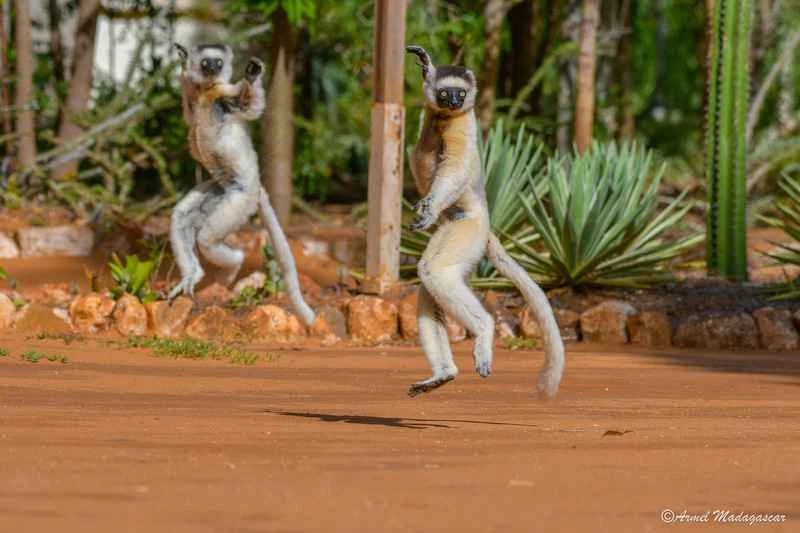
Widman's crowned lemur inhabits the rainforests, western dry deciduous forests, and dry coniferous forests of Madagascar. With its thick, soft white fur, it looks like a ball of cotton from a distance, making it quite endearing and earning it the local nickname "white elf."
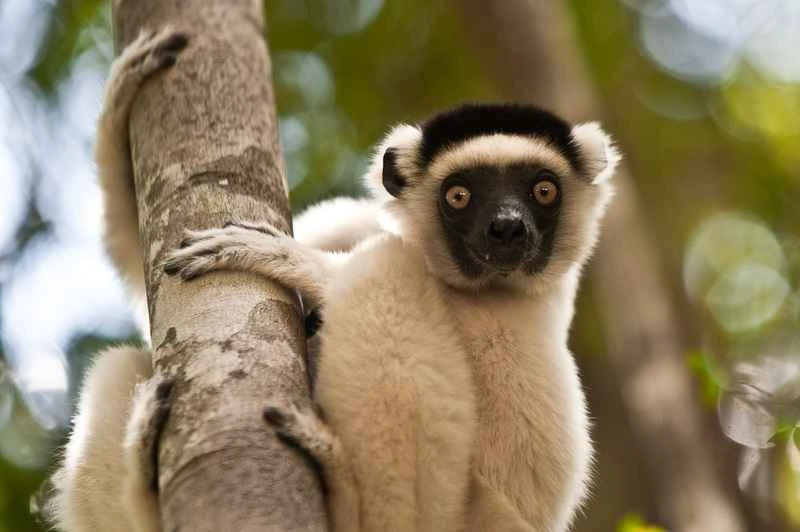
Aside from their white fur, Widman's crowned lemurs have a striking blackish-brown head, face, and palms, making them easily identifiable. Some individuals have dark brown areas on their back, chest, upper arms, thighs, or tail, adding to their allure. Their long tails are used for balance when leaping between trees.
7. Golden-headed langur
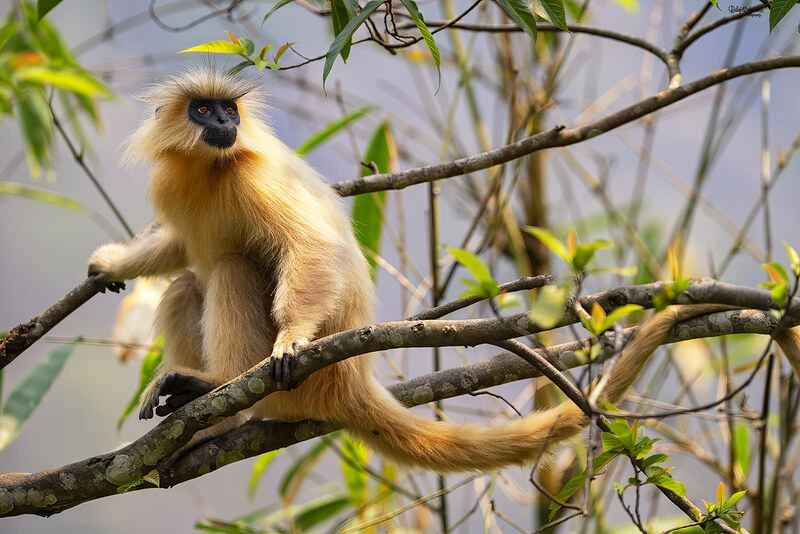
The golden-headed langur is one of India's most endangered primates , first known to the scientific community in the 1950s. Golden langurs have abundant golden to creamy-white fur, a black face, and a long tail reaching up to 50 centimeters . Notably, while adults are black, their offspring are entirely golden, even more beautiful than golden monkeys. However, by the time the offspring reach two years old, the golden fur gradually fades, turning black and white, hence their nickname "chameleon."
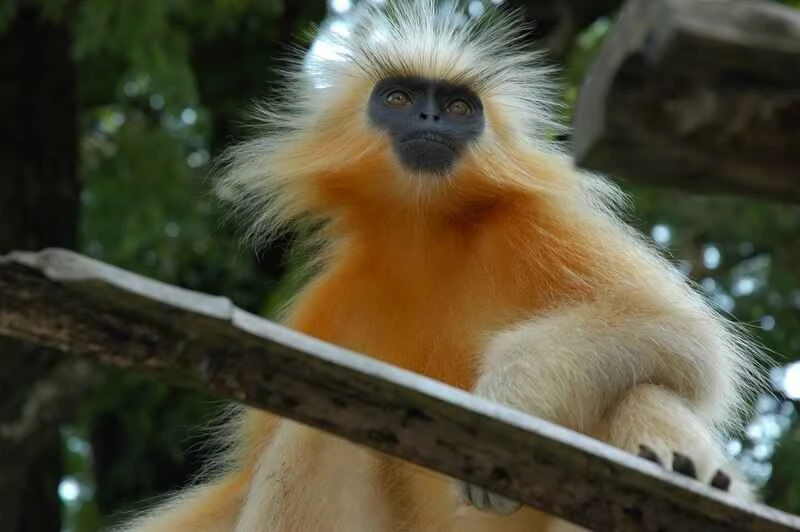
Their distribution is very small, ranging from the Yarlung Tsangpo River in the south to the Manas River in the east , the Sangkoshi River in the west , and the Black Mountain in Bhutan in the north. They are endangered, with only 1,064 individuals in 2001, and their numbers are estimated to be declining due to a lack of offspring.
8. White-bellied long-tailed macaque
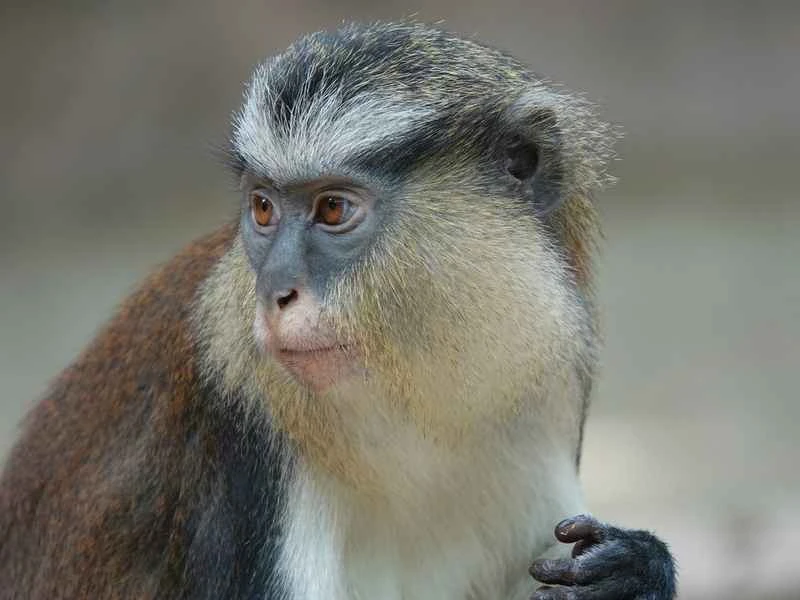
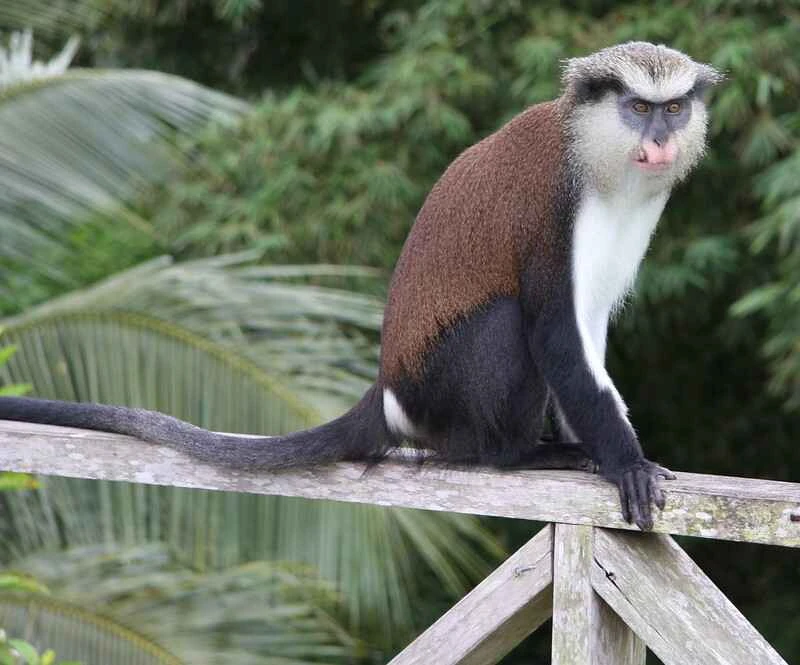
White-fronted macaques are found in the forests between Ghana and Cameroon in West Africa. Among monkeys, they are considered quite attractive. They are medium-sized, with predominantly dark black or black fur, a white throat and belly, and a chestnut-colored back and lower legs, creating a striking and beautiful color contrast . Furthermore, white-fronted macaques have a beard, consisting of a prominent sideburn and a large, colored mustache, making them appear like old men from a distance.
9. Diana monkey
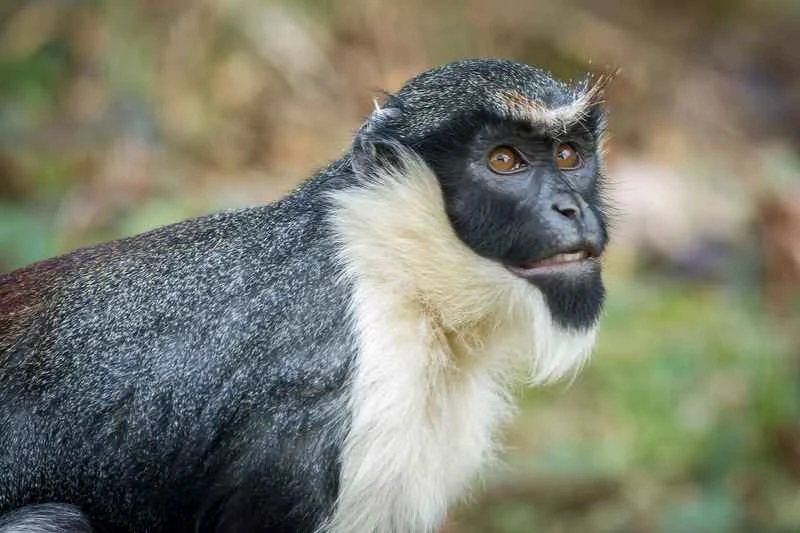
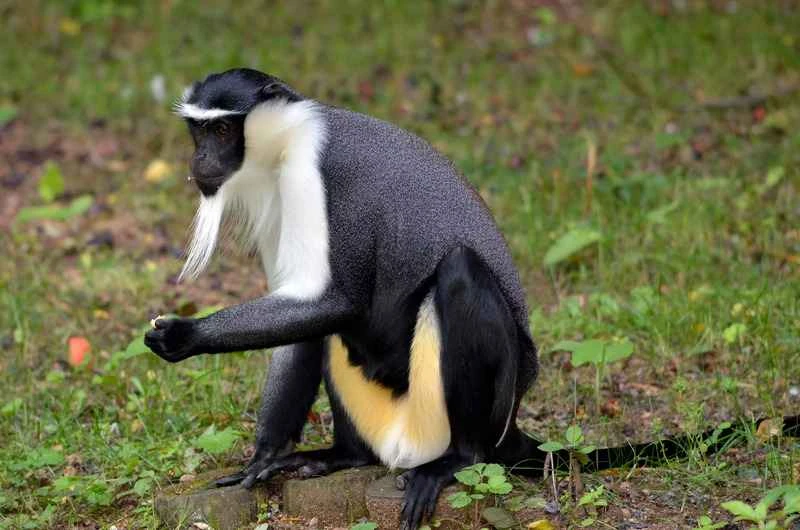
The Diana macaque is found in the rainforests from Sierra Leone to Côte d'Ivoire . It gets its name from its eyebrows, which resemble the bow of Diana in Roman mythology. The Diana macaque is also a rather beautiful monkey species. Its fur is generally black or dark gray, its throat is white, its eyebrows and whiskers are crescent-shaped, and it has a slender body and long legs. When it walks, its entire body and tail form a long, question-mark curve, making it very captivating.
10. Colobus monkey
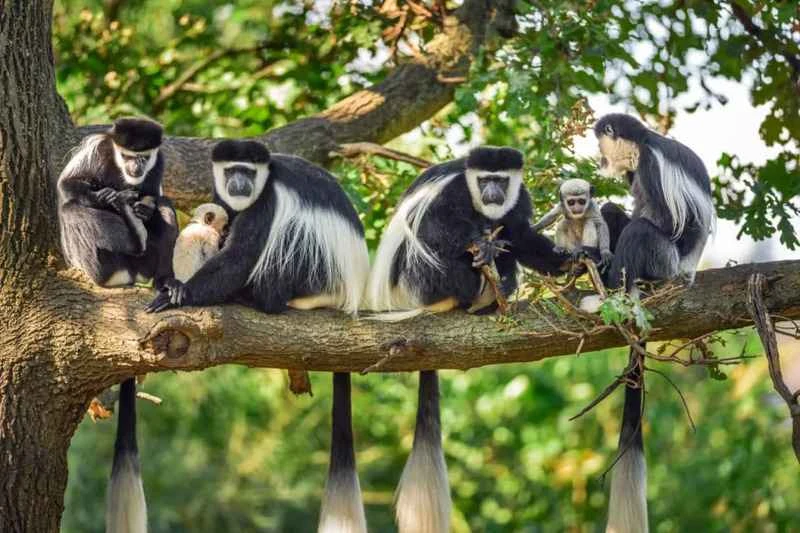
Among the many monkey species, the colobus monkey is undoubtedly one of the most visually appealing. Its fur is richly colored and vibrant, making its appearance both interesting and striking. The genus *Colobus* comprises five species, with the black-and-white colobus monkey being particularly eye-catching: it possesses black and white fur, with long, cape-like white hair draped along its sides, hanging from its shoulders to its back, giving it a majestic appearance. Its tail is also exceptionally striking, typically exceeding the length of its body, with some reaching over a meter in length. It displays a segmented black and white structure, with a thick tuft of white fur at the tip being the finishing touch, making it exceptionally beautiful.
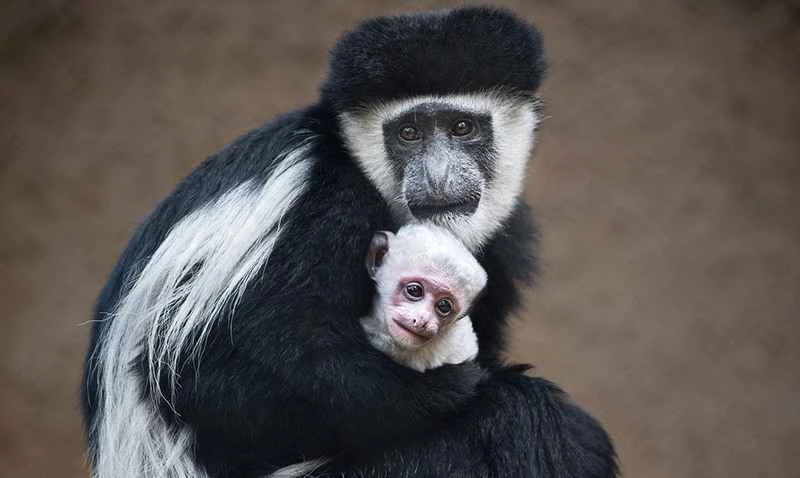
The colobus monkey has a very limited distribution range and its population is declining. Furthermore, due to its attractive fur and meat, it is hunted by humans, severely threatening its population. African countries have listed the colobus monkey as a protected species.