Turtles are familiar animals, but their evolutionary history remains one of the greatest mysteries in paleontology: did they originate independently from anapsids (whose skulls lack other openings behind their eye openings), or did they evolve alongside lizards, crocodiles, and dinosaurs (including birds) from diapsid ancestors (whose skulls also have two pairs of temporal fenestrae behind their eye openings)? The turtle's body structure is strikingly different from other tetrapods. Its torso is short and enclosed by a closed shell (carapace and plastron). Its internal skeleton, such as the vertebrae, ribs, shoulder girdle, and pelvic girdle, is not only fused to the shell but also possesses its own series of specializations. Turtles lack teeth, instead having a horny beak like birds. The vast differences between turtles and other tetrapods, including amphibians, reptiles, birds, and mammals, are akin to the differences between a cable car and various types of cars. The question remains: did these unique skeletal structures of turtles develop overnight or gradually? And what was the specific process? Previously, it was believed that this body pattern of turtles arose "suddenly" in their evolutionary history, remaining essentially unchanged for over 200 million years from the late Triassic period's *Proganochelys quenstedti* to the present day. The early stages of turtle evolution are crucial, but for a long time, fossil representations were scarce, particularly lacking evidence of shell formation and tooth loss. Developmental biologists, molecular biologists, and paleontologists dedicated themselves to studying the origin and early evolution of turtles, but with limited results and conflicting accounts. It wasn't until 2008, with the discovery of *Odontochelys semitestacea*, a turtle with teeth and only a plastron, in the Guanling region of Guizhou Province, by Chinese scholars, that the paleontological community began to gain substantial understanding of the early evolution of turtles. Ten years later, on August 23, 2018, the journal Nature reported on the discovery of a new primitive turtle species, “Eorhynchochelys sinensis,” by an international team led by the Institute of Vertebrate Paleontology and Paleoanthropology of the Chinese Academy of Sciences, in the same region. This is another important early turtle fossil found in Guanling after the half-toothed turtle.
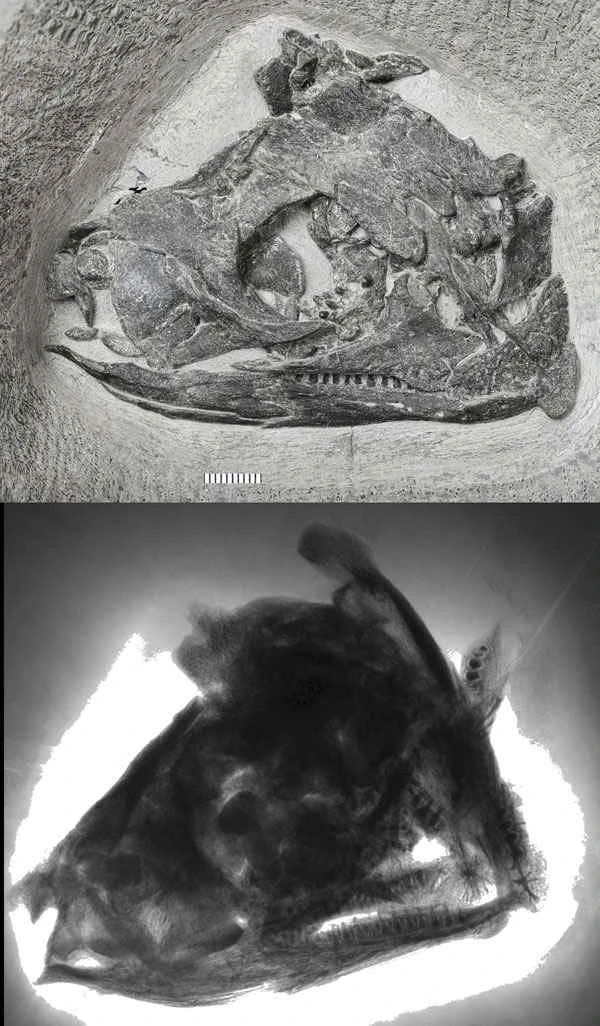
The Chinese Evobeaked Turtle embodies a variety of primitive, advanced, and transitional characteristics, demonstrating the high complexity of early turtle evolution. This large early turtle, exceeding 2 meters in length, had a relatively short body with widened ribs. Its carapace and plastron were not yet fully formed. It was the first to exhibit a closed superior temporal foramen and a rigid pelvic girdle, meaning the two pubic bones and two ischium on the ventral side of the buttock formed a sutured, immobile assemblages. The Chinese Evobeaked Turtle is the earliest beaked turtle, but it still retains teeth in the posterior part of its upper and lower jaws, exhibiting a transitional state of "tooth degeneration and the development of a keratinous beak." The complete skeletal fossil is preserved in Late Triassic marine black marl dating back approximately 228 million years. However, its skeletal structure suggests that the Chinese Evobeaked Turtle did not live primarily in the ocean, but rather likely lived an amphibious life in near-shore estuaries, and possessed burrowing habits.
This discovery began in 2015 when Researcher Li Chun from the Institute of Vertebrate Paleontology and Paleoanthropology, Chinese Academy of Sciences (IVPP), noticed a fossil resembling a primitive turtle in the collection of the Sanya Marine Paleontology Museum (under construction). He then led his research team on a year-long fossil restoration and field investigation, ultimately confirming that it was a much older turtle found 7.5 meters below the fossil layer of *Semi-scutiformes*. Building on this, a research team comprised of scholars from the IVPP, the National Museum of Scotland, the Field Museum of Natural History in the United States, and the Canadian Museum of Nature analyzed all important primitive turtle fossils from different regions of the world, determining the new specimen's pivotal position in the early evolution of turtles and filling a significant gap in the phylogenetic understanding of this group. This research was jointly funded by the Strategic Priority Research Program of the Chinese Academy of Sciences and the National Natural Science Foundation of China.
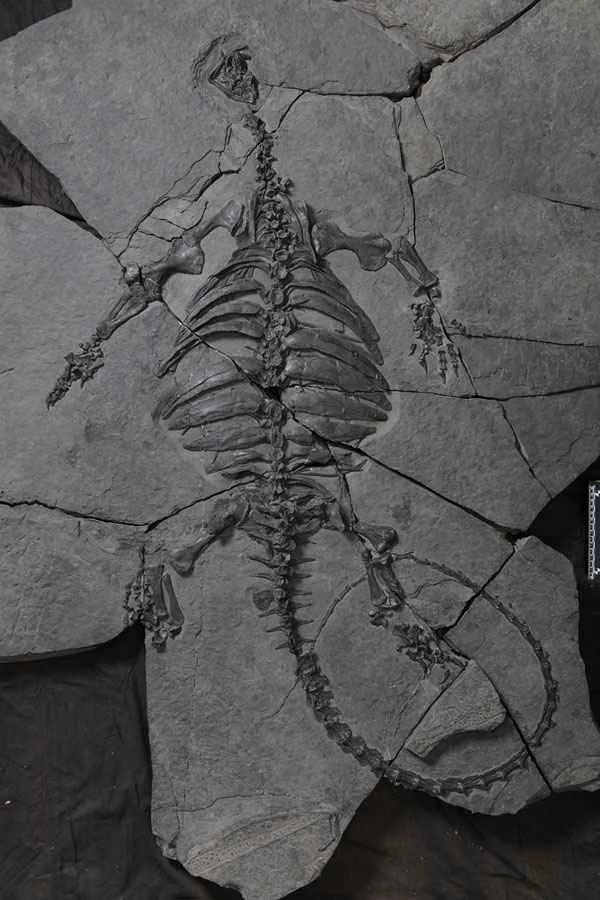
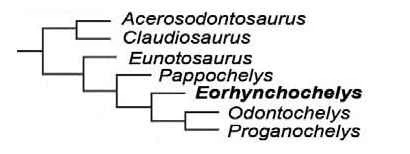
Eorhynchochelys sinensis (Li et al., 2018) and its systematic position (partial)
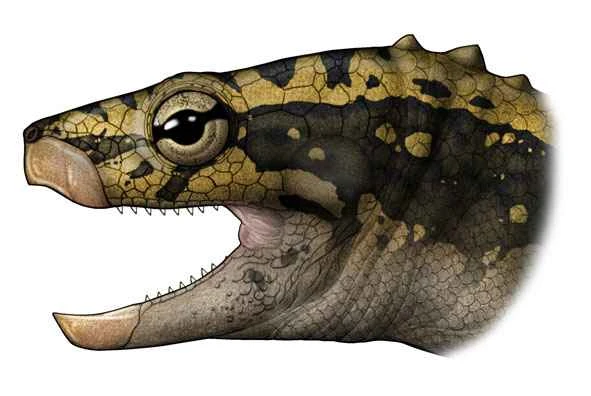
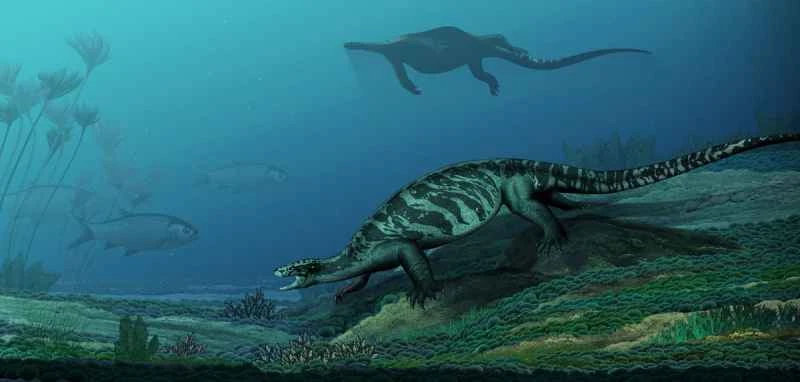
Skull and ecological reconstruction of the Chinese E. sinensis (illustrated by Chen Yu)