The saltwater crocodile is the animal with the strongest bite force on Earth. It is the largest of the 23 crocodile species and the largest living reptile on Earth. Also known as the sea crocodile, saltwater crocodile, hulei, man-eating crocodile, estuary crocodile, Malayan crocodile, and naked-necked crocodile, among other names, it belongs to the genus Crocodilia in the family Crocodilianae and is at the top of the wetland food chain.
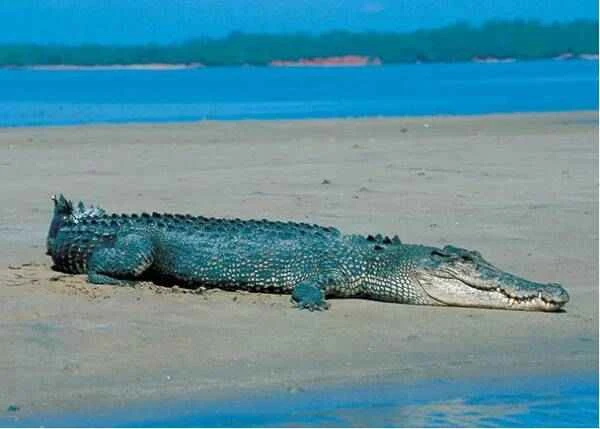
Adult saltwater crocodiles range in length from 2 to 7 meters and weigh 600 to 1000 kilograms. Records indicate that the largest saltwater crocodile ever recorded reached 7 meters in length. Each side of the upper jaw has 16-19 teeth, and each side of the lower jaw has 14-15 teeth. Because the saltwater crocodile is the only crocodile in the order Crocodilians without large scales on its neck and back, it is also known as the "naked-necked crocodile."
Like other crocodiles, saltwater crocodiles belong to the dinosaur family. Since appearing on Earth over 200 million years ago, their appearance has remained largely unchanged. They primarily feed on mud crabs, turtles, monitor lizards, and waterfowl. Some larger adults even prey on buffalo, livestock, wild boar, and monkeys, and in the sea, they also hunt sharks. In Australia, there are records of saltwater crocodiles eating people and even attacking ships, hence their nickname "man-eating crocodile."
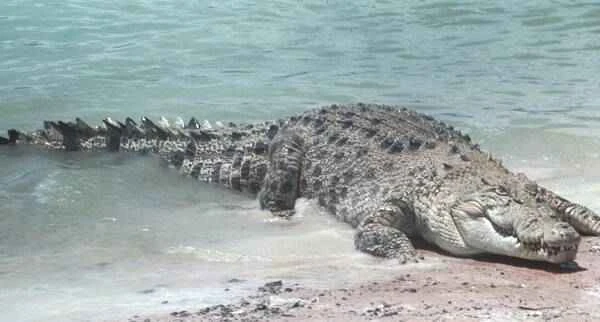
The saltwater crocodile's ferocious hunting prowess has earned it the reputation of a "cold-blooded killer." Its most lethal weapon is its long, narrow, and massive jaws. This jaw, which accounts for one-sixth of the crocodile's body length, possesses immense bite force, approximately 200 kilograms per square centimeter—more than ten times stronger than a human bite. However, the saltwater crocodile's teeth cannot tear or chew its food. It often uses its jaws to grip its prey, dragging it to rocks or tree trunks on the water's edge and violently slamming it until it's broken or softened before eating it piece by piece. Because its teeth cannot chew its food, the saltwater crocodile possesses a special stomach containing the strongest stomach acid among vertebrates. This makes its digestive system exceptionally efficient, capable of digesting almost any food, including bones. Saltwater crocodiles sometimes also eat sand and gravel to aid digestion.
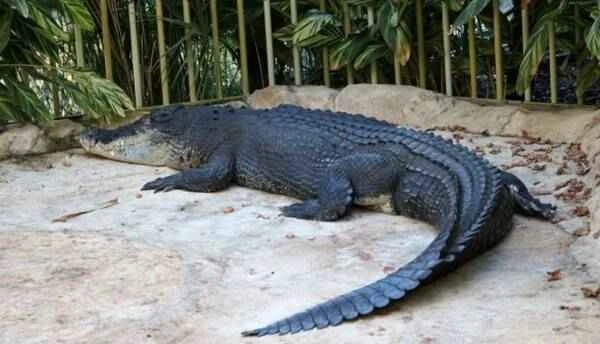
The saltwater crocodile's greatest economic value lies in its hide, which is among the world's most prized leathers. While the meat is edible and consumed by the Burmese, the Thais, though not fond of meat, value the bile for its medicinal properties, using it to treat female infertility. Saltwater crocodiles are widely distributed and abundant; in addition to consuming the meat, people in Southeast Asia tan their hides for leather goods such as shoes, belts, trunks, and handbags. Their beautiful patterns and colors make them exquisite decorative leather products with high artistic value. As a large reptile, the saltwater crocodile also possesses significant ornamental value, making it an important resource for tourism development.
The saltwater crocodile, the largest of the 23 crocodile species, is also the largest living reptile, with lengths exceeding 7 meters and weights ranging from 1400 to 1600 kilograms. (Guinness World Records)