1. Red coral
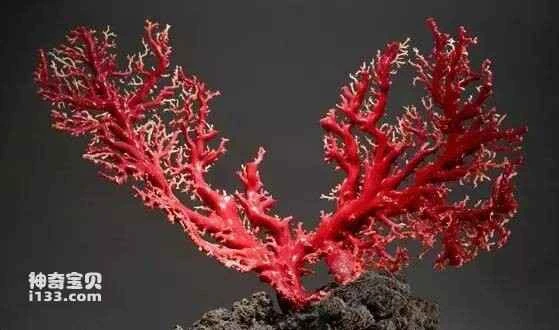
In the past, red coral was a tribute to the emperor, used in medicine, and was used in Buddhist prayer beads. It was also the official hat ornament of second-rank civil and military officials in the Qing Dynasty. In short, people considered red coral a treasure. However, what exactly is red coral? What are its characteristics? People know very little. Long-term misinformation, coupled with a mystifying connotation, has made it even more enigmatic.
Red coral is a type of lower marine invertebrate, belonging to the phylum Cnidaria, class Anthozoa, subclass Octocorhabditis, order Soft corals, suborder Hard corals, family Coralidae, and genus Coral. The red corals we see are remnants of skeletons.
(1) Biological characteristics of red coral
According to surveys in the Mediterranean-Atlantic and Pacific regions, red corals require specific habitat conditions for growth, including hard bottoms, fast currents, no sediment (especially no terrestrial sediments), clear water, low light, and low temperatures (8–20°C). The optimal temperature for red coral growth in the Mediterranean is 10°C.
(2) Slow growth and long lifespan
Red corals reach sexual maturity 10-12 years after larvae attach, and lay eggs every summer. Their planktonic larvae are negatively phototactic. Due to the longer lifespan of red corals compared to other invertebrates, their slow growth rate and low adult mortality rate are inevitable trends.
2. Bamboo Coral
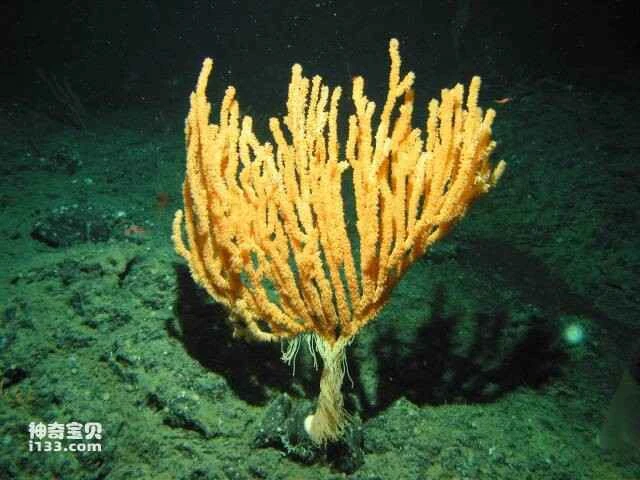
Bamboo coral, due to its central axis fossilization and the alternation of light brown and white internodes, closely resembles a natural bonsai carnation. Displayed in the living room, it adds a touch of poetic beauty and has been widely used in Chinese folk culture.
3. Formation of Coral Reefs
Coral reefs or coral islands are formed by the accumulation of the remains of coral polyps over geological periods.
We collectively refer to corals that form coral reefs as reef-building corals. Most reef-building corals live in colonies, with each individual being very small, generally 1-3 millimeters in diameter. The structure of a single individual is similar to that of a sea anemone. Their skeletons are composed entirely of calcium carbonate, with calcium secreted outward from the basal disc and the epidermal cells at the lower end of the column, forming a cup-shaped skeleton. During the formation of the cup-shaped skeleton, the basal disc secretes calcium to form the base plate, while the calcium secreted at the lower end of the column forms the rim of the cup. The corals in the colony are connected to the bottom of the cup, sharing the cup walls, and reproduce by budding and growing upward. Under the same conditions, blocky corals generally grow only 0.5-2 millimeters in thickness per year, while branching corals can grow 10-20 centimeters. In this way, countless small coral polyps continuously grow and reproduce, eventually forming the pieces and clusters of corals we see after many years. Together with the remains of other plants and animals that form calcareous skeletons, such as mollusks, brachiopods, echinoderms, and calcareous algae, they accumulate over geological time to form reefs and islands in the ocean.
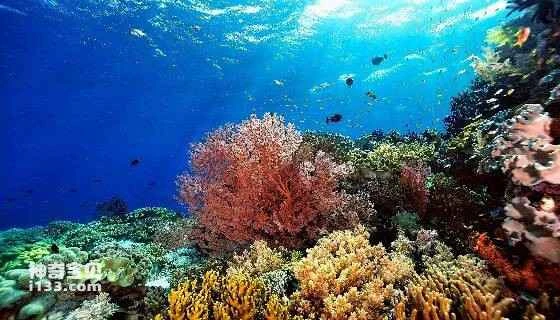
Not all sea areas can form coral islands. Coral growth and development require strict ecological conditions.
First, temperature is a limiting factor affecting the growth of reef-building corals. Coral polyps can only build reefs when the average annual temperature of the seawater is not lower than 20℃. The most suitable temperature range is 22℃~28℃. Therefore, coral reefs and coral islands are distributed in tropical and subtropical seas. my country's Xisha Islands, Nansha Islands, and Zhongsha Islands are all islands formed by corals.
Secondly, reef-building corals require a certain sea depth. They mainly live in shallow sea areas because sunlight can penetrate and reach the seabed well in shallow sea areas, which is conducive to the photosynthesis of symbiotic algae in the coral. The waves and the oscillation of the seawater provide corals with abundant food sources and sufficient oxygen, and make it easy to remove metabolic products.
Furthermore, reef-building corals require relatively clean seawater to live in. If too much terrestrial material pollutes the seawater, it will inhibit the corals' normal physiological functions such as feeding and respiration. Therefore, coral reefs must form in tropical and subtropical waters, in shallow sea areas with abundant sunshine and clear water.