Penguins, known as the "ships of the sea," are ancient members of the waterfowl family. Dressed like Western gentlemen in formal attire, their waddling gait and endearing expressions make them a beautiful sight in the marine world, captivating all who see them. Are you curious about the different types of penguins? This article introduces ten famous penguin species from around the world. Globally, there are 18 species of penguins, the vast majority inhabiting the Southern Hemisphere. Among the most famous are: Emperor Penguins, Adelie Penguins, Humboldt Penguins, Yellow-eyed Penguins, Chinstrap Penguins, African Penguins, King Penguins, Little Blue Penguins, Macaroni Penguins, and Galapagos Penguins. Let's step into the world of penguins and explore their wondrous lives.
1. Emperor Penguin
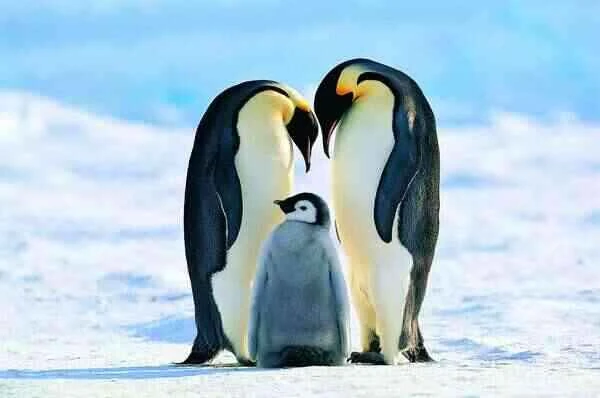
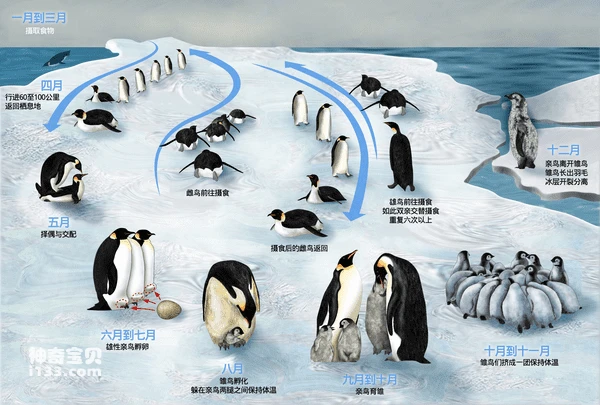
The Emperor Penguin, revered as royalty, stands at the pinnacle of penguin diversity, being the largest of all penguins, comparable to a giant in the penguin world. They typically stand over 90 centimeters tall, with the tallest reaching 120 centimeters, and weigh up to 50 kilograms. Emperor penguins are adorned with a striking black and white plumage, their beaks a vibrant reddish-orange, their necks decorated with orange-yellow feathers that gradually soften downwards, becoming darker behind their ears, creating a harmonious overall color scheme. Emperor penguins are known for their lifelong monogamous fidelity, maintaining a strict monogamous relationship. Their lifespan is typically around 10 years, although some individuals can live up to 20 years.
2. Adelie Penguins
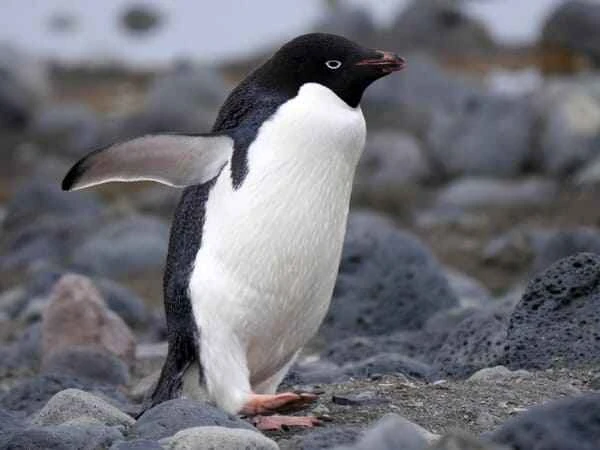
The Adélie penguin, named after the Antarctic continent, is a small to medium-sized group of penguins and a common sight in the Antarctic region. Adélie penguins range in length from 46 to 75 centimeters and weigh approximately 4 to 6 kilograms. They have bright white eye rings, a distinctive blue-green head, a black beak adorned with long, thin feathers, short legs, and black claws. Although flightless, these penguins are excellent swimmers and divers, their waddling gait displaying a playful charm. They can glide on ice using their bellies, and their diet consists mainly of various fish, mollusks, and crustaceans.
3. Humboldt penguins
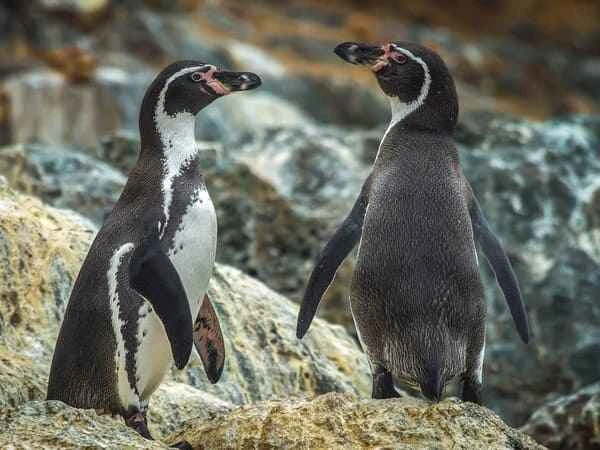
The Humboldt penguin, named after the German polymath Alexander von Humboldt who introduced it to Western academia, is a penguin species endemic to the coast of South America. Its forelimbs have evolved into flipper-like feet, naturally designed for underwater locomotion. The penguin's feathers are scale-like in structure, with broad, short shafts and narrow, compact vanes evenly distributed across its body. Its skeleton is characterized by its solid rather than pneumatic structure, with a prominent keel-like structure on the breastbone, rich in fatty bone marrow. They have short tail feathers and compact, posteriorly positioned feet with webbed toes adapted for swimming. The horny portion of their upper beak consists of three horny plates. Their tongues are covered with nail-like points, enabling them to effectively capture crustaceans, squid, and fish. The Humboldt penguin is a vulnerable species, with wild populations estimated at between 3,300 and 12,000, primarily breeding along the coastlines of Peru and Chile.
4. Yellow-eyed penguins
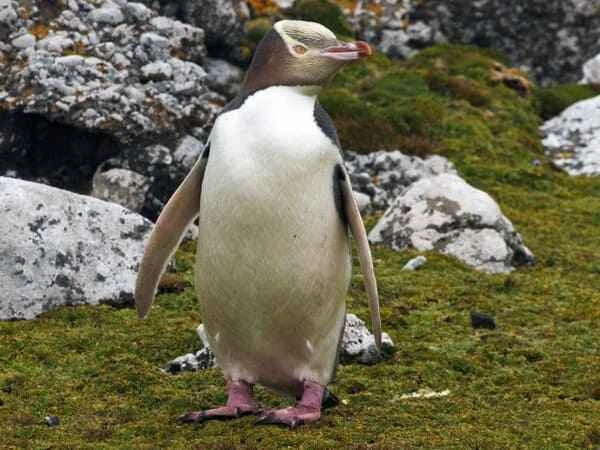
The Yellow-eyed Penguin, a member of the genus *Phragmites* in the family Sphenisciidae, is a unique coastal species native to New Zealand. Their habitat spans the South Island, Stewart Island, the Auckland Islands, and Campbell Island. These fish-eating penguins are particularly renowned for their colonies on the Otago Peninsula, attracting numerous tourists eager to witness their beauty up close. As an endangered species, the Yellow-eyed Penguin population is estimated to be only around 4,000 individuals. Among penguins, the Yellow-eyed Penguin is relatively large, averaging 70 centimeters in length and weighing between 5 and 8 kilograms. Its head is a soft, pale yellow, its eyes gleaming with a pale yellow light, while its body is covered in elegant black plumage.
5. Chinstrap Penguin

Chinstrap penguins, with their distinctive black neck stripes resembling those of a naval officer's hat, are famous for the striking black band below their necks. This band gives them a dignified and resolute appearance, earning them the affectionate nickname "Officer Penguin" from the Soviets. Chinstrap penguins are distributed in the southernmost parts of the world, including the South Sandwich Islands, Antarctica, the South Orkney Islands, the South Shetland Islands, South Georgia Island, Bouvet Island, the Barreny Islands, and Peter the Great Island. Their characteristic black stripes on their heads, resembling a military helmet, give them the nickname "cheek-strap penguin," making them one of the most easily recognizable penguin species. Chinstrap penguins can reach a length of 72 cm, and adults average about 4 kg in weight. It is estimated that there are an astonishing 7.5 million breeding pairs of chinstrap penguins worldwide. Their main diet consists of krill, various shrimp, and fish.
6. African penguins
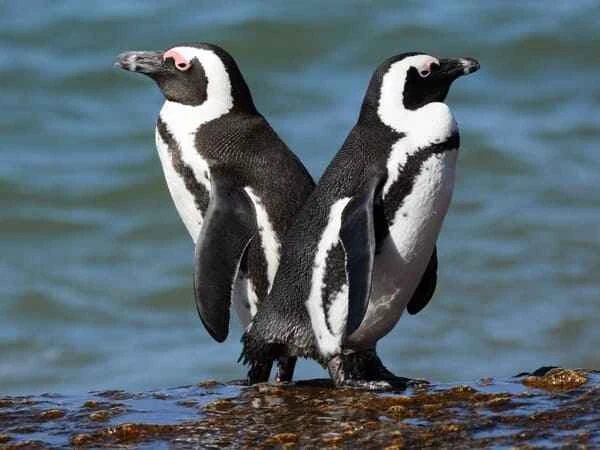
The African penguin, scientifically named *Penta sulphurus*, also known by other names such as the black-footed penguin and the donkey penguin, belongs to the order Sphenisciformes, family Spheniscidae, and genus *Penta sulphurus*. This penguin is endemic to the southwestern coast of Africa, found on 24 islands stretching from Namibia to Algoa Bay near Port Elizabeth, South Africa. African penguins stand between 68 and 70 centimeters tall and weigh between 2 and 5 kilograms. Their backs are black, while their chests and bellies are predominantly white, dotted with scattered black spots and patterns. Notably, each African penguin's black spots are unique, much like human fingerprints, giving them individual characteristics.
7. King Penguin
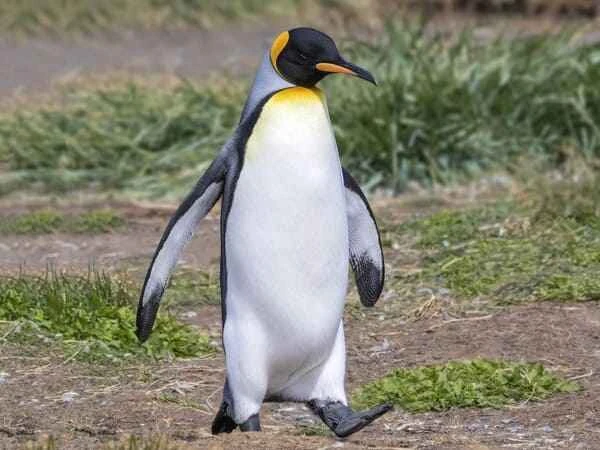
King penguins are tall penguins, typically nearly 1 meter in length and weighing about 15 to 16 kilograms. Their most distinctive feature is the bright orange-yellow patch on the side of their neck. Their forelimbs have evolved into flippers adapted for swimming. The king penguin's feathers are scale-like, with short, wide shafts and narrow, tightly packed vanes, covering their entire body. Their skeleton is robust and not pneumatically inflated, with a prominent keel-like structure in the chest, storing high-fat bone marrow. The king penguin has a relatively short tail feather, compact, backward-moving feet, and webbed toes that aid in swimming. Their upper beak consists of 3 to 5 horny plates. Their tongue is covered with nail-like points, enabling them to effectively prey on crustaceans, squid, and various types of fish.
8. Little Blue Penguin
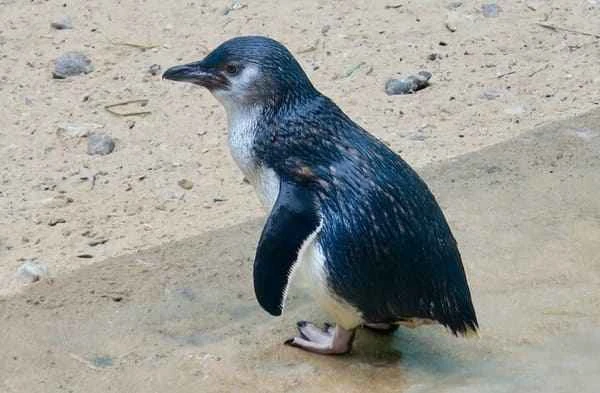
The little blue penguin, also known as the blue penguin, is considered the smallest member of the penguin family, typically standing only 43 centimeters tall and weighing about 1 kilogram, with males slightly larger than females. These penguins are named for their distinctive blue plumage. Their heads and backs are a deep indigo blue, while the area around their ears is bluish-grey, and their bellies are pure white. Their flippers are also indigo on the outside and white on the inside. Their dark grey-black beaks are 3 to 4 centimeters long, and their feet are white on the top and black on the soles and webs. These penguins inhabit the coastlines of South Australia, New Zealand, and Chile, and swim a wide range of areas. Their diet includes fish, squid, and other small marine creatures. According to 2015 data, the global population of little blue penguins is estimated to be around one million.
9. Macaroni Penguins
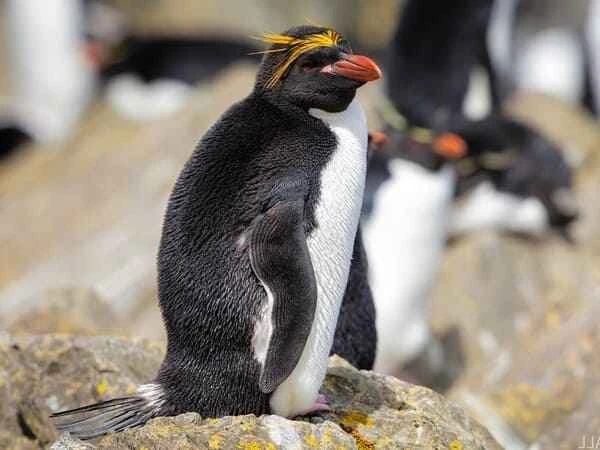
Reaching approximately 70 centimeters in length and weighing about 5.5 kilograms, the Macaroni penguin's most distinctive feature is the orange plume adorning its head, extending from between its eyes to the sides, often likened to spaghetti. Thus, the Macaroni penguin has another nickname—the "pasta penguin." In English, "Macaroni" also carries a playful connotation of "mischievous." A pink ruff around its beak adds a touch of color. Like all penguins, the Macaroni penguin cannot fly but is an excellent diver. Its appearance is similar to the Crested Penguin, making it easily mistaken for the Chinese Crested Penguin. Every Antarctic summer, flocks of Macaroni penguins migrate to the Antarctic waters to mate and breed on the numerous rocky islets. They primarily feed on krill, but also catch squid and small fish. This penguin species is found from South Africa to the west coast of South America, and along the Antarctic coastline.
10. Galapagos penguins
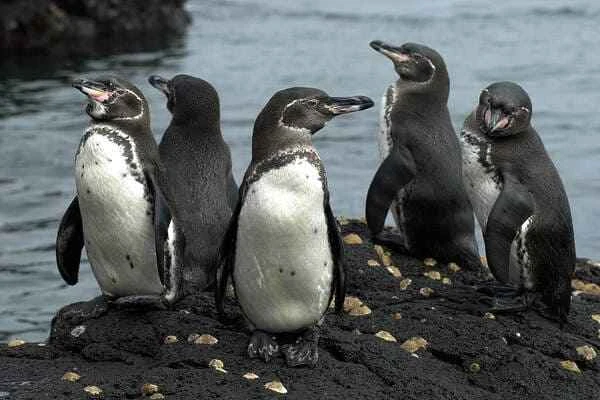
The Galapagos penguin, also known as the Galapagos penguin or Galapagos sulphur penguin, is a species of penguin belonging to the class Aves, order Sphenisciformes, and family Sphenisciidae. It is uniquely distributed in the Galapagos Islands of South America. Known as the "equatorial penguin," this species is special because it is the only penguin species to inhabit near the equator. Thanks to the combined effects of the Peru Current and the Cromwell Current, the climate of the Galapagos Islands is drastically different from other equatorial regions, making survival possible for the penguins. As one of the smallest known penguin species, the Galapagos penguin is also the only penguin species to migrate to the Northern Hemisphere. The current estimated population is around 1,000.
In addition to the top ten penguin species mentioned above, there are also Gentoo penguins, Southern Rockhopper penguins, Northern Rockhopper penguins, Yellow-browed penguins, Scots Island Yellow-browed penguins, White-cheeked Yellow-browed penguins, Crested penguins, and Magellanic penguins.