It is well known that land animals sleep, although their sleeping postures and methods differ. So, do marine animals also sleep? The answer is yes, they do, and their sleeping postures and methods are even more unique.
In fact, sleep is simply a special method of resting for a longer period of time. Both land and sea animals need rest, including sleep. Land animals generally have longer sleep periods, making them easier to notice, while sea animals' sleep periods are mostly very short, making them difficult to detect. For example, fish sleep for very short periods, some only a few minutes, and some even just a few seconds. What is a blink of an eye for some fish is already a nap.
Besides fish, many other mammals live in the ocean. While their sleeping methods differ from fish, they still need to sleep. For example, dolphins mostly float about a foot underwater at night, peacefully drifting off to sleep. Their tails, however, still wiggle every 30 seconds or so, serving two purposes: first, to allow their heads to surface for air; and second, to stabilize their position in the water, unaffected by currents or waves. Most interestingly, there is the Azoki dolphin, which uses an alternating sleep pattern between its two hemispheres: while one hemisphere sleeps, the other is awake. After a while, the sleeping hemisphere awakens, and the awakened hemisphere falls asleep again. If subjected to strong external stimuli, both hemispheres will immediately awaken. Therefore, they can always be swimming, and their swimming speed doesn't decrease even during sleep.
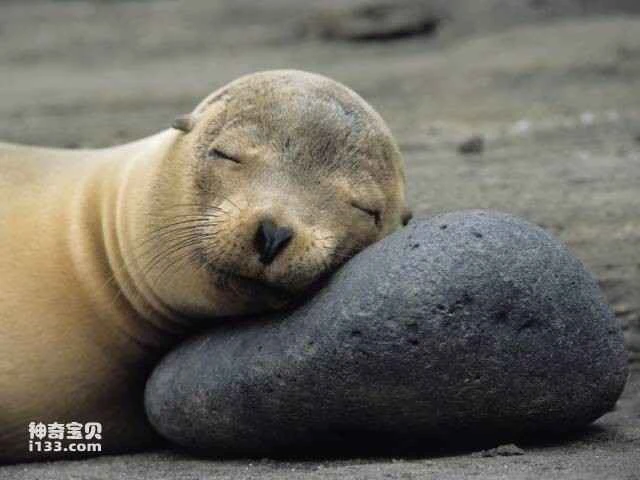
Unlike dolphins, seals can live both underwater and on land. When sleeping on land, they behave similarly to land animals; when sleeping underwater, they wake up with each breath. This means they take naps in the intervals between breaths.
Fur seals are marine animals that can live both in the ocean and on land. When they sleep on land, they can sleep just as soundly as land animals; when they are underwater, they sleep by alternating between the two hemispheres of their brains, just like Azoki dolphins.
Sea otters, native to the North Pacific coast, will build an oval-shaped "bed" out of seaweed on the beach, and hide their bodies in the middle with their bellies facing up when they sleep. If they are satisfied with sleeping in a certain place, they will go to that place to sleep every day.
Walruses living in the Arctic Ocean have a rather unique way of sleeping. They don't sleep lying flat, but rather vertically in the water with their heads above the surface.
Adorable beavers typically sleep during the day, tilting their heads back and sometimes grinding their teeth. Baby beavers, in particular, are quite amusing; they sleep side-by-side, some even with their tiny paws under their heads.