Echidnae (scientific name: Tachyglossidae) are among the most unique mammals in the world, being one of the few oviparous mammals. While most mammals are viviparous, echidnas break this convention, attracting attention from the scientific community and nature enthusiasts for their striking appearance and distinctive lifestyle. This article will provide a detailed overview of echidnas' characteristics, habitats, diet, and their amazing reproductive mechanisms.
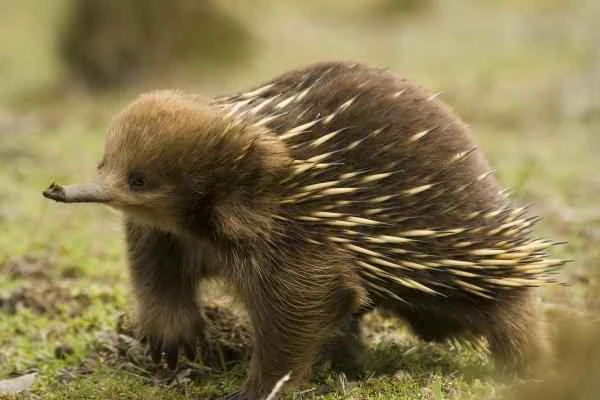
Morphological characteristics of echidnas (morphology and classification of Equidna)
Classification : Belongs to the order Monotremata, and is one of the most primitive living mammals.
Number of species : There are 4 extant species worldwide, belonging to two genera: the short-beaked echidna (Tachyglossus aculeatus) and three species of long-beaked echidna (Zaglossus spp.).
Size : Body length is about 30 to 100 centimeters, and weight is between 2 and 7 kilograms.
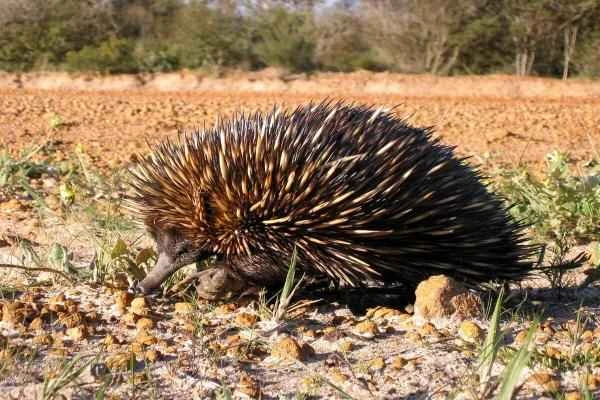
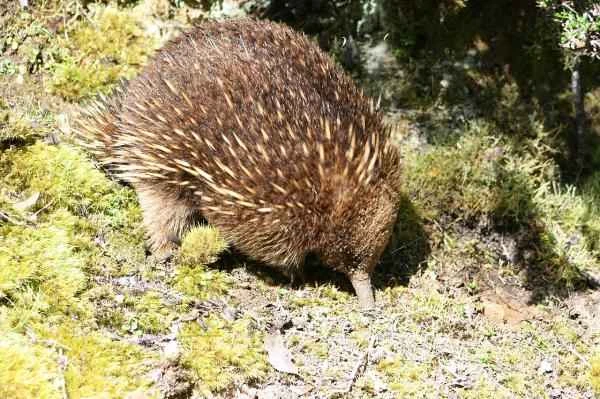
Body structure : The body is round and plump, with stiff black, gray or white bristles (which do not fall off) covering the back and tail, unlike hedgehogs; the abdomen and face have dense soft fur.
Mouth features : The snout is elongated, resembling a slender bird's beak, and accounts for half the length of the head.
Limb structure : Both forelimbs and hindlimbs are short, strong, and powerful, with powerful claws. The hind limbs extend backward, and the male's hind legs also have venomous barbs on the ankles.
Other characteristics : poor thermoregulation, mostly nocturnal, and spends the day in burrows.
Habitat distribution of echidnas
The echidna is a mammal endemic to Australia and its surrounding areas , and its distribution is as follows:
Short-beaked echidna : Widely distributed in Australia, Tasmania and New Guinea, it is highly adaptable and can live in arid grasslands, savannas, tropical rainforests and even deserts.
Long-beaked echidna : It is a species endemic to New Guinea, inhabiting only humid, pristine highland rainforests, and has high environmental requirements.
They usually dig their own burrows underground, and sometimes they also occupy abandoned nests of animals such as rabbits as shelters.
Echidna Diet and Foraging Methods
Echidnae are entomophobic animals , primarily feeding on ants, termites, worms, and larvae.
Foraging tools : Its slender proboscis is equipped with a sticky long tongue, which can penetrate deep into the ant nest and soil to "fish out" prey.
Toothless structure : The oral cavity has no teeth, and food is ground and swallowed using small keratinous protrusions at the bottom of the oral cavity.
Electrosensory ability : There are electrosensors on the snout, which can detect weak electrical signals released by prey.
Assistive behaviors : using the strong claws of the forelimbs to dig in the soil and peel back the bark to find hidden insects.
Echidna reproduction: a representative of oviparous mammals
Echidnae are among the very few extant egg-laying mammals , and their reproductive process is quite unique:
Mating season : The breeding season usually occurs during the warm season, when males form "echidna trains" and line up to chase after estrus females.
Fertilization process : internal fertilization, the male's unique four-headed forked penis can complete fertilization separately during mating.
Egg-laying process :
The female lays a soft-shelled egg about three weeks after mating.
The eggs are stored in a brood pouch on the abdomen for incubation, which takes about 10 days.
After hatching, the young continue to live in the pouch and feed on milk secreted by the mammary glands (they have no nipples; the milk seeps out from the skin pores).
Growth process : The young stay in the pouch until they develop bristles (6 to 8 weeks), then are moved to the underground nest for continued care, and leave the nest to become independent after 3 to 4 months.
Ecological significance and conservation status of echidnas
Although the echidna is not currently facing total extinction, some long-beaked echidna populations are listed as endangered due to habitat loss and illegal hunting. Currently, Australia and Papua New Guinea are strengthening protection through legislation and scientific research.
References
Beatty, R., Beer, A., & Deeming, C. (2010). The Book of Nature. Dorling Kindersley, UK.
Science Direct (2022), "Tachyglossidae: An Overview". Accessed at: https://www.sciencedirect.com/topics/agricultural-and-biological-sciences/tachyglossidae
Wilhelm, N. (2021) *Tachyglossidae*. Animal diversity website. Accessed at: https://animaldiversity.org/accounts/Tachyglossidae/