Penguins, the fastest swimming birds on Earth, are among the oldest waterfowl, often called "ships of the sea." There are 18 species of penguins worldwide, most of which are distributed and live in the Southern Hemisphere. They are characterized by their inability to fly. The largest species is the Emperor Penguin, averaging about 1.1 meters tall and weighing over 35 kilograms. The smallest penguin species is the Little Blue Penguin (also known as the Fairy Penguin), which is 40 centimeters tall and weighs 1 kilogram.
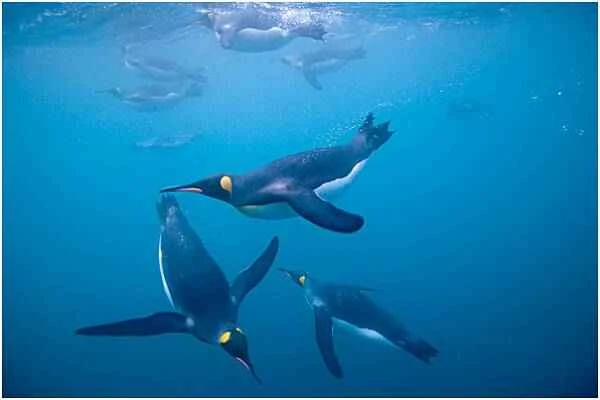
Penguins are typical seabirds. Although they cannot fly, they are super swimmers among birds. Many waterbirds swim by propelling themselves forward with their webbed feet. Although penguins also have webbed feet, they only use them as rudders to control direction. The propulsion power comes entirely from their oar-like wings, which flap and fly through the water.

Penguins are incredibly fast swimmers. Emperor penguins can swim about 10 kilometers per hour, while white-capped penguins have a record of swimming 36 kilometers per hour, making them the fastest swimmers of all birds. Penguins often use a dolphin-like swimming technique, which involves diving for a distance, surfacing for air, and then diving again to continue swimming. In fact, penguins are also diving champions among birds, having recorded dives of 18 minutes and a depth of 265 meters.

The world's most cold-resistant bird: Penguins, nicknamed "ships of the sea," are among the oldest waterfowl. They likely established themselves in Antarctica long before the Earth was covered in ice, and they can live and breed in temperatures as low as -40°C. (Guinness World Records)