In the main group of proboscis, the elephantiformes, the development of a pair of large upper incisors (tusks) is a distinctive feature of this group. This structure typically serves as a tool for individual foraging and a weapon for males to compete for mating rights. Proboscis without tusks usually only exist in primitive groups that diverged before the Oligocene, such as the Deinotherium, which only developed a pair of hook-shaped lower incisors while completely lacking upper incisors. In the early stages of elephantiform evolution, a group called the Amebelodontidae emerged, whose lower jaw and lower incisors were particularly elongated and widened, forming a shovel-like structure. This peculiar evolutionary direction has long attracted the attention of researchers. Many hypotheses and studies have emerged over the years regarding the significance of the shovel-shaped lower jaw in the functional morphology of the Amebelodontidae.
Recently, researchers Wang Shiqi, Deng Tao, and Ye Jie from the Institute of Vertebrate Paleontology and Paleoanthropology, Chinese Academy of Sciences, along with collaborators from the Gansu Hezheng Paleozoological Fossil Museum, jointly studied a well-preserved fossil assemblage of shovel-tusked elephants discovered at the Dingjiaergou site in Tongzhong, Ningxia, during the Middle Miocene. Their findings were recently published online in the international journal *Journal of Systematic Palaeontology*. This fossil assemblage, represented by 11 relatively complete individuals of different sexes and ages, possesses shovel-shaped mandibles and lower incisors, undoubtedly belonging to the shovel-tusked elephant family. However, its tusks are absent in all sexes and age groups—a feature never before observed in elephantoids, resembling a strange combination of deinotherium and shovel-tusked elephant. This new group has been named a new genus and species of *Aphanobelodon zhaoi* (*Aphanobelodon zhaoi* gen. et sp. nov.). The genus name "*Aphanobelodon*" indicates its main characteristic of missing tusks; while the species name is dedicated to Mr. Zhao Rong, the discoverer of the fossil assemblage.
The discovery of *Platybelodon* is significant because it reveals the morphological and ecological diversity of elephantoids during their early evolution. Caucus studies and verification demonstrate that *Platybelodon* exists as a sister group to the genus *Platybelodon* in phylogenetic analysis. However, the internal structure of its lower incisors differs significantly from that of *Platybelodon*, but is similar to that of another genus within the family, *Protanancus*. Thus, the similarity in lower incisor structure is no longer a criterion for distinguishing members within the family, but rather a phenomenon of parallel evolution under selective pressure. Microtrace analysis and mechanical analysis show that within the family, the group represented by *Platybelodon* and *Platybelodon* specializes in feeding on tender leaves, with its broad, shovel-shaped lower jaw primarily used for cutting tender branches and leaves. In contrast, the other group, represented by *Protanancus*, has a broader diet; its narrow, shovel-shaped lower jaw can be used to dig for shallow vegetation, and its tusks also play a crucial role in food gathering. The phylogenetic differentiation within the Shovel-toothed Elephant family also represents ecological differentiation.
The males of the cryptotustrum also lacked their upper incisors, suggesting that competition among males may not have been very intense. Therefore, the social structure of the cryptotustrum was likely different from that of other elephants. Perhaps in the cryptotustrum, males and females formed a stable breeding group, jointly raising their juvenile offspring. This is vastly different from the matriarchal societies of modern elephants, where females form large groups to raise their offspring.
This research was supported by the National Basic Research Program of China, the Chinese Academy of Sciences, the National Natural Science Foundation of China, and the Basic Research Program of the Ministry of Science and Technology.
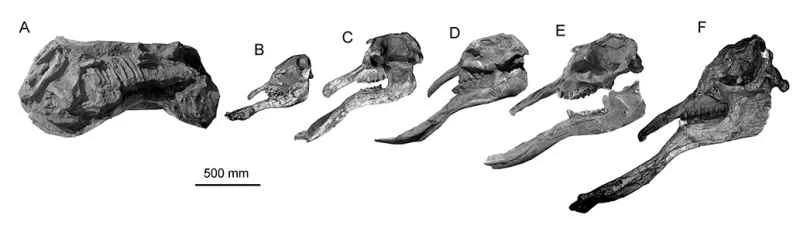
Figure 1: Individuals of the Cryptodontidae of different ages and sexes (Photo provided by Wang Shiqi)
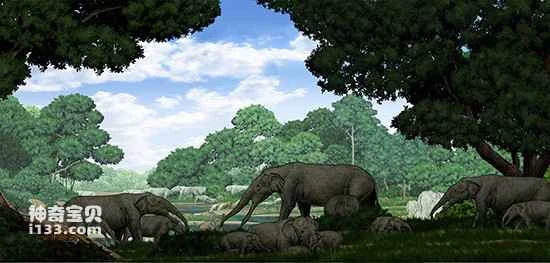
Figure 2: Reconstruction of the habitat of the Cryptodont (illustrated by Chen Yu)