Giant tortoises, among the oldest and most unique reptiles on Earth, are renowned for their astonishing size and long evolutionary history. Their enormous size not only makes them wonders of nature but also provides scientists with opportunities to study evolution and survival strategies in depth. This article will explore the evolutionary history of giant tortoises, analyze their unique physiological characteristics and adaptations, and discuss their important role in the ecosystem.
Overview of Giant Tortoises
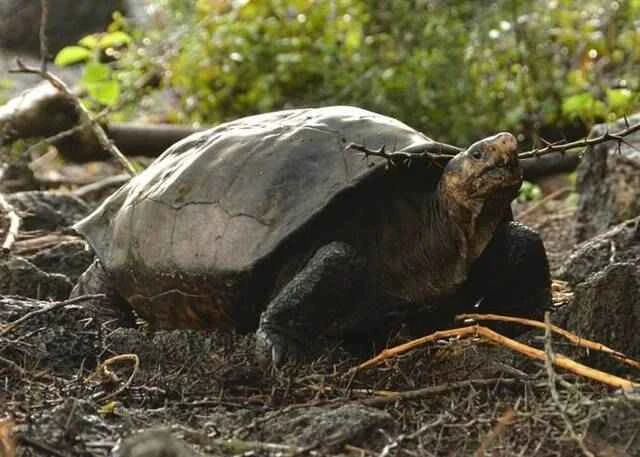
Giant tortoises mainly include species such as the Galapagos tortoise (Chelonoidis nigra) and the Aldabra tortoise (Aldabrachelys gigantea). They are known for their enormous size, long lifespan, and drought tolerance, and are representative species of terrestrial tortoises.
1. Galapagos Tortoise
Size : Adult Galapagos tortoises can reach 1.2 meters (4 feet) in length and weigh up to 250 kilograms (550 pounds). Their shells are tall and curved, providing additional protection.
Habitat : Mainly distributed in the dry and semi-arid regions of the Galapagos Islands.
Diet : Primarily plant-based, including grasses, leaves, fruits, and cacti.
Evolutionary characteristics : The variations in their shell shape and body size are the result of adaptation to different island environments. For example, some individuals have curved shells adapted to reach higher food sources, while others have low-profile shells, which are better suited to survive in arid environments.
2. Aldabra Tortoise
Size : Aldabra tortoises can reach 1.2-1.5 meters (4-5 feet) in length and weigh approximately 250-300 kilograms (550-660 pounds). Their shells are relatively flat, an adaptation to humid environments.
Habitat : Primarily distributed in the Aldabra Atoll in the Indian Ocean.
Diet : They mainly eat grass, leaves and fruits.
Evolutionary characteristics : The Aldabra tortoise's shell shape and body size are adapted to abundant food resources and humid environments, enabling them to survive in tropical ecosystems.
The Evolutionary History of Giant Tortoises
1. Body size evolution
The enormous size of giant tortoises is a striking feature of their evolution. The main reasons for this evolutionary change include:
Reduced predator populations : The large size of giant tortoises allows them to effectively defend themselves against predators. Their robust shells provide protection, making them safer when facing predators.
Long-term survival : Large tortoises can store a lot of energy, allowing them to survive for a long time during dry seasons when food is scarce.
2. Adaptation to shell morphology
The shell morphology of giant tortoises demonstrates their adaptability to different environments:
Shell curvature : Variations in the shell morphology of Galapagos tortoises reflect their adaptations to different island environments. Curved shells allow them to reach taller plants, while flat shells are adapted to humid environments.
Shell thickness and sturdiness : The thick shell provides extra protection against environmental damage and attacks from predators.
3. Reproduction Strategy
The reproductive strategies of giant tortoises are also an important part of their evolution:
Long lifespan : The long lifespan of giant tortoises allows them more opportunities to reproduce. Some individuals can live for over 100 years.
Slow growth rate : Their slow growth rate and long juvenile period enable them to adapt to a long-term stable living environment.
The role of giant tortoises in the ecosystem
Giant tortoises play an important role in the ecosystem:
Plant dispersers : They feed on plants and spread plant seeds through their excrement, which helps plants reproduce.
Environmental shapers : Their food choices and activities influence the plant community structure of ecosystems.
Preservation of the status quo and challenges
Despite the unique adaptations that giant tortoises have developed during evolution, they still face many challenges:
Habitat destruction : Habitat destruction caused by human activities poses a threat to their survival.
Introduced species : The introduction of alien species can put pressure on the survival of giant tortoises, such as competition for food and predators.
Climate change : Climate change may affect the conditions of their habitat and food resources.
Protecting giant tortoises is not only a task for preserving this ancient species, but also an important step in maintaining ecological balance. By protecting their habitat and taking appropriate conservation measures, we can ensure that these amazing creatures can continue to live on Earth.
Which invasive animals threaten giant tortoises?
Giant tortoises, especially Galapagos tortoises (Chelonoidis nigra) and Aldabra tortoises (Aldabrachelys gigantea), face threats from several invasive species. These invasive species often disrupt the existing ecological balance, causing competition and predation against native species, directly impacting the survival of giant tortoises. The following are some of the invasive animals that threaten giant tortoises:
1. Felines (such as domestic cats and wild cats)
Threat : Domestic and feral cats are among the main predators in the Galapagos Islands, preying on young tortoises, especially unhatched eggs and newly hatched hatchlings. This predation by cats poses a serious threat to tortoise reproduction and population survival.
Impact : The presence of felines reduces the survival rate of juvenile turtles, leading to a decrease in the number of adult turtles, which in turn affects the reproduction and ecological stability of the entire population.
2. Black rat (Rattus rattus)
Threat : Black rats pose a particular threat to Galapagos tortoises. They not only prey on tortoise eggs and hatchlings, but also damage the tortoises' habitat.
Impact : Black rats' predation and habitat disturbance reduce the survival rate of juvenile turtles and destabilize the food chain in the ecosystem.
3. Dogs (including domestic dogs and stray dogs)
Threats : Dogs, especially uncontrolled wild dogs, prey on tortoise hatchlings and eggs. Dogs also disturb tortoise habitats, causing damage to their living environment.
Impact : Predation by dogs and habitat destruction reduce the survival chances of juvenile tortoises and disrupt the normal lives of adult tortoises.
4. Pigs (Wild Boars, Sus scrofa)
Threats : Wild boars dig into the soil, damaging tortoise nests and threatening the eggs. Additionally, wild boars compete with tortoises for food resources.
Impact : Wild boar activity disrupts tortoise breeding grounds and reduces the plant resources available for tortoises to forage.
5. Rabbits (including European rabbits and domestic rabbits)
Threats : Introduced rabbits, especially European rabbits, will compete for plant resources, reducing the food source for tortoises. Rabbits may also damage tortoise habitats by digging.
Impact : Reduced food resources and habitat destruction make it more difficult for tortoises to survive.
6. Ants (especially invasive ant species)
Threat : Certain invasive ant species, such as fire ants, can attack baby turtles and prey on their eggs. They can also damage the local ecosystem.
Impact : The predatory behavior of ants directly threatens the survival of young tortoises and also affects the plant resources that tortoises depend on.
Protective measures
To protect giant tortoises from invasive species, the following measures are necessary:
Controlling invasive species : Take effective measures to control and manage invasive predators and competitors, such as hunting, trapping, and extermination operations.
Habitat protection : Protect the habitat of tortoises and ensure that their living environment is not destroyed.
Ecological restoration : Restoring ecosystems damaged by invasive species, replanting native plants, and improving food resources for tortoises.
Public education : Raise public awareness of the impact of invasive species and encourage participation in conservation efforts.
Are those giant tortoises extinct?
Giant tortoises, especially those from the Galapagos Islands and the Aldabra Atoll in the Indian Ocean, are renowned for their enormous size and distinctive biological characteristics. However, some giant tortoise species have indeed gone extinct throughout history. Here are a few known extinct giant tortoise species:
1. Galapagos giant tortoise (Chelonoidis elephantopus)
Distribution : They once lived on Isabela Island and Floreana Island in the Galapagos Islands.
Size : This tortoise is known for its exceptionally large size, resembling an elephant's trunk.
Causes of extinction : The Galapagos giant tortoise gradually went extinct due to hunting in the 19th century, the introduction of alien species (such as black rats and domestic cats), and habitat destruction. The last recorded individual was captured in the mid-19th century.
2. Galapagos flatback tortoise (Chelonoidis nigra becki)
Distribution : Formerly lived in the Florea Islands of the Galapagos Islands.
Size : This tortoise has a relatively flat shell, which is an adaptation to its island habitat.
Causes of extinction : Like other Galapagos giant tortoises, the Florea flatback tortoise went extinct due to overhunting, invasive species, and habitat destruction.
3. Great Atoll Tortoise (Aldabrachelys abrupta)
Distribution : Once lived in the Aldabra Atoll in the Indian Ocean.
Size : This tortoise is slightly smaller than the extant Aldabra giant tortoise (Aldabrachelys gigantea), but is still a large tortoise.
Causes of extinction : The extinction of the Aldabra giant tortoise was primarily due to human activities (such as hunting and habitat destruction) and environmental changes. While the Aldabra giant tortoise still exists, it faces numerous threats.
4. Galapagos tortoise (Chelonoidis nigra nigra)
Distribution : Formerly found on Isabella Island and other islands in the Galapagos Islands.
Size : The shell of this tortoise is curved, unlike other species.
Cause of extinction : The Galapagos tortoise population declined sharply due to the introduction of predators (such as cats and rats) and overhunting, ultimately leading to its extinction.
5. Madagascar Giant Tortoise (Aldabrachelys gigantea)
Distribution : Although many species of giant tortoises in Madagascar are extinct, they were once widely distributed in Madagascar and surrounding areas.
Size : These tortoises are among the oldest known tortoises, and are enormous in size, able to adapt to different environmental conditions.
Causes of extinction : Human hunting, habitat destruction, and the invasion of alien species led to the extinction of these tortoises.
Preserve the status quo
Although many giant tortoises have gone extinct, some species remain, such as the Aldabra giant tortoise (Aldabrachelys gigantea) and the Galapagos giant tortoise (Chelonoidis nigra). Protecting these surviving species and their habitats is crucial for maintaining ecological balance and biodiversity. Through global conservation efforts and scientific research, we can strive to prevent similar extinction events from happening again and protect these ancient and amazing creatures.