China's first dinosaur fossil skeleton was unearthed in 1939 on the eastern slope of Shawan Mountain in Lufeng County, Yunnan Province. Academician Yang Zhongjian, a pioneer and founder of Chinese paleontology, named it Lufengosaurus xuei. Lufengosaurus xuei is not only China's first dinosaur fossil skeleton, but also the first dinosaur that the Chinese themselves excavated, studied, and mounted. The story behind it is full of ups and downs and fascinating details.
Xu's Lufeng Dragon
The Marco Polo Bridge Incident in 1937 marked the beginning of the Chinese people's eight-year War of Resistance against Japan. Chinese scientists also embarked on a long and arduous eight-year journey of hardship and displacement, yet still dedicated to serving their country. Yang Zhongjian was one such scientist who left Beiping (present-day Beijing) for the southwestern rear area. In July 1938, he became the director of the Kunming office of the Central Geological Survey of the Ministry of Economic Affairs, and quickly began geological and paleontological fossil surveys in Yunnan. That winter, geologists Bian Meinian and Wang Cunyi discovered a large number of vertebrate fossils in the Lufeng Basin, northwest of Kunming, during their fieldwork.
A year later, Yang Zhongjian, Bian Meinian, and others returned to Lufeng for further investigation and discovered new fossil sites. They then conducted excavations for over a month, obtaining a large number of vertebrate fossils and abundant geological data. The discovered fossil fauna is known as the Lufengosaurus fauna, including precious fossils such as Lugoulong (a coelurosaurid), Sinosauropteryx (a carnivorous dinosaur), Wulong (a Paleopoda), Yunnanosaurus, giant Lufengosaurus, Xu's Lufengosaurus, and Bian's Hercules (a mammal-like reptile). Among these, the most complete fossil remains are those of Xu's Lufengosaurus.
From 1939 to 1940, Mr. Yang Zhongjian successively wrote research papers such as "Preliminary Observations on Lufeng Dinosaurs," "The Discovery Process and Significance of Lufeng Dinosaur Fossils," and "Reconstruction of Lufengosaurus Xu's" in Wayaocun, Kunming. In the autumn of 1940, the Kunming office of the Central Geological Survey was closed, and its personnel moved to the headquarters of the Central Geological Survey in Beibei, Chongqing. Mr. Yang Zhongjian, carrying fossils collected from Lufeng, traveled to Beibei in two cars. To prevent air raids by Japanese aircraft, the Geological Survey was dispersed in Beibei. The main office was located in Wenxing Bay, now the Beibei Natural History Museum; the library was built in Yutang Bay, 2 kilometers away; and some simple offices were also built in Tianshengqiao, 4 kilometers away from the town.
Mr. Yang Zhongjian rented a house in Qin Family Courtyard, Paifangwan, near the headquarters in Beibei, but commuted to work at Tianshengqiao every day. His home was a wooden plank house that creaked and swayed in the wind. Mr. Yang didn't mind, jokingly calling it a "dangerous building," and wrote a couplet: "A corner of a dangerous building, backed by mountains and facing water, with a gorge in sight; three years of wandering, running east and west, when will I return?" Every morning, he would set off from this dilapidated building, walking 4 kilometers along a rugged mountain path to work at Tianshengqiao. The office conditions at Tianshengqiao were equally rudimentary, a small, drafty office. Later, to allow Mr. Yang to concentrate more on his research of precious vertebrate fossils, the institute provided him with a space in the library about 1 kilometer from his home. With easier access to the office, Mr. Yang's work progressed much faster. In the spring of 1941, he wrote and published "Lufengosaurus Xu's," the first scientific monograph on dinosaurs by a Chinese scholar.
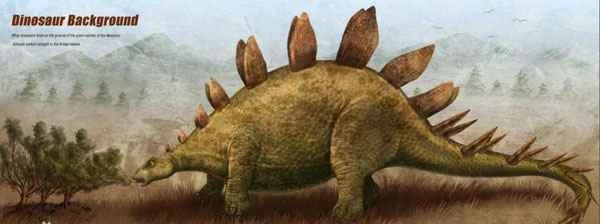
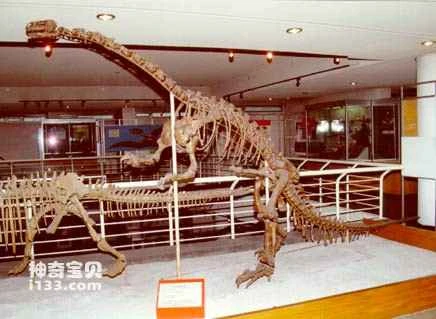
According to Mr. Yang Zhongjian's research, we know that *Lufengosaurus xuei* belongs to the family Plasmosauridae within the suborder Paleopoda. It was about 6 meters long and over 2 meters tall when standing. It had a small head, a pointed snout, triangular nostrils, and large eye sockets. Its dentary bones were thin and weak; it had approximately 27 upper teeth and 20 lower teeth, shaped like flat leaves with serrated edges. *Lufengosaurus xuei* had a long neck with 10 cervical vertebrae. It also had 14 dorsal vertebrae, 3 sacral vertebrae, and 45 caudal vertebrae. Both its cervical and dorsal vertebrae were quite robust. *Lufengosaurus xuei* had short forelimbs and long, robust hind limbs; both fore and hind feet had five digits (toes), with the phalanges of the hind feet being stronger than those of the forefeet; the first claws of both fore and hind feet were well-developed. Therefore, it is inferred that when alive, it could stand and walk on its hind feet, using its tail for balance. It can also put its forelimbs on the ground when foraging or resting.
Lufengosaurus huei lived 190 million years ago and was a herbivorous dinosaur in the Early Jurassic period. It often roamed the shores of lakes or swamps, feeding on dense twigs and tender leaves; however, it may also have occasionally swallowed small insects that were easy to catch.
Let's talk about Mr. Yang Zhongjian. While diligently organizing and researching vertebrate fossils such as Lufengosaurus, he also enthusiastically used them for popular science work. While in Kunming, Mr. Yang Zhongjian exhibited these precious fossils to the public. On January 5, 1941, after the 5th anniversary memorial meeting for Ding Wenjiang held at the Wenxingwan Geological Survey Institute by the Geological Society of China, Yang Zhongjian gave a lecture on "The Collection, Repair, Research, and Assembly of Lufengosaurus xuei" and guided attendees to view the Lufengosaurus xuei fossil skeleton. From January 6th to 8th, Lufengosaurus xuei was publicly exhibited at the Geological Survey Institute. This was the first public appearance of Lufengosaurus xuei, which generated a strong attraction for the public, with no fewer than 400 to 500 visitors each day.
In December 1944, the Western China Museum was completed in Wenxing Bay, Beibei District. The Central Geological Survey, as one of the preparatory units, was responsible for the museum's layout, placing the Lufengosaurus xuei fossil skeleton in the main exhibition hall. As the victory in the War of Resistance Against Japan drew near, the Western China Museum organized a replica of the Lufengosaurus xuei to be displayed in the hall, replacing the holotype. In 1946, the Central Geological Survey moved back to Nanjing, and the Lufengosaurus xuei was also transferred there. In 1948, scientists remounted the Lufengosaurus xuei in Nanjing. After the founding of the People's Republic of China, the Institute of Vertebrate Paleontology and Paleoanthropology of the Chinese Academy of Sciences was established in Beijing, and the Lufengosaurus xuei was again transferred to Beijing and placed in the institute's specimen hall. In 1994, the institute established the Paleozoological Museum of China, and since then, Lufengosaurus xuei, along with more than ten other dinosaur skeletons, has formed the basic exhibits of the Paleozoological Museum of China, welcoming visitors from all over the world every day and becoming a vital part of science popularization.