Liaoxi Chaoyangosaurus is a small dinosaur discovered in Chaoyang County, Liaoning Province. Based on an incomplete skull with a complete mandible, cervical vertebrae, and a fragmented shoulder girdle, it was officially named by Zhao Xijin and others in 1983. This small dinosaur had triangular premaxillary teeth and developed long, canine-like teeth. Its broad palatine bone was well-developed, and the skull's appearance was very similar to that of Psittacosaurus.
The fossils of Chaoyangosaurus were excavated from the Tuchengzi Formation, which consists of purplish-red and gray sandstone and shale, distributed in western Liaoning Province, and belong to the Late Jurassic strata. The discovery and study of Chaoyangosaurus extends the historical record of ceratopsians from the Early Cretaceous to the Late Jurassic.
In 2004, Yu Hailu and Peter Dodson of the University of Pennsylvania discovered that Chaoyangsaurus was the most basal neoceratops, more evolved than Psittacosaurus, and that the fibroceratopsidae was a sister group to the ceratopsian family, rather than the protoceratopsidae.
In clade-based phylogenetics, ceratopsians are often defined as all species within the cephalosauridae that are closely related to Triceratops but distantly related to Pachycephalosaurus. Under this definition, the most basal ceratopsian dinosaurs currently known are *Yinlong*, which coexisted with *Chaoyangsaurus* in the Late Jurassic, and the Psittacosauridae, which lived in the Early Cretaceous. These basal ceratopsians were found in northern China and Mongolia. These species already possess features such as a coracoid bone and trumpet-shaped cheekbones, suggesting that even earlier ceratopsian dinosaurs have yet to be excavated and discovered.
The Neoceratosauridae clade includes all ceratopsian infraorders that are more derived than Psittacosauridae. The Ceratoceratosauridae now include all ceratopsian infraorders that are more derived than Dawn Ceratopsus. Ceratoceratosaurids were the first to develop a frill, while the first few cervical vertebrae were fixed to support the increasingly heavy head. Within the Ceratoceratosauridae, three groups are generally recognized, but depending on the scope of scientific research, some dinosaurs are not included in these three groups. The first group is Protoceratosauridae, including Protoceratops and its close relatives, all found in Asia. The second group is Leptoceratopridae, including most species living in North America and closely related to Leptoceratops. The third group is the Ceratopsoidea, including Zuniceratops and its close relative Triceratops. Triceratops includes Triceratops, as well as all large North American ceratopsian infraorders; this family can be further divided into the subfamilies Sacralosaurinae and Ceratopsinae (also known as Sacralosaurinae).
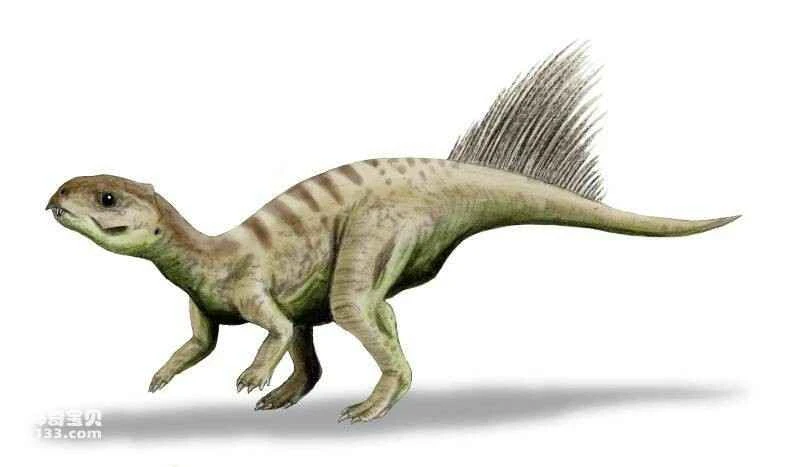
Chinese name: Chaoyanglong
Latin name: Chaoyangsaurus
Era: Early Cretaceous
Fossil origin: Liaoning, China
Physical characteristics: Unknown
Diet: Plants
Species: Ceratopsians
Definition: Dinosaurs discovered in the Chaoyang area