When people think of bacteria, they probably first think of pathogenic bacteria that cause disease and harm lives, so it's understandable that they "turn pale at the mention of bacteria." In fact, pathogenic bacteria are only a part of bacteria, and in the vast world of bacteria, most bacteria can bring great benefits to humans. The production of food additives such as monosodium glutamate and the purification of the environment are all inseparable from bacteria.
Bacteria are a type of simple, single-celled organism that are so small that they can only be observed under a microscope. They lack a fully formed nucleus, existing only with nucleoplasm either dispersed within the cell's protoplasm or in granular form. Therefore, scientists call them "prokaryotes."
Bacteria are diverse and widely distributed, found everywhere from 17,000 meters in the air to 10,700 meters deep in the ocean.
Bacteria are not only widely distributed, but also diverse in species and appearance. Scientists usually classify them into four groups based on their shape: spherical ones are called cocci, long cylindrical ones are called bacilli, slightly curved or arc-shaped ones are called vibrios, and spiral ones are called spirochetes, also known as spirochetes.
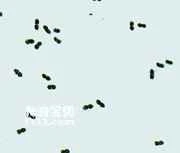
Streptococcus pneumoniae
Among cocci, some live alone and are called monococci, such as *Coccobacillus urealyticum*; some live in pairs and are called diplococci, such as *Dicotyl pneumococcus*; some have four cells linked together and are called tetracocci; some have eight cells stacked together like a pyramid and are called octacocci, such as *Glaucomatus luteus*; some cells are linked together like a string of beads and are called streptococci, such as *Streptococcus lactis*; and some cells are irregularly clustered together, looking like bunches of grapes, and are called staphylococci, such as *Staphylococcus aureus*.
Bacilli are further divided into long bacilli (e.g., Mycobacterium tuberculosis), short bacilli (e.g., glutamate-producing bacteria), and medium-sized bacilli (e.g., Escherichia coli). Some rod-shaped bacteria can clump together; these are called streptobacteria (e.g., Bacillus anthracis). Other bacilli can grow side branches; these are called mycobacteria (e.g., Mycobacterium tuberculosis).
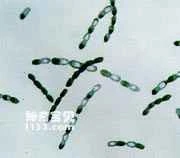
Anthrax bacteria
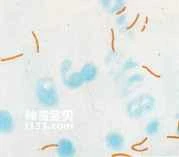
Mycobacterium tuberculosis
In addition to the four groups mentioned above, there is another type of filamentous bacteria, whose rod-shaped cells are linked together in long chains and surrounded by a common mucilaginous sheath, forming filamentous or hair-like hyphae. Such bacteria are called sheathed bacteria and are commonly found in sewers or other water bodies rich in organic matter.
If we cut open a bacterium and observe it, the outermost layer is a strong protective layer called the cell wall, which encloses the entire bacterial cell and gives it a fixed shape. Its main component is peptidoglycan. Inside the cell wall is a thin, soft, and elastic permeable membrane—the cell membrane. It is the exchange station between the inside and outside of the cell, controlling the exchange of substances. The cell membrane is composed of lipids, proteins, and carbohydrates, and inside it is all the life-sustaining material of the bacteria—the cytoplasm. The cytoplasm is composed of a viscous, gelatinous substance containing various enzyme systems. It is the site of biochemical reactions and a "warehouse" for storing metabolic products. Its chemical components are mainly water, proteins, nucleic acids, and lipids. Bacterial cytoplasm contains a nucleus, but this "nucleus" differs from the nucleus of eukaryotes; it is not surrounded by a nuclear membrane but is simply formed by the coiled and intertwined genetic material, and its chemical composition is mainly nucleic acids.
In addition to the general cellular structure, some bacteria also have special structures, such as capsules, spores, and flagella.
A capsule is a jelly-like, mucus-like membrane outside the cell wall of some bacteria, which can resist the attack of harmful chemicals. Therefore, bacteria with capsules are not easily killed by drugs. The composition of the capsule varies from bacteria to bacteria, but most are polysaccharides or polypeptides.
Some bacteria, at a certain stage of their life cycle, can form a round or oval endospore called a spore within their vegetative cell. Spores are dormant forms of bacteria, with low water content, thick and dense walls, and are highly resistant to heat, dryness, and chemical damage. Spores can exist independently of the cell and can survive for up to 10 years in dry environments. When conditions are suitable, spores germinate and grow into new bacterial cells. However, spores are not the means of reproduction, as a bacterial cell can only produce one spore. Bacterial reproduction occurs through cell division.
Some bacilli and vibrios can also grow very fine and long filamentous structures called "flagellates." Flagella are locomotor organs deeply embedded in the cytoplasm; their rotation propels the bacteria to move rapidly. Cocci usually do not have flagella, while some bacilli have them and others do not, and some develop them only at a certain stage of their growth process. Vibrios and spirilla both have flagella. Some bacteria, such as spirochetes, do not rely on flagella for locomotion but instead use the contraction and extension of elastic axonal filaments within the cell to move.