As early as the Late Triassic period, just as dinosaurs were emerging onto the evolutionary stage, a group of small, inconspicuous animals diverged from the theropods within the order Therapsids. They were somewhat "born at the wrong time," because for over 100 million years, from the Jurassic to the Cretaceous, they lived under immense pressure from dinosaurs and other reptiles, struggling to survive. It wasn't until the end of the Cretaceous, when dinosaurs and other reptiles that had been remarkably adapted in the Mesozoic era went extinct, that they were able to rise tenaciously in the subsequent Cenozoic era and become the dominant species on Earth. These were mammals, and the reason they were ultimately able to rise from the margins was that they had acquired a series of advanced features.
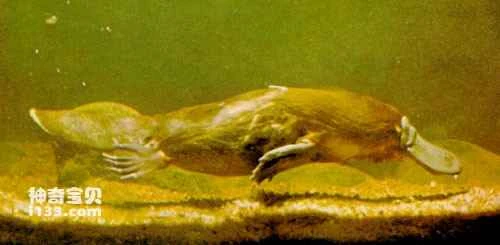
Platypus—a living ancestral mammal
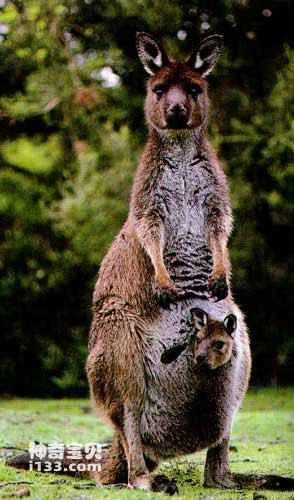
Kangaroo—a modern metamammal

Humans—also a member of the true beasts
Beginning in the Late Triassic, mammals underwent a difficult but relentless evolutionary process throughout the Mesozoic Era, differentiating into three major subclasses: Ethyotheres, Allotheres, and Theria. Ethyotheres comprise two groups: Cyclodontia and Triconodontia; Allotheres contain only one order, Polytuberculates; and Theria include three subclasses: Prototheridia, Metatheridia, and Eutheria.
The establishment of mammalian characteristics
Mammals are agile quadrupeds with relatively large cranial lobes, reflecting increased brain volume and associated enhanced neural control and intelligence. Mammals have a high basal metabolic rate, and their bodies are covered in insulating fur. Combined with other physiological mechanisms (such as sweating), they are warm-blooded animals with a constant body temperature. Except for monotremes, mammals are viviparous, meaning the offspring have completed a certain stage of development in the mother's womb before birth, making them more resilient. Furthermore, after birth, the offspring are nourished by their mother's milk and protected by her, further ensuring their survival. Mammal teeth are differentiated into incisors, canines, and cheek teeth (including premolars and molars). Cheek teeth typically have a crown with several cusps, anchored to the jawbone by two or more roots. Such teeth are better adapted for chewing diverse foods. Mammals have a secondary bony hard palate that separates the nasal passages from the oral cavity, allowing them to breathe without obstructing their breathing while chewing food.
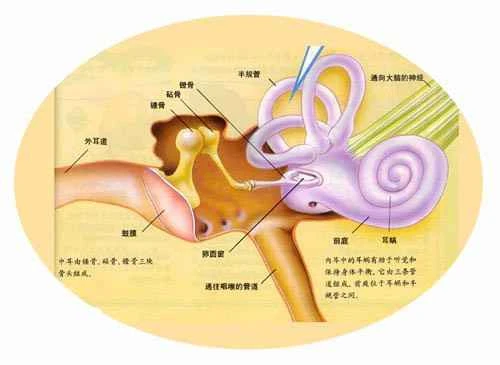
Inner ear structure of mammals
In addition, mammals possess several other anatomical features distinct from reptiles. For example, the ribs in the neck of mammals (cervical ribs) are fused with the cervical vertebrae, becoming part of the cervical vertebrae; there are free ribs on either side of the lumbar vertebrae; the ilium, ischium, and pubis are fused to form a single pelvic structure; and the skull has a pair of occipital condyles. Particularly noteworthy is the joint between the mammalian skull and mandible, composed of the squamosal and dentate bones. The quadrate and articular bones that connect the skull and mandible in reptiles have entered the middle ear in mammals, becoming two of the three auditory ossicles: the incus and malleus. These, along with the stapes (the only auditory ossicle in reptiles), form a lever structure used to transmit sound wave vibrations from the eardrum to the inner ear. This is one of the best examples of anatomical structures shifting from one function to another in the evolutionary history of vertebrates.
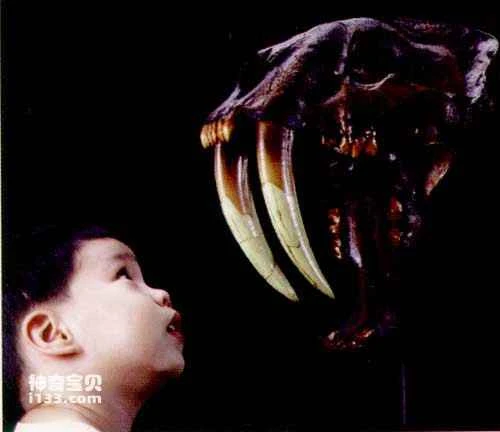
Mammal teeth