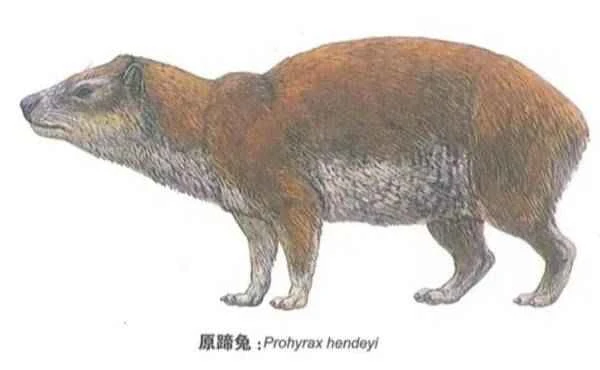
Frogs, toads, and giant salamanders are familiar amphibians that still inhabit ponds, rice paddies, swamps, streams, rivers, and other damp places on land. All these extant amphibians belong to a large family called "smooth-bodied amphibians," formerly known as "armorless amphibians." As the name suggests, these are animals with smooth bodies and no armor. There are approximately 4,000 species of these extant amphibians, living in warm, humid environments on all land except Antarctica. Scientists classify them into three main groups: tailless amphibians, tailed amphibians, and legless amphibians.
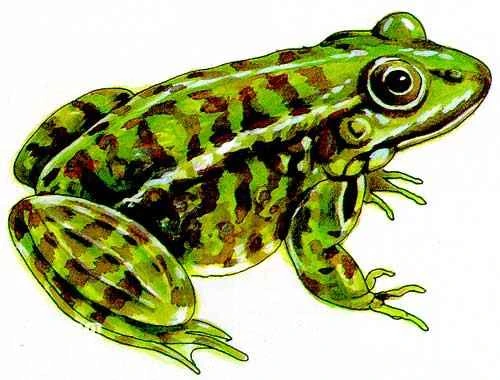
frog
Legless amphibians are a highly specialized group of amphibians. They resemble earthworms in appearance, but have no limbs and short or no tails at all.
Most legless animals live in tropical regions and are burrowing underground; ichthyosaurs are one example. Their skin is bare, with many ring-shaped wrinkles and rich in mucous glands; their eyes are degenerate, but their sense of smell is highly developed. These animals have a large number of vertebrae, some species having up to 250, and the largest legless individuals can reach a length of 1.5 meters.
In addition to the specialized characteristics mentioned above, legless amphibians also exhibit some primitive features. For example, most legless amphibians have degenerated bony scales, but these scales are not distributed across the body surface like those of fish; instead, they are embedded within ring-shaped wrinkles in the skin. These degenerated small scales are considered by some scholars to be remnants of the scales on the body surface of ancient labyrinthoids, reflecting primitive characteristics inherited by these animals.
There are over 160 species of extant legless amphibians, distributed in tropical regions of Latin America, southern Asia, and Africa. The Xishuangbanna fish salamander is the only known species of legless amphibian in my country. Legless fossils are extremely rare; the oldest known legless fossil, discovered in Arizona, USA, dating back approximately 200 million years to the Early Jurassic period, was named *Euthymus microlimbus*. Its distinctive feature was its small, weak limbs, reflecting its primitive nature. As legless amphibians evolved, these limbs gradually shrank, eventually disappearing completely in extant species, making them truly "legless."
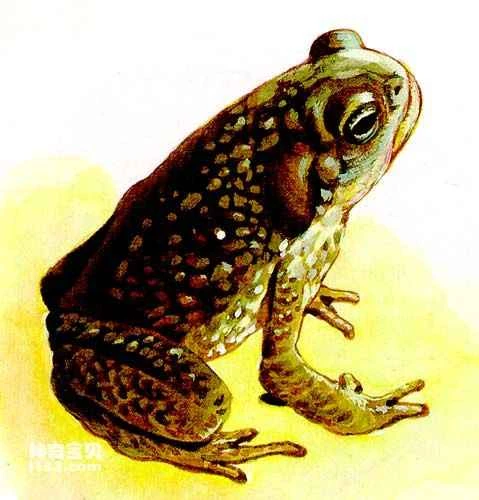
toad
Salamanders are "tailed amphibians". There are more than 350 species living today, mainly distributed in the Northern Hemisphere. Only one type of tailed amphibian, called "lungless newts", has entered South America, located in the Southern Hemisphere.
Many people confuse salamanders with lizards, but the two are actually easy to distinguish. Salamanders are amphibians, while lizards (such as geckos) are reptiles; lizards have scales covering their bodies, while salamanders have bare bodies; in addition, salamanders generally have four "fingers" on their forefeet, while lizards have five.
The history of tailed amphibians can be traced back to the Middle Jurassic period (approximately 170 million years ago). The earliest known representatives were found in Central Asia and Western Europe, but these fossils are scattered and fragmented. Recently, many well-preserved tailed amphibian fossils have been discovered in the Early Cretaceous strata of Northeast my country. Among those already named are *Zhongjian Liaoxi*, *Dongfangtang*, *Qiyi Jehol*, and *Fengshan Sinosaurium*, which lived approximately 130 to 110 million years ago. These fossils are characterized by their early age, excellent preservation, large quantity, and rich diversity. Moreover, they represent the earliest known modern salamanders in the world, and many characteristics can be compared with extant species. Therefore, it is speculated that extant salamanders in the world likely evolved from these earliest examples.
There are three families of tailed amphibians living in my country: the Lesser Salamanders (Andrias davidiana), the Cryptobranchidae (Cryptomaniidae), and the Salamanders (Salamanderidae). The Mesozoic tailed amphibians fossils reported in my country are relatively primitive species with unique skeletal characteristics, and cannot yet be classified into known families. However, preliminary studies show that *Zhongjian Liaoxi Salamander* and *Dongfangtang Salamander* share significant morphological similarities with Lesser Salamanders. *Jehol Salamander*, on the other hand, shares some skull characteristics with certain genera and species of the Cryptobranchidae family (such as the Giant Salamander), but *Jehol Salamander* is much smaller.
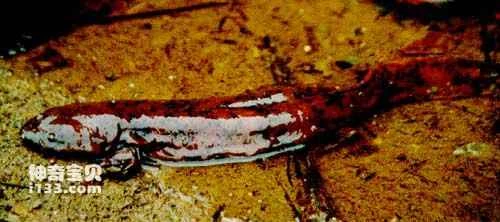
giant salamander
Tailless amphibians are conventionally referred to collectively as "frogs." These include frogs in a narrower sense (what we commonly call croakers, etc.) and toads. The main difference between the two is that frogs have smooth bodies, are agile, prefer moist environments, are good jumpers, and possess a strong thoracic pectoral girdle; while toads have rough, uneven bodies, are heavy, have poor jumping ability, but are highly drought-resistant, and possess an arched thoracic pectoral girdle. However, this distinction is not very strict in biological taxonomy; some animals called toads can also have strong jumping abilities, and some animals called frogs have been found to have an arched thoracic pectoral girdle (such as the wrinkled frog).
Among extant tailless amphibians, the more primitive species are all toads, such as the tailed toad of North America, the smooth-skinned toad of New Zealand, and the tongued toad of Europe and North Africa. Furthermore, fossil evidence shows that the arched pectoral girdle appeared earlier than the fixed pectoral girdle. From this perspective, toads are the ancestors of frogs. In other words, the elegant frog evolved from some strangely shaped toad.
In 1999, an ancient frog fossil unearthed from the Early Cretaceous strata in western Liaoning Province attracted widespread attention from scientists both at home and abroad. Wang Yuan, a young scholar from the Institute of Vertebrate Paleontology and Paleoanthropology of the Chinese Academy of Sciences, named it "Sanyanli Toad". It is the earliest known frog in my country, living approximately 125 million years ago, coexisting with dinosaurs of all sizes.
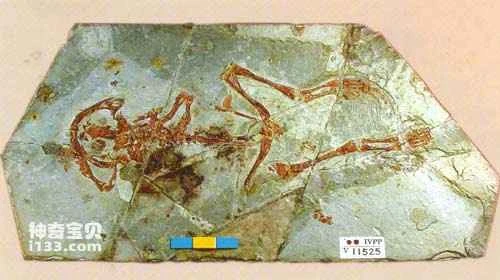
San Yan Li Chan
The *Tripteryx tricornutum* is not only ancient, but its fossils are also remarkably well-preserved, which is extremely rare among frog fossils. This is because frogs mostly live in warm, humid environments, and their skeletons are thin and weak, making them difficult to fossilize. In the past, only two or three relatively complete Cenozoic frog fossils have been discovered in my country, including the *Frog basilicas* from Linqu, Shandong (dating back approximately 16 million years) and the *Frog yusheensis* from Wuxiang, Shanxi (dating back approximately 5 million years).
The skeletal morphology of the *Tripterygium wilfordii* is already very similar to that of extant tailless amphibians, possessing a developed ilium and elongated hind limbs, indicating that it already had considerable jumping ability. Its upper jaw is lined with fine, comb-like teeth, while most common frogs today lack teeth; the presence of teeth is a primitive characteristic. Based on this feature, it can be inferred that the *Tripterygium wilfordii*'s tongue-based predatory function and overall locomotion may not have been very advanced, and its teeth likely played a significant role in assisting predation.
Taxonomically, *Tripteryx tritonense* belongs to the group of discordant toads. Its extant relatives include the European discordant toad, the midwife toad, and the Asian *Lespedeza orientalis*. Judging from the appearance of these toads, *Tripteryx tritonense* was unlikely to be aesthetically pleasing. Clearly, the name "tritonense" derives from its exquisite skeletal fossils, rather than from the animal's physical appearance.
Legless amphibians, tailless amphibians, and tailed amphibians constitute three orders within the subclass Gliomata in animal taxonomy. In addition, the Gliomata subclass has a fourth order, namely the protoanura, which is represented by the Triple Frog discovered on the island of Madagascar in Africa.
Triassic frog is the earliest known gliding amphibian, dating back 240 million years. This small animal, only about 10 centimeters long, surprisingly possesses typical frog characteristics, yet its appearance (Early Triassic) is remarkably early. The Triassic frog has a simplified skull, a shortened tail, an extended ilium in the pelvic girdle, and fused and elongated tibia and fibula—all indicating an evolution towards the jumping adaptations typical of frogs. At the same time, it retains many primitive features: its forelimbs retain five toes (instead of the four common in modern amphibians), its trunk has a relatively large number of vertebrae, and its tail is composed of several vertebrae, rather than the fused caudal stalk found in modern frogs.
Can the *Triassic frog* represent the ancestral type of gliding-body amphibians? Most scientists believe not. This is because frogs are considered a specialized group within amphibians. This is not only due to their unique hopping lifestyle, but also because their skeletal structure is considerably simpler compared to ancient labyrinthodonts and vertebrae. From this perspective, tailed amphibians are closer to the ancestral type of gliding-body amphibians in terms of morphology and skeletal features. However, the earliest tailed amphibian fossils appear much later than frogs. The reason for this difference is still unclear, but it is believed that this question will eventually be resolved with the discovery of more fossils.
Another question that also perplexes scientists is which ancient amphibian(s) evolved from which gliding-bodied amphibians? The currently dominant view holds that all gliding-bodied amphibians evolved from a single type of schistophyte within the labyrinthodontic group, and that all modern amphibians share a common ancestor. This view is known as the "single-source theory." In contrast, the "multi-source theory" posits that tailless amphibians evolved from schistophytes, while tailed and legless amphibians may have evolved from schistophytes. Currently, it remains inconclusive which hypothesis is correct, and this remains an unsolved mystery in the evolution of modern amphibians.