Mass strandings of marine mammals have occurred for millions of years, but their origins are explained in various ways. Causes of mass strandings before the arrival of humans have been attributed to herding behavior, large-scale marine fronts, and harmful algal blooms (red tides). Algal toxins cause organ failure in marine mammals, and red tides are the most common cause of mass strandings, with broad geographical and taxonomic influences. Toxin-mediated deaths of marine food webs have the potential to occur on geological timescales, but direct fossil evidence has been lacking.
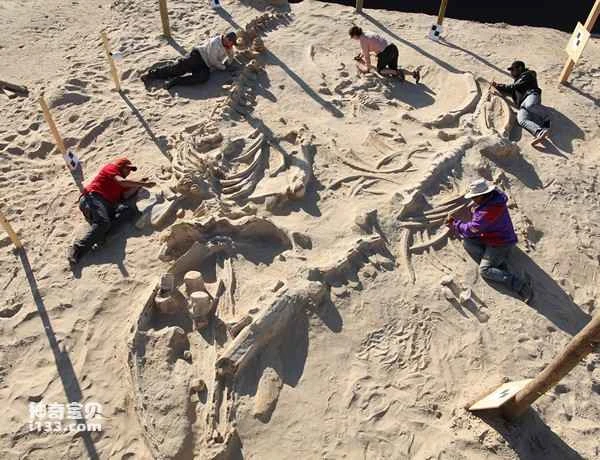
Paleontologists discover fossils of a mass stranding of marine mammals
American paleontologists Nicholas D. Pyenson and colleagues described an unusual, densely packed fossil deposit of marine vertebrates from the Late Miocene in the Cerro ballena region of Chile's Atacama, preserving over 40 skeletons of fin whales, sperm whales, seals, walrus whales, aquatic sloths, and carnivorous bony fish. The marine mammal skeletons were distributed across four discrete sites, representing a cyclical accumulation mechanism. Taphonomic analysis suggests that strong spatial focusing was a mechanism for rapid death at sea, buried under a protective tidal barrier.
In the modern setting, red tides are the only known recurring natural cause, suggesting that upwelling zones should maintain similar patterns and densities of marine vertebrate fossil deposits elsewhere in the world.