Black-feathered birds are quite common in daily life, but do you know the names of these small black birds? This article introduces ten black bird species: crows, black lorikeets, mynas, palm cockatoos, black thrushes, black larks, mynas, black drongos, white-spotted black rock magpies, and black munias. Among them, crows are the common name for about 25 species of black birds in the family Corvidae of the order Passeriformes, and they are the most common black birds in life.
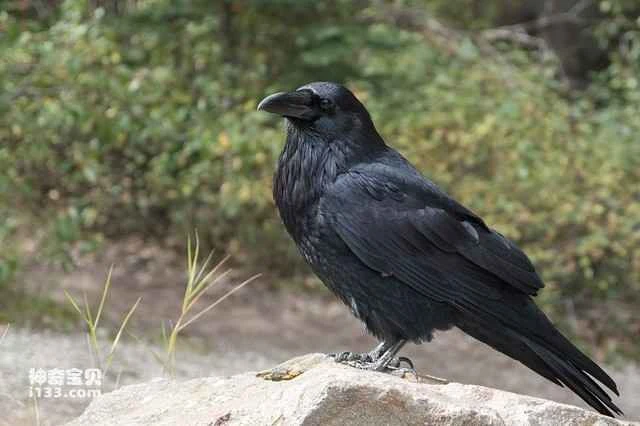
1. Crow
Crows are a common name for several species of black birds in the genus Corvidus of the family Corvidae in the order Passeriformes. They are also called "old crows" because of their large beaks and loud calls. They are the largest birds in the Passeriformes, reaching about 50 centimeters in length. Their plumage is mostly black, hence the name. The feathers are mostly black or black and white, with long beaks, some having a distinctive white collar, and black feathers with a purplish-blue metallic sheen. The beak, legs, and feet are pure black; the distance from the nostrils to the forehead is about one-third of the beak's length, and the nasal whiskers are stiff, reaching the middle of the beak.
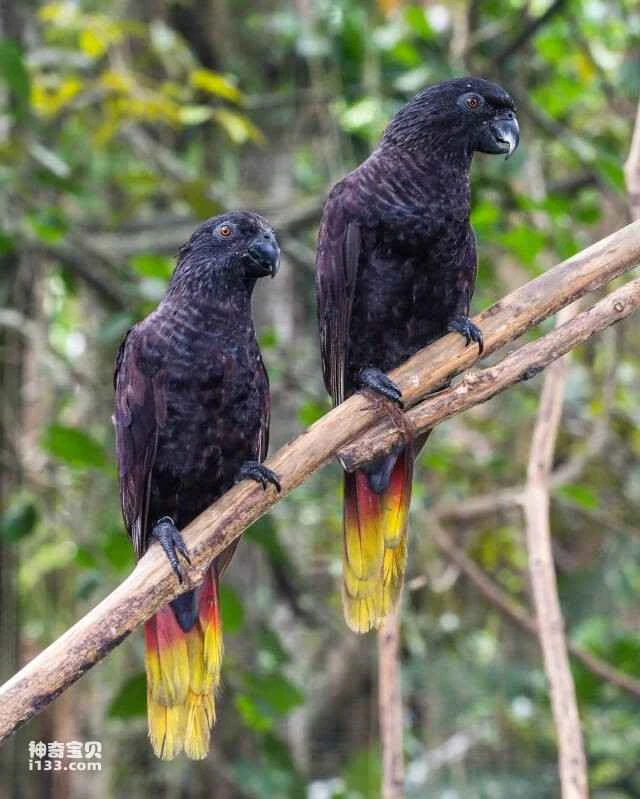
2. Black Lorikeet
The Black Lorikeet has vibrant, glossy black plumage, with some subspecies exhibiting red spots, giving it a crow-like appearance. Its bare parts, such as the beak, skin, area around the eyes, and lower jaw, are also jet black, while the tail has a bluish-purple hue; the underside of the tail feathers is olive-yellow with a slight reddish-brown tinge at the base; the iris is orange-red, and the legs are grey. Black Lorikeets are relatively quiet species, sometimes gathering in large numbers to forage on flowering plants. When flying, they flap their wings rapidly, but not at a fast pace. Captive birds are adorable, playful, and very friendly and obedient.
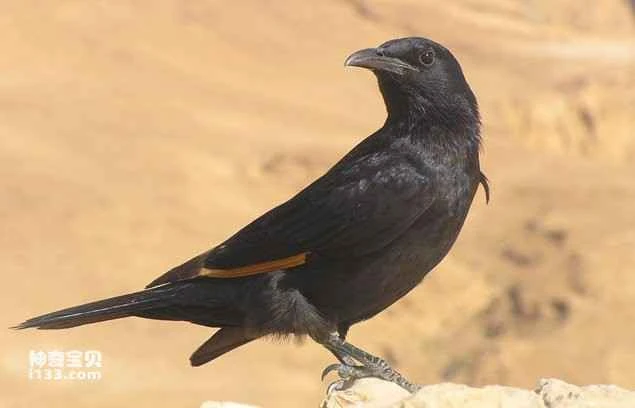
3. Mynah
The common myna is entirely black, with spear-shaped forehead feathers that elongate into a tuft and stand erect at the base of its beak, resembling a crest. The crown, nape, sides of the head, cheeks, and ear feathers are spear-shaped, velvety black with a bluish-green metallic sheen. The rest of the upper body is tinged with pale purplish-brown, less glossy than the head. Its wings are the same color as its back, with white tips on the primary coverts and white bases on the primary flight feathers, forming broad white wing patches, especially noticeable in flight. Common mynas are widespread in southern China and are popular cage birds. They can mimic the calls of other birds and simple human speech, and are widely kept as cage birds in China, and have also been introduced to the Philippines and Canada.
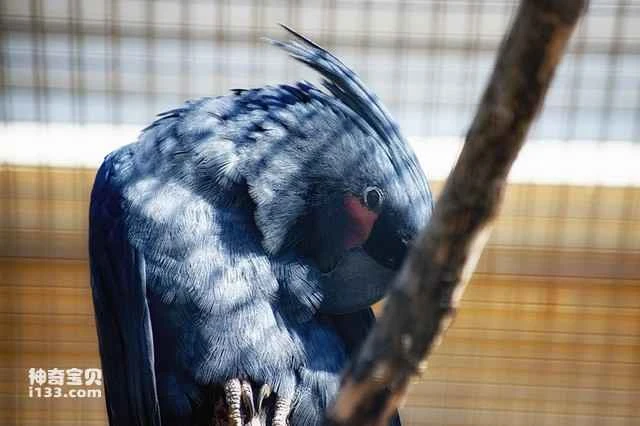
4. Palm Cockatoo
The Palm Cockatoo is a very beautiful and unique cockatoo. Because of its featherless face, similar to the macaw, it is sometimes called the "Coconut Macaw." It is the largest parrot in Australia. The Palm Cockatoo is entirely black and grey, with a greyish-black crest. The bare skin on its face is generally light red, varying in color from white to dark red, with the brightness depending on its environment and health. Like the macaw, when excited or agitated, the bare skin on its cheeks turns flushed, and the crest on its head flutters.
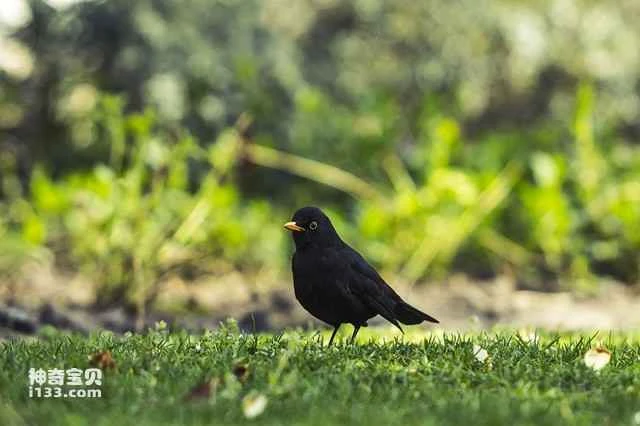
5. Blackbird
The Black-winged Blackbird, also known as the Mockingbird, Chinese Blackbird, or simply Blackbird, is the national bird of Sweden. A beneficial bird of the grasslands, its jet-black plumage often leads unsuspecting people to mistake it for a crow, though it is much smaller, about the size of a pigeon. The male Black-winged Blackbird is predominantly black, dark brown, or tan, sometimes tinged with rust or gray. Its upperparts, including the wings and tail feathers, are black; the underparts are dark brown, slightly lighter in color, with brown edges on the chin and a slightly brown throat with faint dark brown longitudinal stripes.
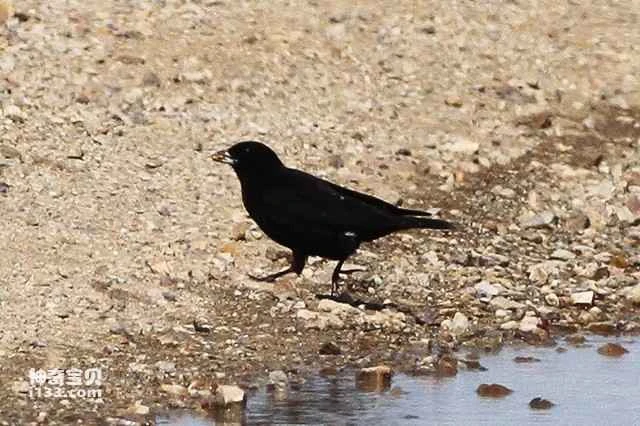
6. Black Lark
The Black Lark is a species of lark in the family Laridae, distributed across Eurasia and North Africa. The male is easily distinguishable, being entirely black; the female resembles the Two-spotted Lark but has denser longitudinal stripes on its underparts, is predominantly black when its wings are folded, and has black underwings and bluish-gray legs in flight. The Black Lark's flight call is similar to that of a lark; it slows its wing flapping while singing, and soars directly into the clouds when flying high. It is also adept at running on the ground, and when startled, it often hides motionless, its camouflage making it difficult to spot. It frequently perches on high mounds or sand dunes, singing incessantly; its song is high-pitched and beautiful.
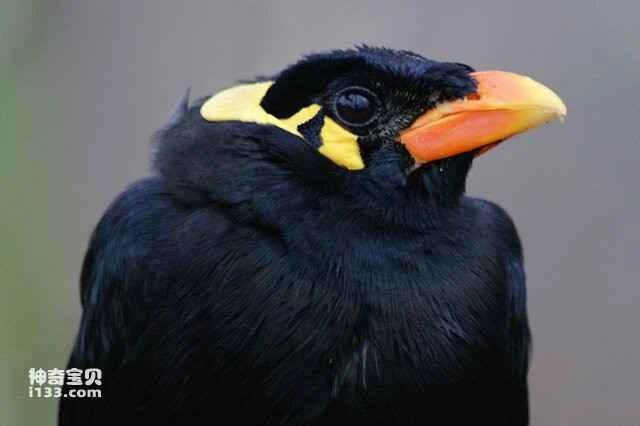
7. Myna
The myna is entirely black, with a purplish-black metallic sheen on its head and neck. The lores and sides of the head are covered with short, downy black feathers, while the central crown has dense, curled feathers. Adult males have well-developed bristles, a glossy black forehead to crown, and short, downy black feathers on the sides of the head. They have two orange-yellow wattles behind the head, and the area behind the eyes is bare. The back of the neck, shoulders, and inner wing coverts are glossy purplish-copper. The chin, throat, and foreneck are purplish-black, the breast is copper-green, and the abdomen is bluish-purplish-copper. The central abdomen and undertail coverts have narrow white edges. Females are similar in color to males.
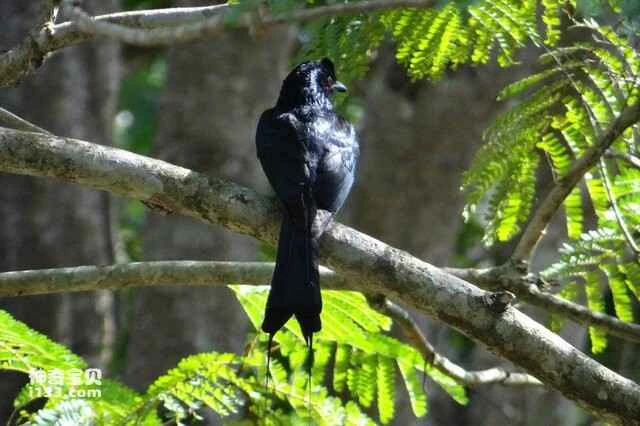
8. Black Curly Tail
The Black Drongo is entirely black, with a glossy blue sheen on its upperparts, breast, and tail feathers. Adult male Black Drongos are entirely glossy black, with the upperparts from the head, back, rump, and upper tail coverts being deep black, tinged with a copper-green metallic sheen; the tail feathers are deep black with a copper-green sheen on the surface; the wings are blackish-brown, with a copper-green metallic sheen on the outer webs of the flight feathers and the upper wing coverts; the underparts from the chin and throat to the undertail coverts are blackish-brown, with the copper-green metallic sheen being more pronounced only on the breast; the underwing coverts and axillaries are blackish-brown.
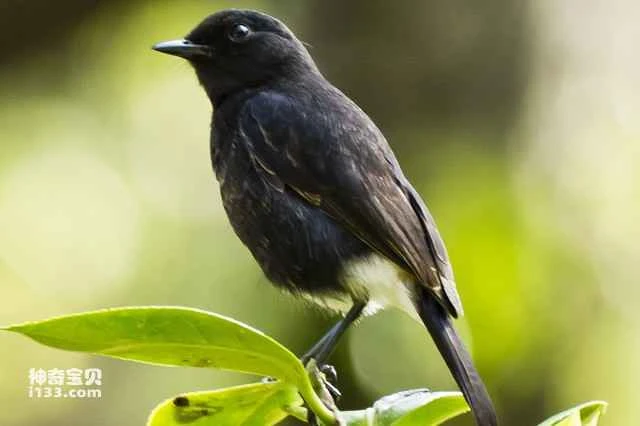
9. White spots and black stones
The White-spotted Black Rock Shrike primarily inhabits open valleys, often perching on the tips of bushes, shrubs, and small trees along field edges, or on power lines. The male is entirely black, with only striking white stripes on its wings and rump. Females typically have brown longitudinal stripes and a light brown rump. They prefer dry, open grasslands, perching on prominent locations such as the tops of bushes, rocks, pillars, or power lines, chasing small insects and other prey. The male raises its tail when singing or excited.
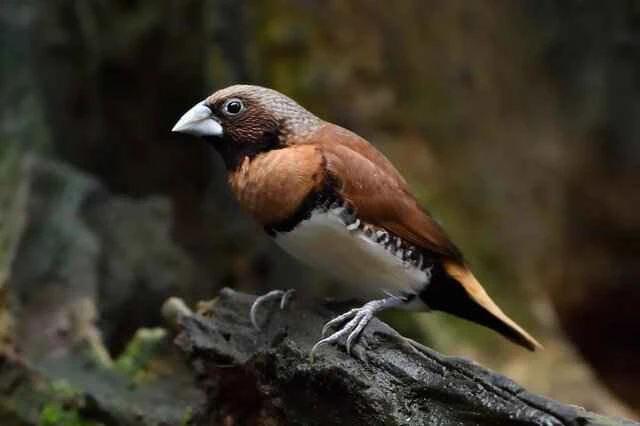
10. Black Java Sparrow
The Munia is approximately 10-11 cm in length and weighs 10-12 g. The male is entirely black except for the rump and upper tail coverts (the wing coverts and flight feathers are actually a very dark brown); the edges of the rump, upper tail coverts, and tail feathers are straw-yellow, sometimes the rump feathers are even darker, appearing orange-yellow. The female is entirely dark brown with a purplish sheen, except for the rump and upper tail coverts; the head, upper back, and breast have black feather edges; the undertail coverts are black; the rump and tail are the same color as the male, sometimes with a chestnut-colored band running across the upper part of the rump.