In the "college student bird-stealing case," both the courts of first and second instance determined that Yan and Wang had hunted a total of 16 birds, including the Eurasian Hobby and other birds of the Falconidae family, both of which are national second-class protected animals.
In this case, of the first batch of 12 birds, police recovered one Eurasian Hobby after the buyer, Yun Rongjie, was apprehended; the whereabouts of the other birds remain unknown. Another buyer identified by the police has also not been apprehended, and the identities of the other buyers are unknown. The second batch of 4 birds, plus the Crested Goshawk purchased by Yan Xiaotian, totaled 5 birds. An identification report issued by the National Forestry Administration's Forest Public Security Judicial Appraisal Center shows that they are: 1 Crested Goshawk, 2 Eurasian Hobbies, and 2 Falconiformes. Another identification report issued by the center also indicates that the only bird "apprehended" in the first batch sold to Yun Rongjie was an Eurasian Hobby. The conclusion is that all the above-mentioned birds are Class II protected animals in China. Below, we will introduce the detailed characteristics of the Eurasian Hobby, Crested Goshawk, and Falconiformes.
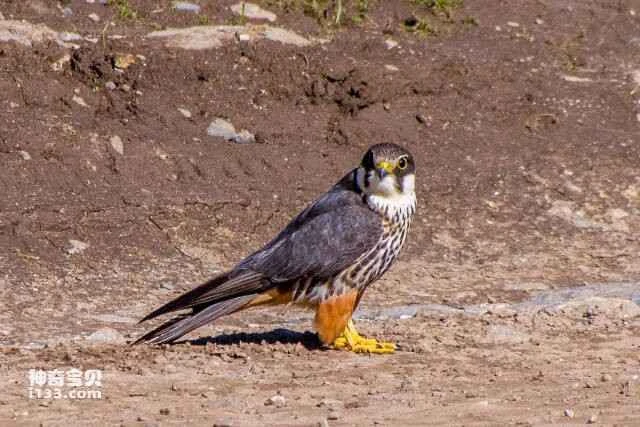
1. Hobby
The Eurasian Hobby is a relatively common species of raptor in my country and is a Class II protected wild animal in China. Scientific name: *Falco subbuteo*, also known as: Green-striped Falcon, Earth Falcon, Child Falcon, Grasshopper Hawk, Insect Hawk, Eurasian Falcon, etc.
The Eurasian Hobby is a medium-sized bird belonging to the genus *Eurasiana* in the family Falconidae, distributed across Eurasia and North Africa. They are approximately 30-36 cm in length, have a wingspan of 75-90 cm, and typically weigh between 200-350 grams. The head and upper back are bluish-grey, while the lower back and tail are brown, and the wings are covered with black stripes and brown spots. Males and females are similar in appearance, but the males have brighter plumage.
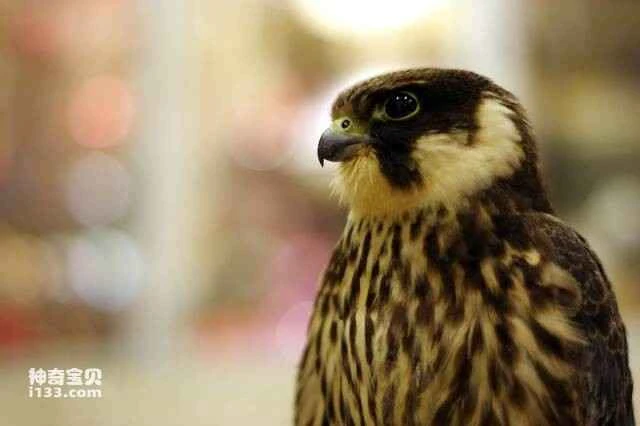
Eurasian hobbies are migratory birds that migrate north to breed in the summer and south to breed in the winter. They usually choose to nest in trees or on cliffs, laying 3-5 eggs at a time. The chicks stay in the nest for about a month after hatching before leaving.
Hobbies primarily feed on insects, small mammals, birds, and reptiles. They typically soar high in the sky, using their vision to lock onto their targets before swiftly swooping down to attack. Hobbies are extremely fast attackers, reaching speeds exceeding 400 kilometers per hour.
Although the Eurasian Hobby is not rare in Europe, its population has been affected to some extent by human activities. Therefore, the Eurasian Hobby is listed as a "Near Threatened" species on the European Red List of Threatened Species.
2. Crested Eagle
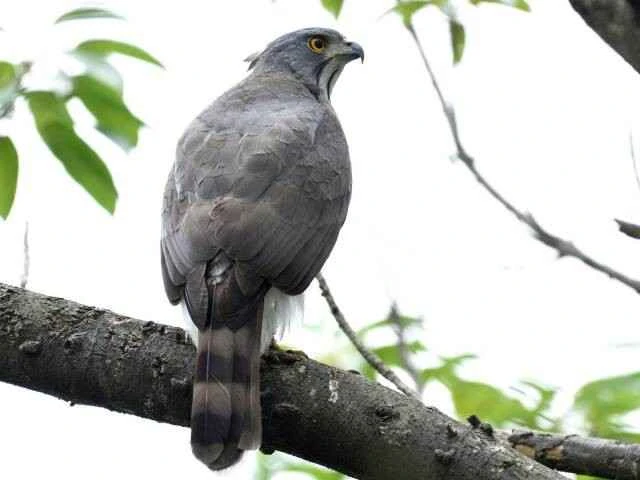
The Crested Goshawk (scientific name: *Accipiter trivirgatus*), also known as the Crested Red-crested Goshawk or the Pink Goshawk, is a bird of the genus *Accipiter* in the family Accipitridae. It is a Class II protected wild animal in China. It is distributed in southern China and Taiwan in Northeast Asia, India and Sri Lanka in South Asia, and the Philippines and Indonesia in Southeast Asia. It generally inhabits forests and nests in tree canopies. The type locality of this species is Sumatra, Indonesia.
The crested goshawk has a small crest and a black central throat stripe, longitudinal bars on its chest, transverse bars on its belly, a brown tail with dark horizontal stripes, and white undertail coverts. In flight, its wings beat very rapidly, and it rarely soars.
Crested goshawks perch on secluded branches with open views, patiently waiting for prey, and also hunt birds and insects from the air. During the breeding season, males often exhibit wing-beating behavior, rapidly flapping their wings and pressing them down before gliding away.
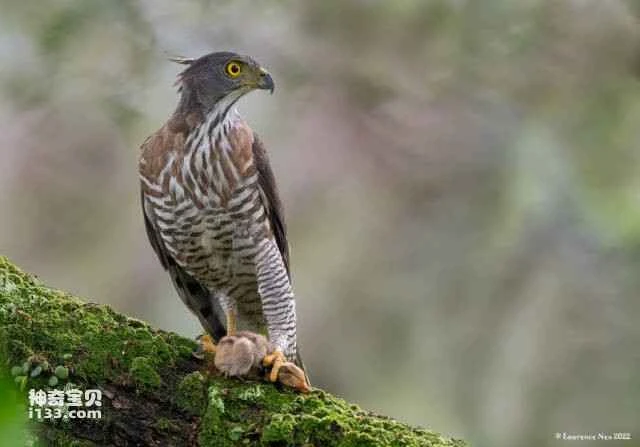
Crested goshawks primarily feed on small mammals, birds, reptiles, and insects. They typically soar in the air, using their vision to lock onto their targets before swiftly swooping down to attack. Crested goshawks are highly intelligent and agile hunters, easily seizing fast and nimble prey.
Although crested goshawks are not rare in Asia, their populations have been affected to some extent by human activities. As a result, they are listed as "Near Threatened (NT)" on the IUCN Red List.
3. Detailed characteristics of falconiformes (Falconidae)
Falconiformes is a class of birds that includes the well-known family Falconidae. They are widely considered to be the most aggressive and fastest of the birds of prey.
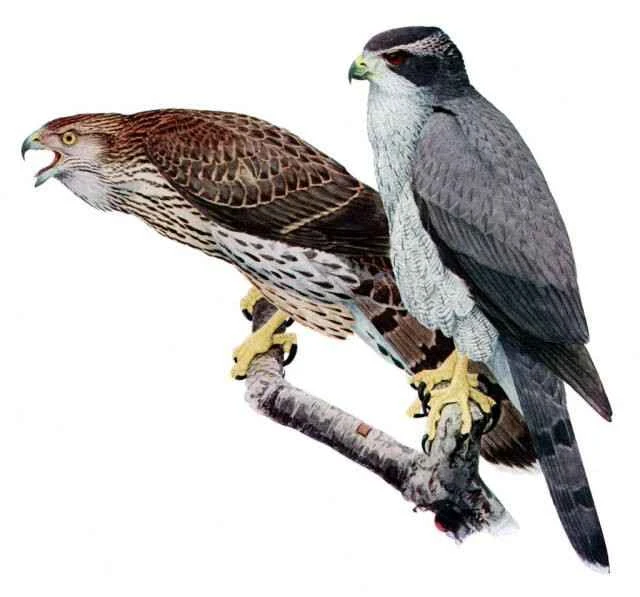
The following are detailed characteristics of animals in the family Falconidae of the order Falconiformes:
Specialized beaks: Falconiformes birds have very sharp beaks, adapted for hunting small mammals and birds. Their upper and lower jaws are very strong, allowing them to easily cut through the skin and flesh of their prey.
Strong claws: Falconiformes have very strong claws, adapted for grasping prey. Their claws usually have sharp talons, allowing them to quickly seize and subdue their prey.
High flight speed: Falconiformes fly at very high speeds, reaching speeds of over 200 kilometers per hour. They typically hover in the air, using their vision to lock onto their targets before swiftly diving to attack.
Long, pointed wings: Falconiformes have long, pointed wings, adapted for high-speed and maneuverable flight. Their wings are typically covered with black or brown feathers, which enhance their maneuverability.
Diverse diets: Falconiformes have a very diverse diet, including insects, small mammals, birds, and reptiles. Different species of falcons choose different foods based on their own tastes and the ecological environment.
In general, falconiformes are a group of highly aggressive and fast birds of prey that have adapted to a variety of different ecological environments and have outstanding abilities in hunting and survival.