China has over 40 species of venomous snakes, widely distributed, mostly in provinces south of the Yangtze River. Snake venom can be classified into three main categories based on its nature: neurotoxins, hemotoxins, and mixed venoms. The most venomous snakes include the king cobra, banded krait, red-tailed pit viper, Zhoushan cobra, sharp-nosed viper, golden krait, round-spotted viper, lancehead viper, Mangshan pit viper, and short-tailed viper. Today, we present a ranking of the top ten most venomous snakes in China. Let's take a look.
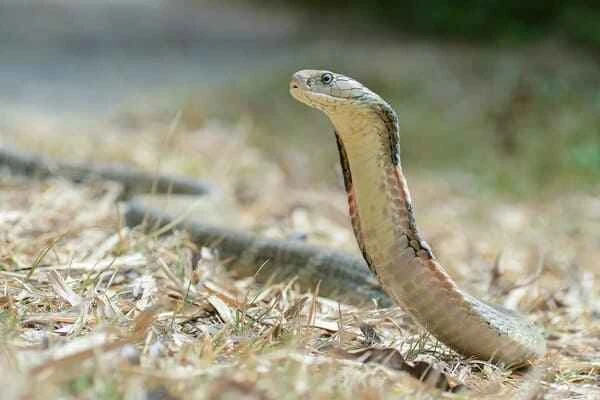
1. King Cobra
The king cobra is distributed in Zhejiang, Fujian, Jiangxi, Hainan, Guangxi, Sichuan, Guizhou, Yunnan, Tibet, Guangdong, as well as Southeast Asia and South Asia. Compared to other cobras, it is more ferocious, extremely agile, and has a flexible head and neck. It also delivers a large amount of venom, making it one of the most dangerous snakes in the world. Its main diet consists of other snakes, so it is rare to see other snake species in its territory. Once a king cobra bites, it rarely releases its grip. Its venom contains approximately 100 mg of dry venom, with an average lethal dose of 12 mg. A bite can cause swelling, nausea, abdominal pain, respiratory paralysis, speech impairment, and coma within minutes. Without timely medical treatment within half an hour of being bitten, death is almost certain.
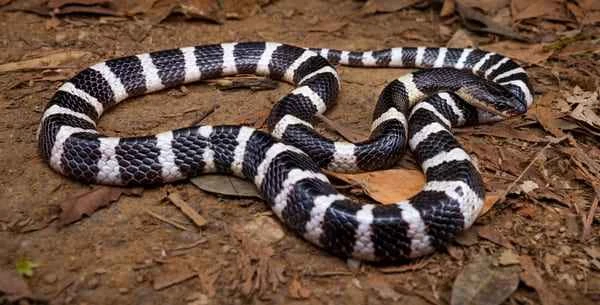
2. Banded krait
The banded krait has consistently ranked among the top three venomous snakes in China, and it also ranks highly in global snake venom rankings. It is the fourth most venomous land snake, primarily distributed south of the Yangtze River. They are typically nocturnal, hiding during the day and active at night, especially on humid and hot nights. However, in early summer when temperatures are between 15-20°C and the weather is clear, they will also be active during the day, basking in the sun.
The banded krait is relatively docile and rarely attacks humans unprovoked. However, it will suddenly attack and bite when laying eggs, hatching, or when disturbed. Although its venom glands are relatively small, the banded krait's venom is extremely potent, making it the most venomous snake in the genus *Bungarus*. Patients bitten by a banded krait may not feel pain but instead experience drowsiness and a desire to sleep. Without timely treatment, they may die in their sleep.
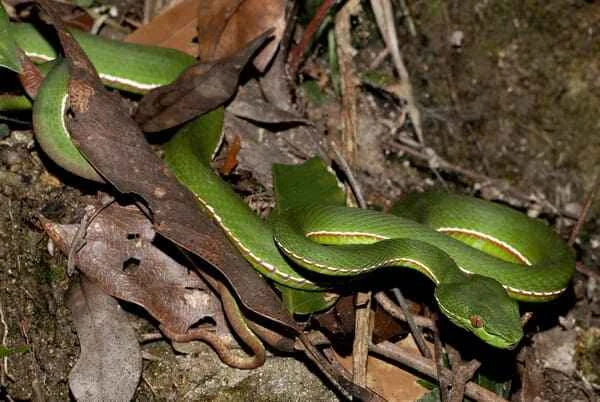
3. Red tail bamboo leaf green
The red-tailed bamboo pit viper, also known as the white-lipped bamboo pit viper, is one of the most renowned venomous snakes, and in my opinion, one of the most beautiful. They are mainly distributed in southern China and Southeast Asia, and typically prey on rodents, lizards, frogs, and tadpoles. They have a voracious appetite and usually kill their prey by biting it before swallowing it whole. Their mouths can change size depending on the size of their prey.
Although the red-tailed bamboo pit viper is relatively small, it is quite aggressive. Clinical observations indicate that the bamboo pit viper's venom is hemotoxic, causing intense burning pain at the bite site. Improper wound treatment can lead to serious consequences, including severe pain, swelling, and eventually subcutaneous purpura, potentially resulting in heart failure and death.
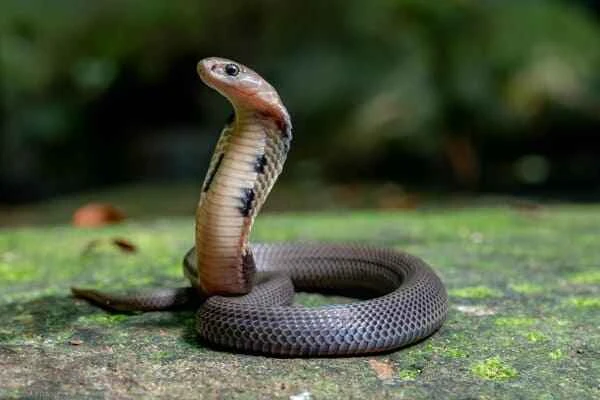
4. Zhoushan cobra
The Chinese cobra, also known as the Zhoushan cobra, ranks fifth among venomous snakes in China and is a major species distributed in the low-to-mid-altitude areas of southern China, Taiwan, and the Indochina Peninsula. It is a large, front-fanged venomous snake. When disturbed, it often raises its forebody, flattens and expands its neck, adopting an aggressive posture, while displaying double-ringed "spectacles"-like markings on the back of its neck.
Its primary diet consists of frogs and snakes, followed by birds and mice. It also preys on lizards, loaches, eels, and other small fish. Its venom contains a mixture of neurotoxins and hemotoxicants, causing respiratory muscle paralysis and external bleeding. If a bite is not treated promptly, it can be life-threatening. Furthermore, the Chinese cobra has a tendency to actively attack.
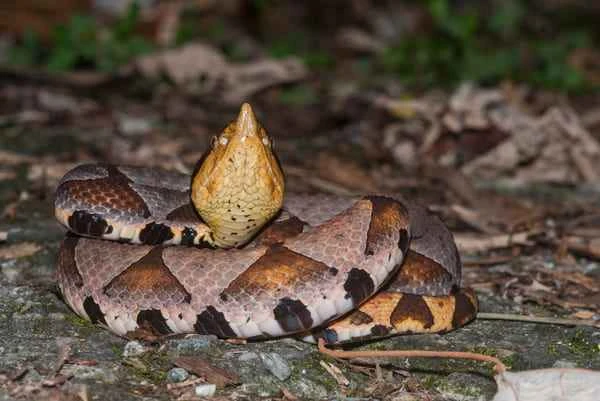
5. Sharp-nosed viper
The sharp-nosed viper, also known as the hundred-pace snake, five-pace snake, seven-pace snake, Qizhou snake, mountain valley viper, hundred-flower snake, and Chinese viper, is a well-known snake species in Asia, particularly in Taiwan and southern China. Its distribution range is roughly east of 104°E and between 25°N and 31°N in China. Known distribution areas include southern Anhui, Chongqing, Jiangxi, Zhejiang, northern Fujian, Hunan, Hubei, northern Guangxi, Guizhou, northern Guangdong, and Taiwan. In China, its distribution is quite widespread, with the richest populations found in the Wuyi Mountains and southern Anhui. Outside of China, it is only found in northern Vietnam. The sharp-nosed viper is a highly venomous snake; it is said that a bite from this snake will cause the victim to faint within five steps, hence its nickname "five-step knockout."
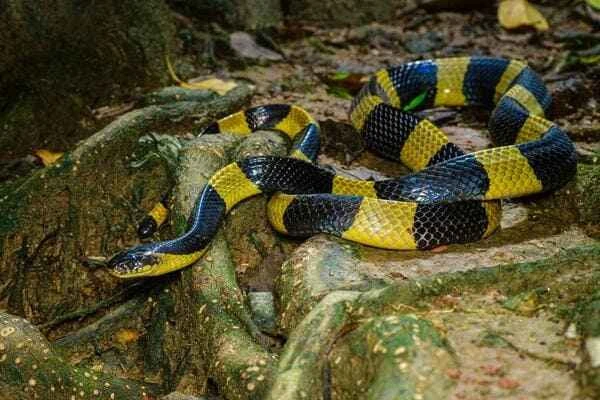
6. Golden-ringed snake
The banded krait (Bungarus fasciatus) is mainly distributed in Guangxi, Guangdong, Hainan, Fujian, Jiangxi, Yunnan, and Hubei provinces in China. It is a highly venomous snake with proteroglyphous fangs. Along with the cobra and rat snake, it is known as one of the "three snakes" and is a famous edible snake species. Although the banded krait's venom is weaker than its close relative, the silver krait (Bungarus fasciatus), it is still highly venomous, and its numbers are relatively greater, so a bite should not be ignored. The incubation period for symptoms after a bite is relatively long; patients may experience difficulty breathing, and in severe cases, death may result from respiratory paralysis and circulatory failure. However, similar to other kraits, the banded krait is slow-moving, rarely attacks humans, and primarily feeds on small vertebrates.

7. Spotted viper
The spotted viper ranks among the most venomous snakes in China, primarily distributed in Fujian, Taiwan, Guangdong, and Guangxi provinces. Slow-moving, the spotted viper initially arches its back before suddenly leaping off the ground to strike and bite its target, sometimes holding on tightly. Juvenile spotted vipers are even more ferocious, exhibiting continuous contraction and expansion movements while hissing when disturbed; this can last from several minutes to half an hour. The snake's venom contains two toxins: a hemorrhagic toxin and a neurotoxin, both extremely potent. A bite often results in kidney damage, hence its common name, "kidney-damaging snake."
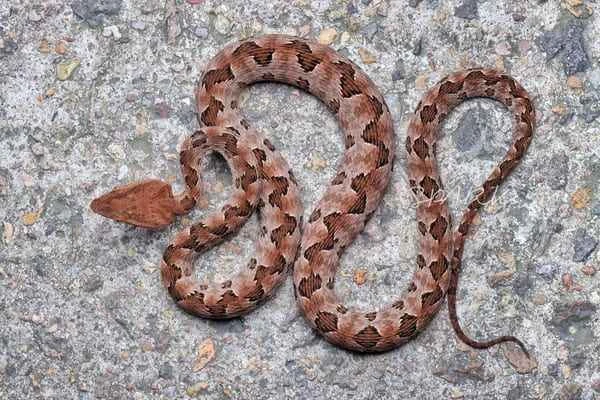
8. Original spearhead viper
The lancehead viper, also known as the turtle-shell flower, bamboo shoot-shell snake, rat snake, and evil crow, belongs to the Viperidae family and the Protoceratops genus. It is one of the six most venomous snakes in Taiwan. This snake has a typically long triangular head and a slender neck that resembles a branding iron, hence its nickname "branding iron head." It has a slender body and a thin tail, possessing excellent constricting ability and is adept at climbing trees. The lancehead viper mainly inhabits hilly and mountainous areas, often found in bamboo forests, thickets, and streamsides, feeding on fish, frogs, lizards, birds, mice, and even other snakes.
The lancehead viper belongs to the tubular-fanged venomous snake class, and its venom has local hemotoxicity. Its maximum venom release dose can reach 108 mg, and the lethal dose for humans is 48 mg (dry weight). When 0.01 ml (diluted) of the venom is injected into a 10-gram mouse, it can cause death within 2 hours; when 0.5 ml of venom at a concentration of 0.5000 is injected subcutaneously, or when 0.5 ml of venom is injected into the abdominal cavity of a mouse, the mouse dies within 24 hours, with the direct cause of death being respiratory paralysis.
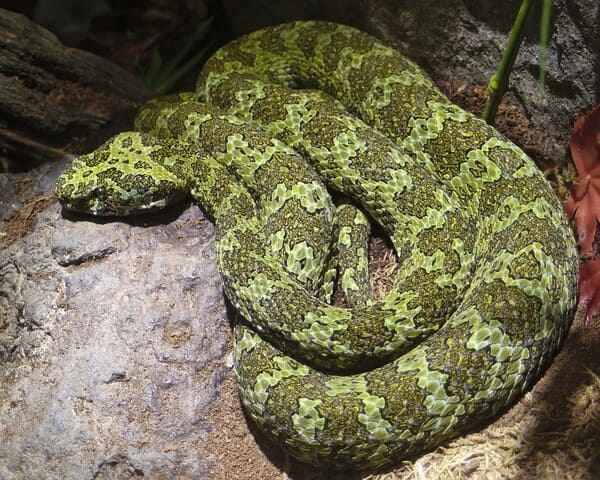
9. Mangshan Pitting Iron Head
The Mangshan pit viper, also known as the Mangshan lancehead viper, is a giant venomous snake endemic to China. It is famous for its slightly large triangular head and cheek pits, which resemble a branding iron, hence its name. Due to its endangered status, it is listed as an "endangered" species on the IUCN Red List and is often referred to as the "panda of snakes."
The Mangshan pit viper can reach a length of 2 meters and is a venomous snake with tubular fangs. Its body is covered with dark brown scales interspersed with tiny yellowish-green or rust-colored spots, forming a fine reticulated pattern. Compared to the five-step snake, the Mangshan pit viper is more venomous; a bite can be fatal within ten minutes if not treated promptly.
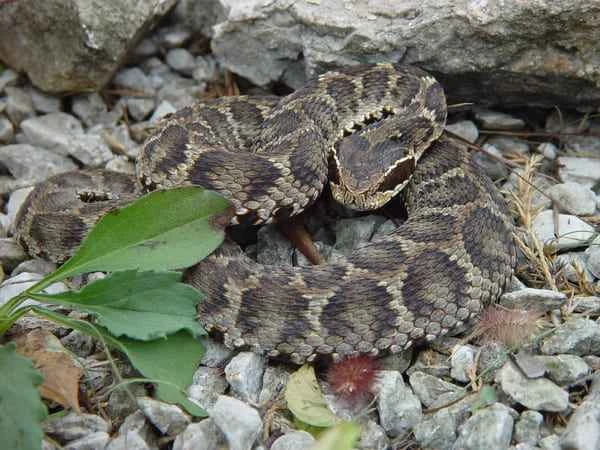
10. Short-tailed viper
The short-tailed viper is mainly distributed in the middle and lower reaches of the Yangtze River in China and the Korean Peninsula, and is one of the most venomous snakes in China. This viper is crepuscular, being most active in hot weather, especially from 8 pm to the early morning. It typically inhabits grasslands in plains and hilly areas, and from summer to early autumn, it spreads to cultivated areas, ditches, roadsides, and around villages, usually living in existing burrows such as tree holes and mouse holes. Due to its wide distribution, large numbers, and strong venom, the short-tailed viper causes considerable damage in densely populated areas of the middle and lower reaches of the Yangtze River.
Its venom contains presynaptic neurotoxins, which may primarily cause death through neurotoxin action. There are also reports that bites may cause symptoms such as myocardial damage and hemoglobinuria.
The ranking of China's top ten venomous snakes is mainly based on the venom's toxicity and popularity, and also takes into account relevant internet rankings and lists. If you have any questions, please feel free to comment or criticize at the end.