You may have heard of the lizard-like Tyrannosaurus Rex. Or perhaps the massive Apatosaurus is more to your liking. But there are actually hundreds of lesser-known dinosaur species. Here are six more to learn about.
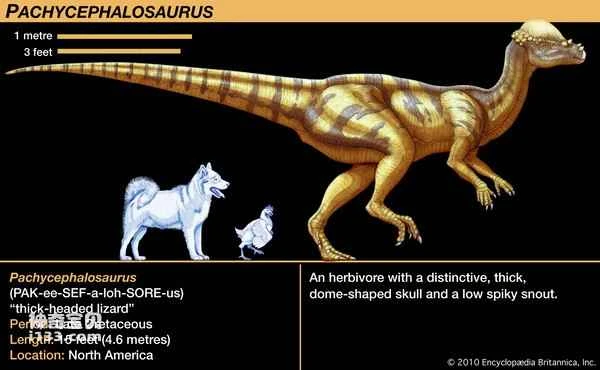
6. Pachycephalosaurus
Pachycephalosaurus was a dinosaur from the Late Cretaceous period. It was a herbivore with a distinctive, thick, dome-shaped skull and a low-pointed snout.
Pachycephalosaurus was remarkable because it wore a magnificent hat. This dinosaur had a bony dome on its head, sometimes adorned with strange knobs or spikes. For a time, it was thought that these domes were used for headbutting, like the horns of a modern ram. But this is not the case. These domes were not designed to crack. They were likely simply for species identification or display. In other words—a bone hat.
5. Titanosaur
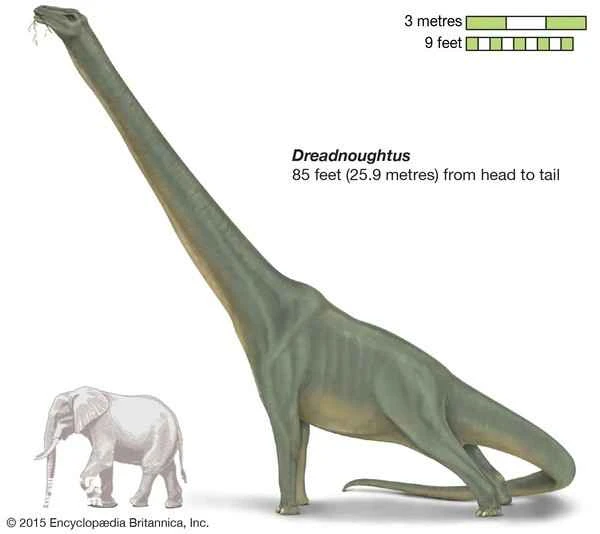
Dreadnoughtus, a Late Mesozoic dinosaur, Titanosaur, a sauropod dinosaur.
Dreadnoughtus, the largest dinosaur, whose size can be reliably calculated. A remarkably complete fossil of this sauropod dinosaur was unearthed in 2009. Dreadnoughtus measured 26 meters (85 feet) long and weighed approximately 65 tons.
Discovered in Argentina, *Dreadnoughtus Schrani* is believed to be the largest land animal ever to have lived on Earth. This gigantic sauropod dinosaur flourished during the Late Cretaceous period (100.5 million to 66 million years ago). It measured approximately 26 meters (85 feet) long and weighed about 59 metric tons (about 65 tons)—more than a dozen African elephants! Its name literally means "fearless," and it is believed that this herbivore's enormous size meant that it had virtually no predators, if any, as an adult. Amazing!
4. Velociraptor
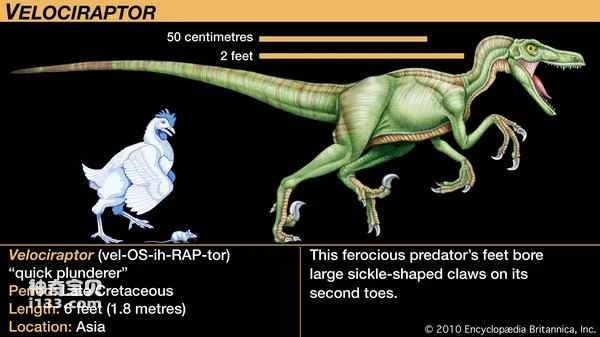
Velociraptor, a dinosaur from the Late Cretaceous period. This ferocious predator had a huge, sickle-shaped claw on the second toe of its foot.
Contrary to what Jurassic Park might convince you, while velociraptors could reach lengths of up to 1.8 meters (6 feet), they weren't much larger than a turkey, standing less than 0.6 meters (2 feet) tall. However, their signature large, scythe-like claws on their second toes and their agile hunting abilities still made them formidable predators. Even with their smaller size, humans would have had a difficult time surviving a hungry velociraptor.
3. Ankylosaurus
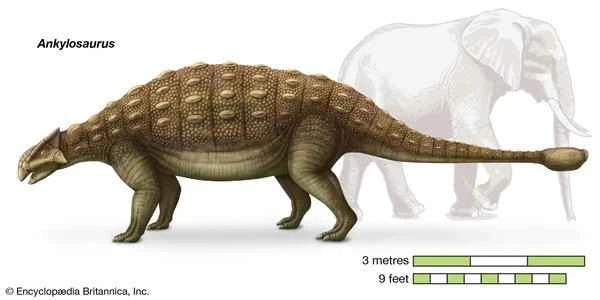
Ankylosaurus is an over-engineered creature; it looks unbelievably good. With spikes on its head and sides, armored back, and a massive bony club at the end of its tail, it's more formidable than a Stegosaurus with its ornate armor. Imagine a massive combination of a tortoise and a rhinoceros. Paradoxically, this coolest dinosaur didn't appear in many movies until Jurassic World. Do you know why? Whenever you see a Tyrannosaurus Rex fighting some unfortunate Triceratops, it's all over once the T-Rex hides behind its folds. You can't hide behind an Ankylosaurus. Enter its blind spot, and your face will be hit by its massive bony club. There's no fair fight with an Ankylosaurus.
2. Compsognathus
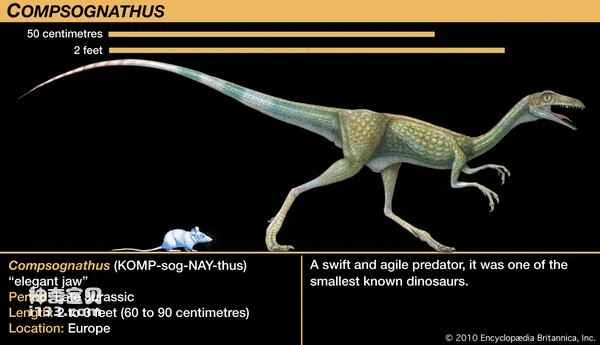
Compsognathus was a dinosaur from the Late Jurassic period. It was a swift and agile predator and one of the smallest known dinosaurs.
The smaller members of the genus Compsognathus are remarkable for their extraordinary sense of scale. About the size of a turkey, much smaller than their theropod relative Tyrannosaurus, they possessed the same elegant raptor proportions, swooping down with supple hind legs to capture smaller creatures. (They ate lizards, a fact evidenced by specimens found inside the thoracic cavity of a fossil.) The size and whippet-like form of Compsognathus strongly suggest an evolutionary continuum between birds and dinosaurs. In fact, fossils of a related species possessed remarkably well-preserved primitive feathers, suggesting that Compsognathus may have also possessed them.
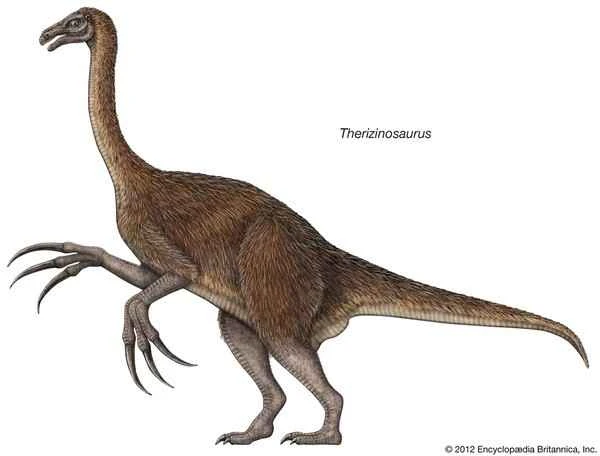
1. Therizinosaurus
Therizinosaurus, theropod dinosaurs, dinosaurs
Therizinosaurus was a fearsome theropod dinosaur from the Late Cretaceous period, originating in Asia and North America. Despite its nightmarish Freddy Krueger claws, it was likely not carnivorous. These unusual dinosaurs had a small skull and leaf-shaped teeth, but lacked teeth in the anterior half of the upper jaw.