In the south, there lives an animal that is not a chicken but is called "longan chicken". It is an insect and is even known as the "most beautiful insect in the south". It has an "elephant trunk" and is covered with "peacock patterns". It is very popular among collectors and children. I often saw it when I was a child, but I didn't know its name. So today, let's get to know the insect with an " elephant trunk and peacock patterns ".
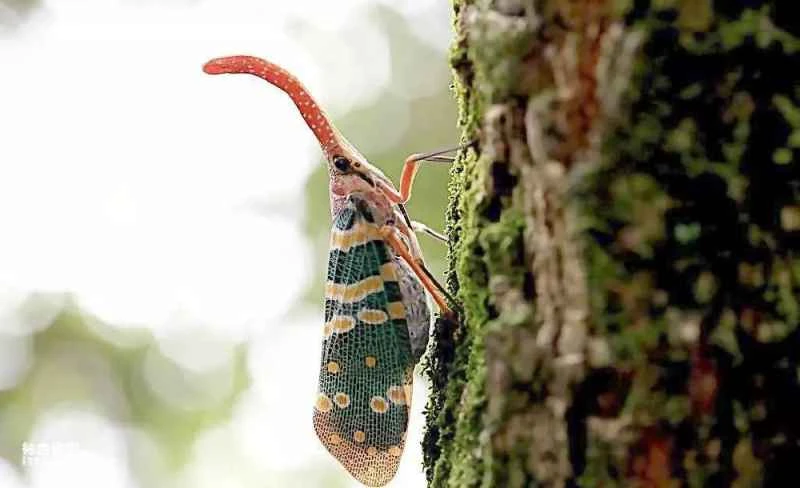
The Longan Moth (Fulfora candelaria), also known as the Longan Moth or Long-nosed Lanternfly, is an arthropod belonging to the class Insecta, order Hemiptera, family Fernidae, and genus Fulfora. It primarily inhabits the branches of fruit trees such as longan and lychee, and is distributed in Hunan, Guangdong, Guangxi, Fujian, and Yunnan provinces in China. The official name for this species recorded in the *Chinese Economic Insects* is indeed the Longan Moth.
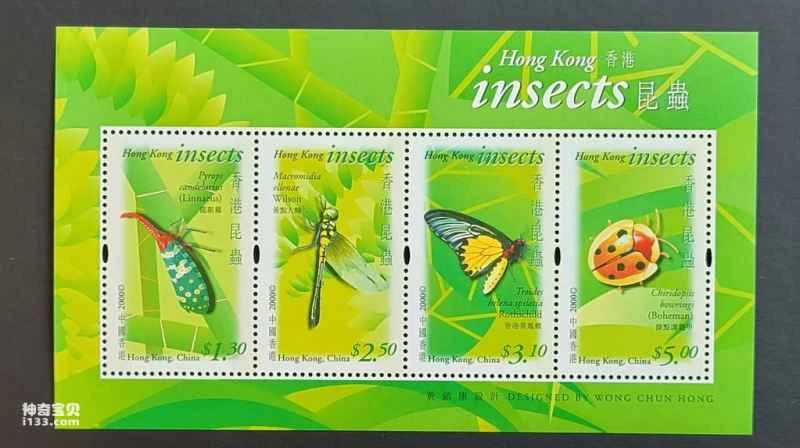
Such a dazzling appearance amazes first-time visitors. In a set of four insect stamps issued in Hong Kong in 2000, the first stamp featured the long-nosed lanternfly.
Compared to the typical cicada, which is only about 2 centimeters long, the longan cicada is about 3 centimeters long, making it a top contender among the "big guys." Belonging to the hemimetabolous insect family , the longan cicada's body structure is roughly similar in its larval and adult stages, the difference being that the adult develops a pair of brightly colored wings after molting.
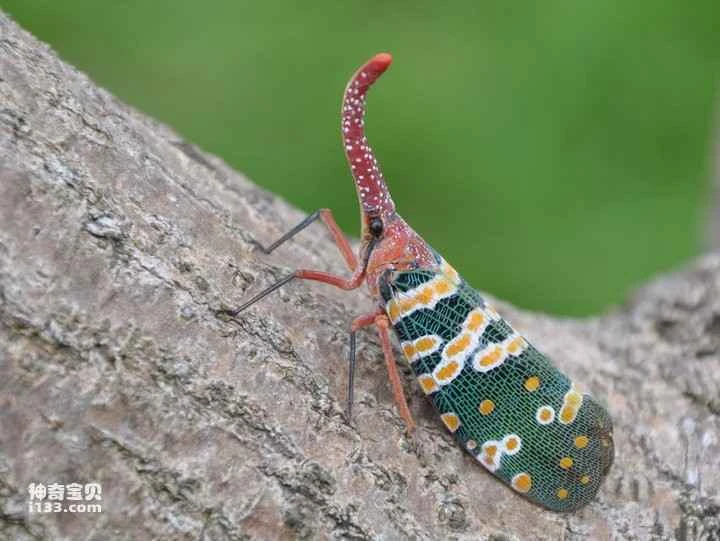
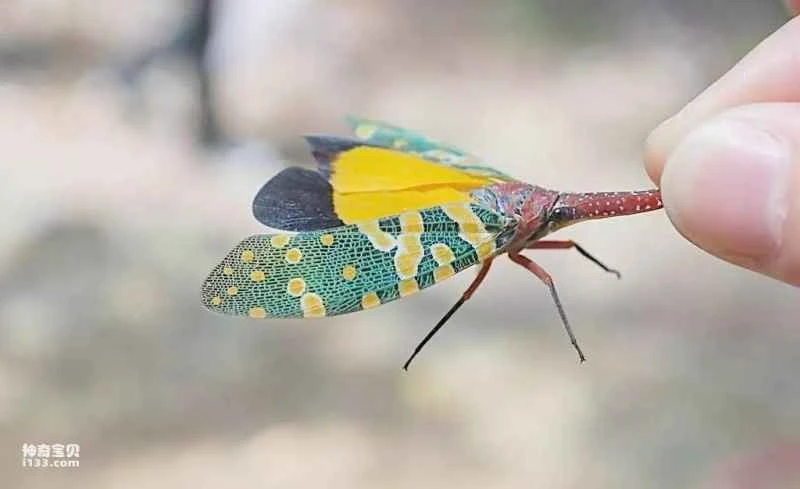
As a species of planthopper in the genus *Orientalis* of the order Hemiptera, the long-nosed planthopper is most easily distinguished from other planthoppers in the same genus by its bright red, long "nose." This "nose" is actually its protruding, upward-curving mouthparts, resembling a miniature elephant trunk. Besides its striking "nose," the long-nosed planthopper also has two pairs of brightly colored wings. The forewings are covered with a veined network, are dark green, and inlaid with many golden spots, like a peacock's tail feathers. The hindwings, except for a few black spots at the top, are entirely made of a translucent yellow membrane, resembling brocade, making them exceptionally beautiful.
During its larval stage, the longan larvae, lacking wings, resemble tiny "bottles." To better blend into their surroundings, the larvae are grayish-brown, closely matching the color of the tree trunk, much like the "ugly duckling" in fairy tales.
Upon reaching adulthood, they shed their dull appearance and become one of the most fascinating species in the cicada family. The adult's head, thorax, and distinctive long nasal protuberance (the long, nose-like part at the front of the head) are reddish-brown, covered with regularly distributed small white dots, while the abdomen is grayish-brown. The forewings are emerald green with bright fluorescent yellow veins, regularly scattered with 14 circular spots, divided into inner and outer layers: an outer layer that is milky white or off-white, and an inner layer that is yellow.
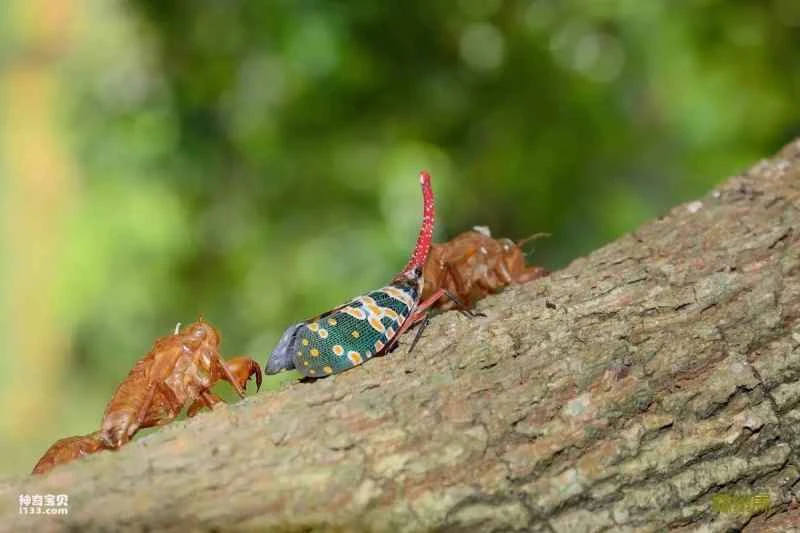
The longan larva, through its metamorphosis, seems to recreate the fairy tale of the "ugly duckling turning into a beautiful swan." In the insect world, it is not uncommon for larvae to be "ugly" while adults are "beautiful." In order to survive better, they must remain inconspicuous at each stage.
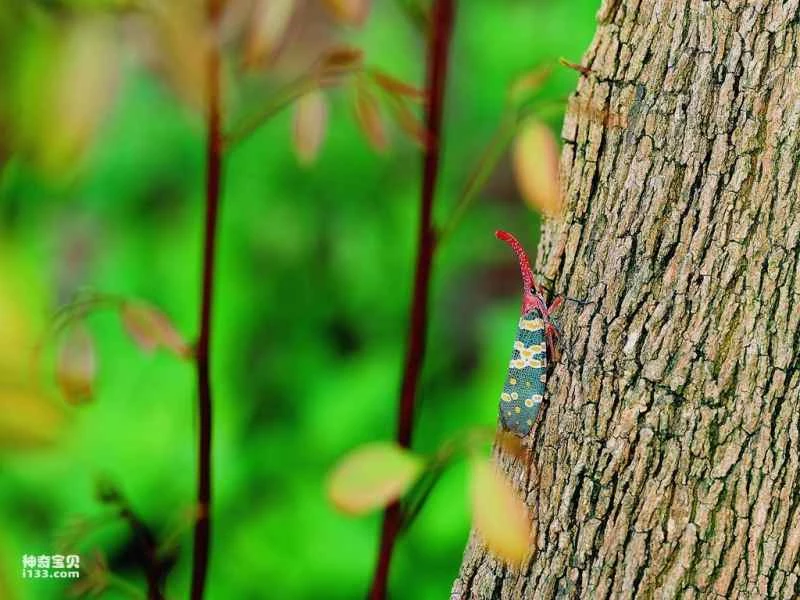
However, despite the seemingly inspiring story, fruit farmers see them as notorious thieves in their orchards! Both the larvae and adults of the longan chicken feed on the sap of southern fruit trees such as longan, lychee, wampee, guava, and olive.
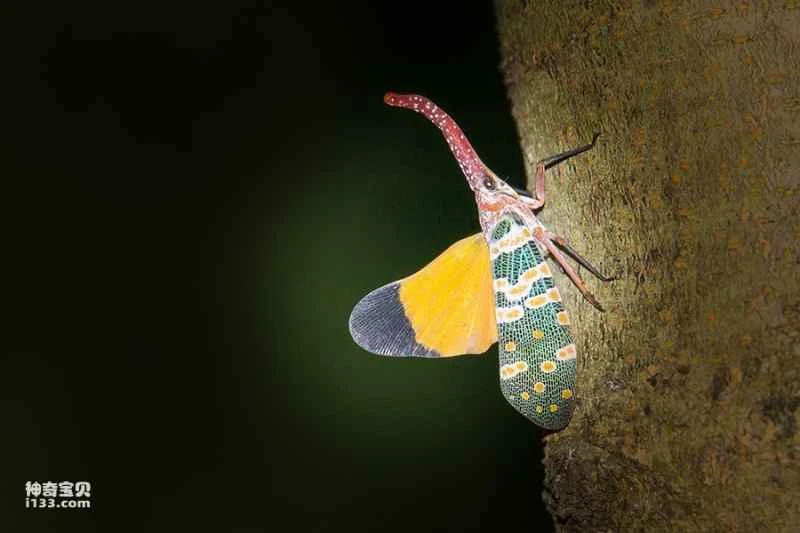
The longan fruit tree's piercing-sucking mouthparts allow it to extract sap from the tree trunk, causing the fruit trees to weaken, wither, and even drop their fruit due to nutrient deficiency. Furthermore, the harmful fungi they carry can lead to fungal diseases and sooty mold, potentially causing the trees to die in severe cases.
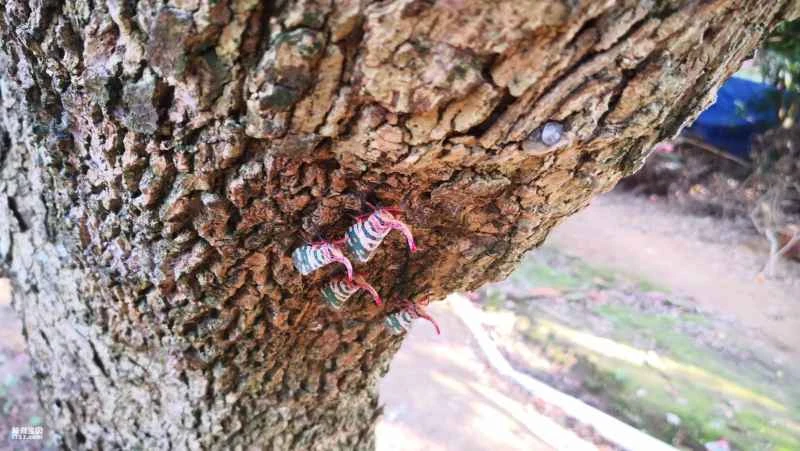
In particular, the adult and larval longan worms have a strong jumping ability, allowing them to leap from one branch to another, expanding their destructive range in the orchard and causing great trouble for fruit farmers.
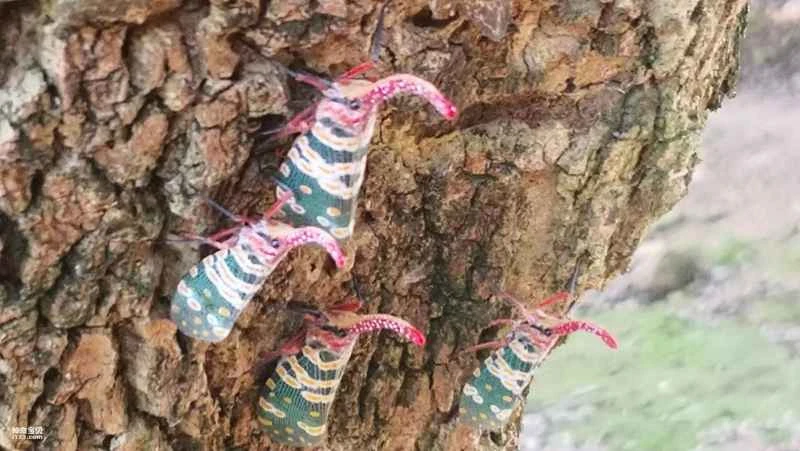
Longan crickets are common insects in Guangdong, often found in orchards, especially on longan and lychee trees. They are not afraid of people and have a gentle temperament. If you encounter one in the wild, don't forget to take some good photos to remember the moment.