Many people often ask when planning to get close to the ocean: Are there any aquariums that are truly "animal-friendly"?
Before answering this question, we must acknowledge that even the most advanced artificial venues cannot replace healthy natural habitats , especially for whales, dolphins, and other large marine mammals.
However, if measured by animal welfare and ecological protection standards, the Monterey Bay Aquarium in California is widely regarded as the closest to the "ideal aquarium".

A panoramic view of the Monterey Bay Aquarium. Image: Rhinopias / Wikimedia
Five criteria for judging whether an aquarium is "good"
To determine whether an aquarium is truly animal-friendly, consider the following five points:
Whether or not one has participated in the capture, captivity, breeding, performance, or trade of wild animals for profit;
Should species with extremely high requirements for space and behavior, such as whales and dolphins, be kept in captivity?
Does it focus on wildlife rescue and habitat protection, with the goal of rewilding and reintroduction?
Whether the focus remains on restoring wild populations, rather than simply showcasing reproductive achievements;
Does it provide the public with scientific and cutting-edge popular science about species and habitats, and actively participate in scientific research and policy advocacy?
Monterey Bay Aquarium excels in all five dimensions.
Unique geographical and ecological advantages
The Monterey Bay Aquarium is located in the famous Monterey Bay in California, adjacent to the deep Monterey Canyon .
This place used to be a sardine cannery, and was later converted into an aquarium in 1984;
The unique bay topography fosters rich biodiversity, making the area one of the best places in the world to see whales and dolphins;
Researchers were able to conduct field surveys and habitat protection work nearby.
Importantly, the aquarium has never kept whales or dolphins in captivity since its inception, and provides telescopes in the outdoor area for visitors to observe wild California sea otters, sea lions, seals, and whales and dolphins.

Monterey Bay. Image: Seano1 / Wikimedia
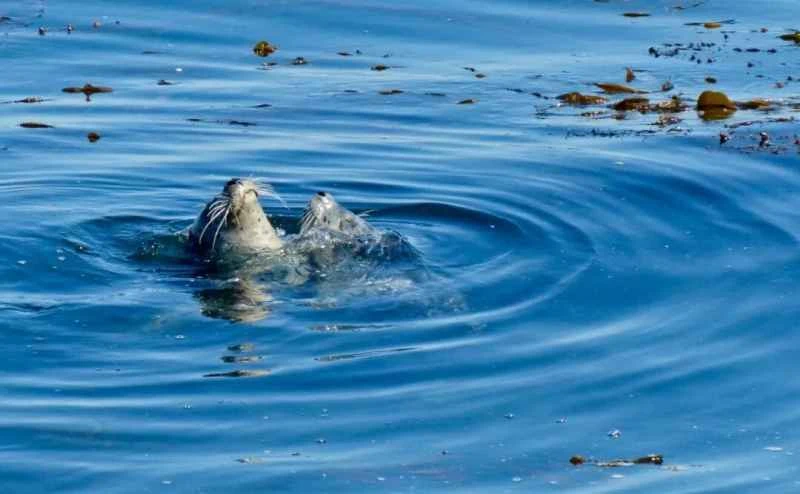
Seals resting in the bay. Image: Needpix
Focusing on the display of native species and habitats
Monterey Bay Aquarium currently has 10 permanent exhibits and 2 special exhibits , housing and displaying more than 500 species and approximately 35,000 native animals .

The most representative exhibition areas include:
Kelp Forest : The world's first aquarium exhibit to bring a 20-meter-tall giant kelp ecosystem into the aquarium, simulating natural sunlight and ocean currents;
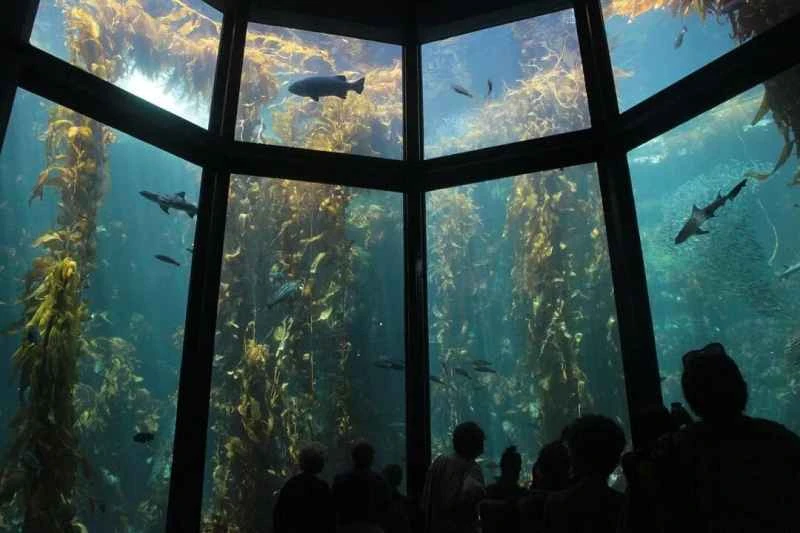
Giant kelp forest exhibit. Image: Rhinopias / Wikimedia
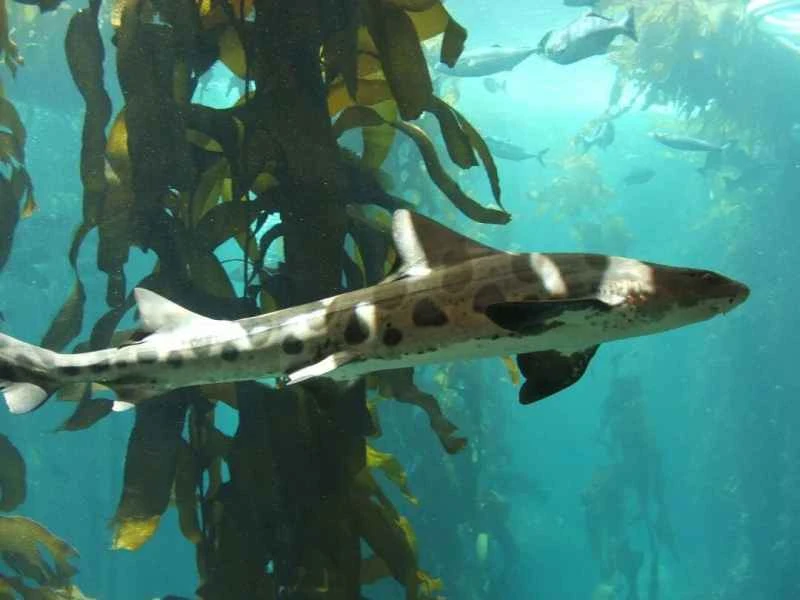
A half-breasted frilled shark in the giant kelp exhibit. Image: Tewy / Wikimedia
Open Sea : Showcases typical offshore creatures such as hammerhead sharks, sunfish, and green sea turtles;
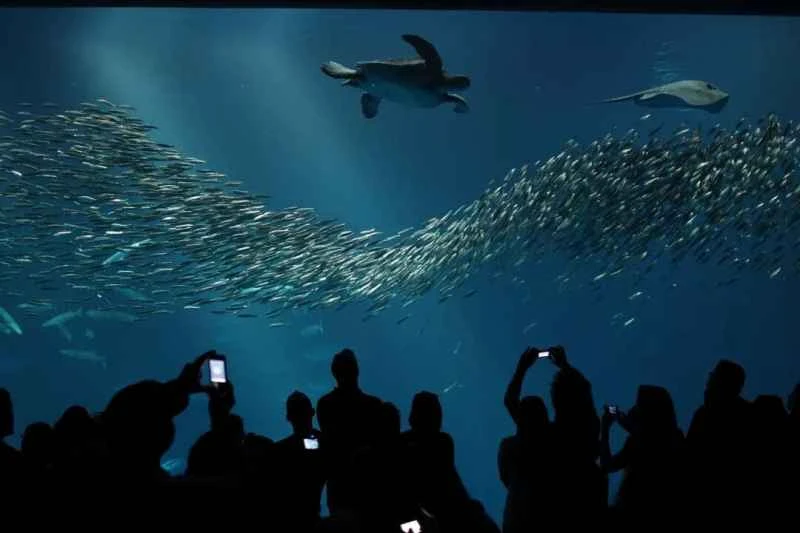
An exhibit showcasing large animals from the waters off Monterey Bay. Image: John Loo / flickr
Jellyfish exhibit : Showcasing the natural beauty of 13 species of jellyfish, free from dazzling lights.
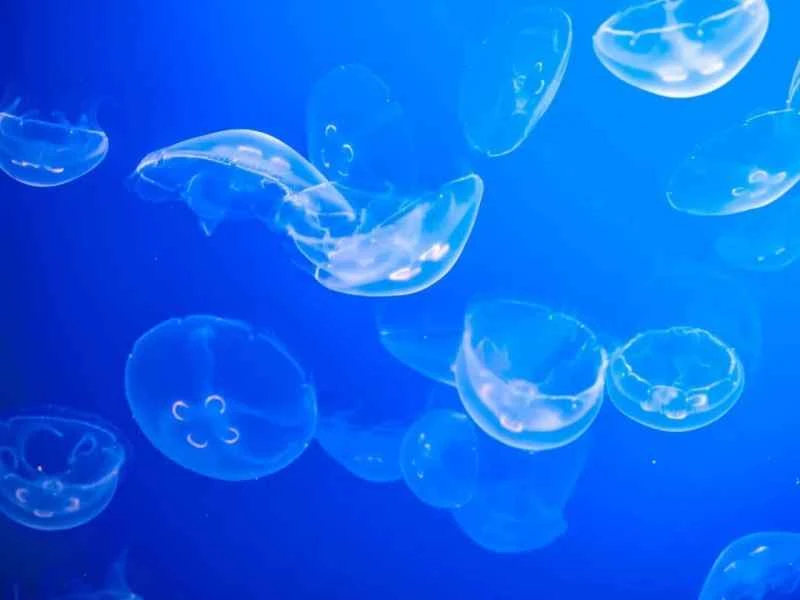
Moon jellyfish. The Monterey Bay Aquarium also displays more than 13 species of jellyfish in tanks where, without the bright fluorescent lights, visitors can appreciate their natural beauty. Image: William Warby / flickr
These exhibits not only offer a visual feast but also help the public gain a direct understanding of how California’s coastal ecosystem works.

Diagram of the pipe cleaning process. Image: Schlumberger Software / YouTube
Respect animal welfare: Reject captive great white sharks
Although the aquarium attempted to keep six juvenile great white sharks in captivity between 2004 and 2011, it was eventually found that they generally exhibited stress problems such as impacts, self-harm, and difficulty feeding in the artificial environment.
After releasing the last great white shark, the aquarium announced the permanent cessation of great white shark exhibitions , marking a significant milestone in the industry's recognition of the limitations of captivity.
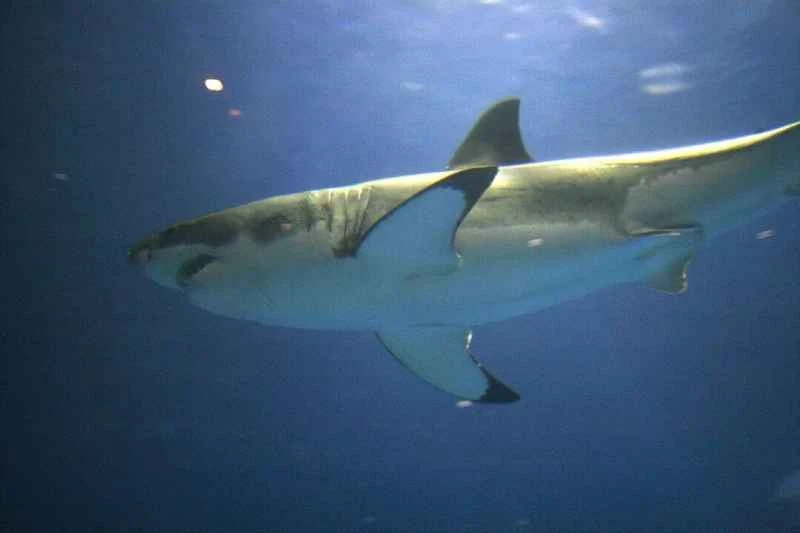
A great white shark kept in an aquarium in 2006. Image: Brocken Inaglory / Wikimedia
Success story of sea otter rescue and reintroduction into the wild
Monterey Bay Aquarium is a world-renowned center for the rescue and conservation of California sea otters .
In the early 20th century, California sea otters were nearly wiped out due to the fur trade, with only about 50 remaining.
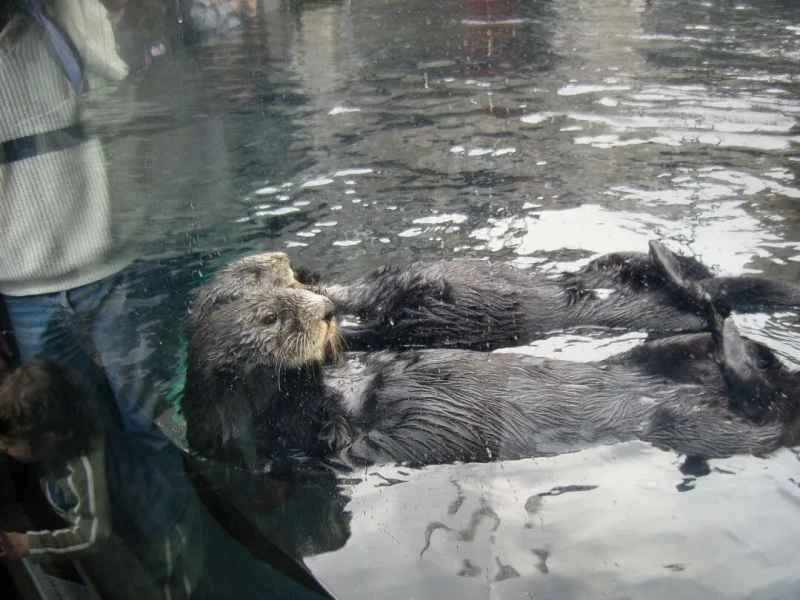
California sea otters on display at an aquarium. Image: Fred Hsu / Wikimedia
The aquarium has long been engaged in rescue, rehabilitation and release programs, and in 2001 introduced a female sea otter named Toola as a surrogate mother to teach orphaned sea otters survival skills;
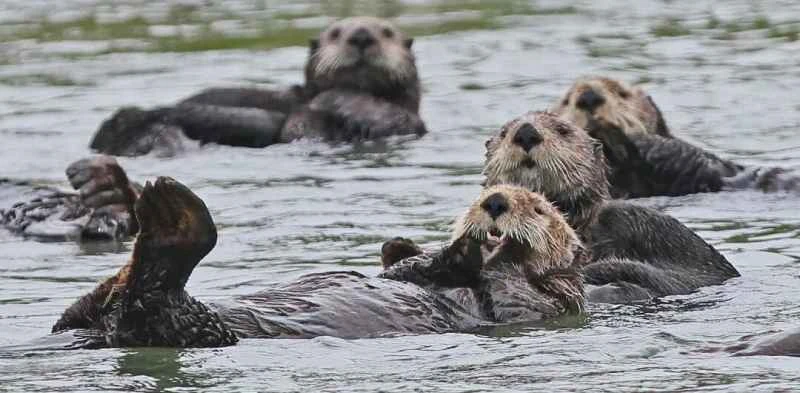
California sea otters in the wild. Image: Judy Gallaghe / Wikimedia
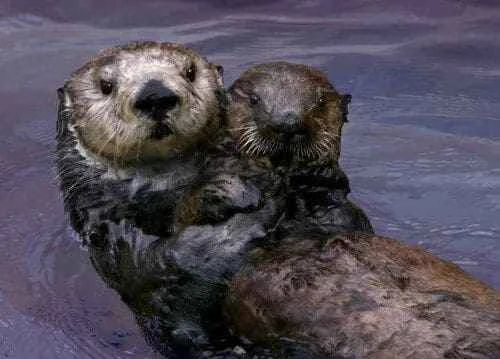
Toola and the cubs she cares for. Photo: Randy Wilder / Monterey Bay Aquarium
To date, nearly 1,000 California sea otters have been successfully rescued and released back into the wild, significantly improving the survival rate of cubs in the wild.
This model has also promoted the improvement of laws and environmental policies, such as prohibiting the hunting of marine mammals and strengthening habitat protection.
Promote habitat protection and ecological education
The efforts of the Monterey Bay Aquarium contributed to the establishment of the Monterey Bay National Marine Preserve .
The protected area stretches 444 kilometers along the central California coastline and is home to more than 30 species of marine mammals, over 90 species of seabirds, and more than 300 species of fish.
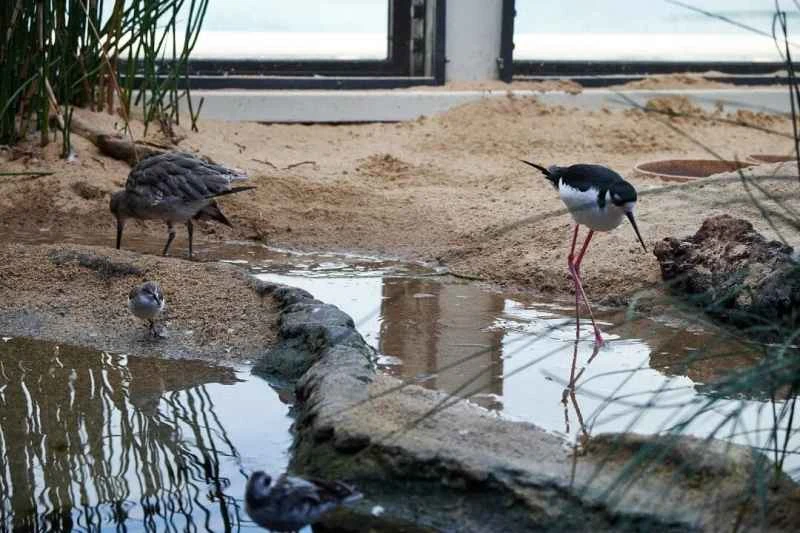
The bird exhibit at the aquarium. Besides California sea otters, the Monterey Bay Aquarium has also rescued many injured or orphaned waterbirds, such as the Snowringed Plover, the Spotted-winged Sandpiper, and the Brown-breasted Avocet. Similarly, after these birds grow up and recover, those deemed capable of surviving in the wild are released back into the wild. Image: Kārlis Dambrāns / Wikimedia

The coastline of the Big Sur region. Image: NOAA / Wikimedia
In addition, the aquarium launched the renowned Seafood Watch in 1999 to help consumers and restaurateurs choose more eco-friendly seafood products. This shift in consumer behavior has also driven the transformation of the entire fisheries industry chain.
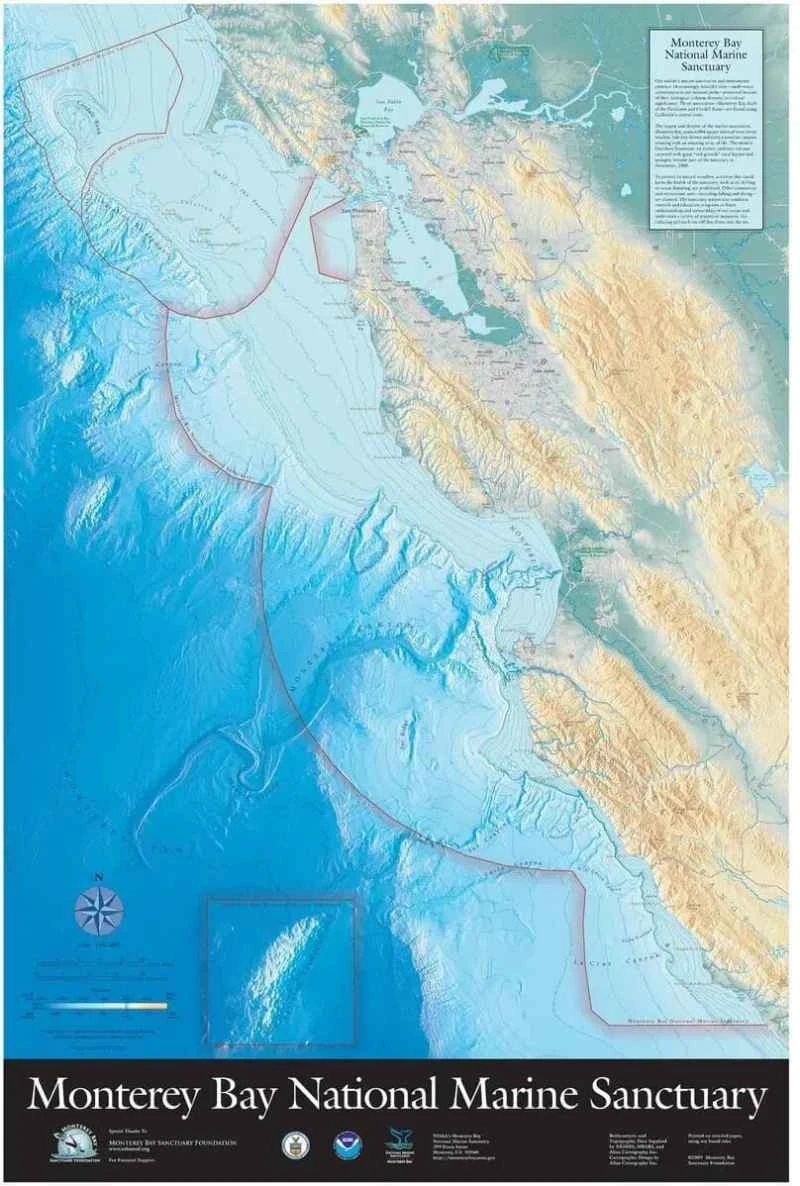
The boundaries of the Monterey Bay National Marine Preserve. Image: NOAA / Wikimedia
The Monterey Bay Aquarium's Seadfood Watch program also has a corresponding mobile app available for download. Image: Monterey Bay Aquarium
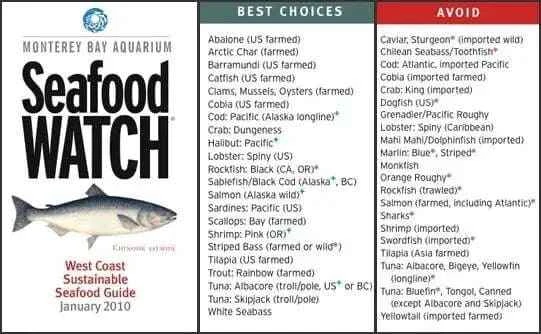
Consumer choices drive industry change, and without consumer preferences, these changes might be delayed. Image: Monterey Bay Aquarium
Science popularization and public participation: The "cloud aquarium" of the new era
During the COVID-19 pandemic, Monterey Bay Aquarium launched 24-hour online live streams for several exhibits, including the Giant Kelp Forest and the Wild Sea Otter Area, providing an immersive eco-education experience for audiences worldwide.
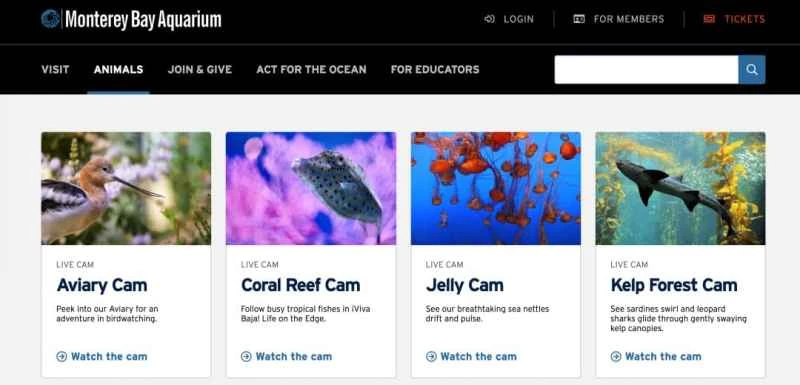
The live streaming channel on the official website.
The aquarium and its sister institution, the Monterey Bay Marine Institute , also continuously deliver scientific knowledge to the public through live webcasts, social media interactions, and science lectures, becoming a model of innovative education in the industry.
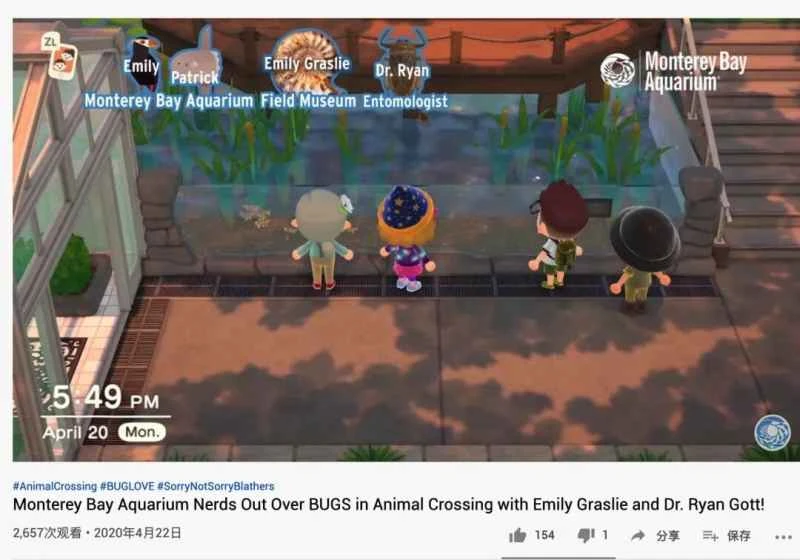
By taking viewers on a virtual tour of the museum within the game, scientists conducted a very unique form of science education during the pandemic.
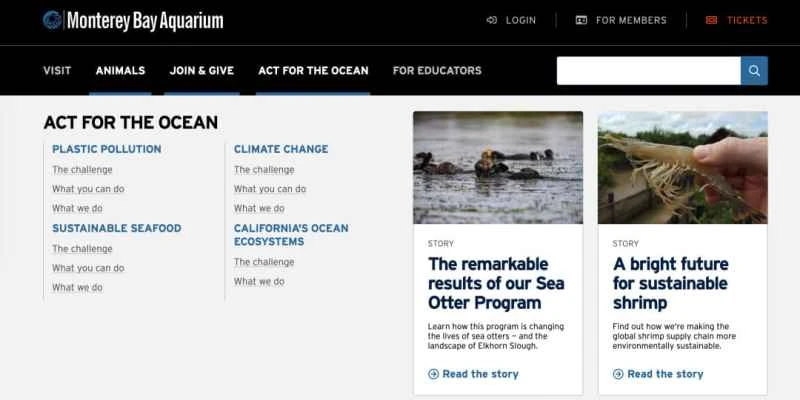
The aquarium's official website also has many articles related to environmental education for everyone to learn from.
Summary: The Future Direction of the Aquarium Industry
The Monterey Bay Aquarium is hailed as **"the world's most worthwhile aquarium to visit"** not because of its rare exhibits, but because it adheres to:
We do not keep whales, dolphins, or great white sharks in captivity;
Popular science education focuses on local ecology and natural habitats;
Promote habitat protection and sustainable consumption;
Actively explore new ways of combining science and technology with education.
As society places increasing emphasis on animal welfare and environmental protection, this model may become the mainstream direction for the future development of aquariums.