Moles are small mammals belonging to the family Talpidae, primarily inhabiting Europe, Asia, and Africa. Below is a detailed introduction to moles and their habits:
1. Physical characteristics:
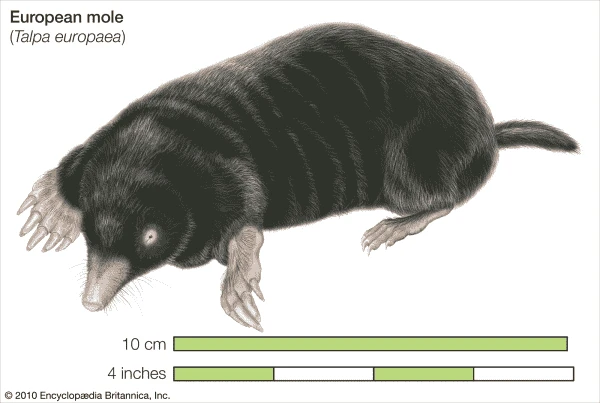
Size : Moles are generally small in size, with a body length of about 12-20 centimeters and a short tail.
Hair : Its hair is fine and soft, and its color is usually grayish-brown or black, sometimes showing a silver sheen in the sunlight.
Forelimbs : The forelimbs are strong and adapted for digging in the soil and building tunnels. They have moderately sized claws for digging underground passages.
2. Living habits:
Habitat : Moles mainly inhabit grasslands, farmlands, forests, and other areas, and prefer to live in moist and sandy soil.
Diet : Moles mainly feed on insects, worms, crustaceans, and plant roots and stems, and are omnivorous.
Behavior : Moles are nocturnal animals, spending most of the day resting in their burrows and searching for food at night.
Digging ability : Moles are known for their powerful digging ability. They use their forelimbs and claws to dig underground tunnels and burrows, while also helping to loosen the soil.
Reproduction : Moles generally have a high reproductive capacity. Female moles usually give birth to their young in the spring, and the young grow up after being nursed for a period of time.
3. Relationship with the environment:
Ecological role : Moles play an important role in the ecosystem by digging in the soil to promote soil aeration and drainage, which helps plant roots grow.
Relationship with humans : Moles may damage crops in farmland, but they also have some benefits for crop growth due to their ability to aerate and loosen the soil.
Moles are fascinating underground animals that, although not often seen by humans, play an important role in the ecosystem. They attract attention with their unique habits and physical characteristics. Hopefully, this introduction has given you a more comprehensive understanding of these interesting creatures. If you have any further questions or need more information, please feel free to let me know.