Among mammals, the most agile species are primarily found in the feline family. Felines are renowned for their unique characteristics. Let's take a look at the top ten feline superlatives, including the world's largest feline—the Siberian tiger; the smallest feline—the embroidered cat; the fastest running feline—the cheetah; the feline with the strongest bite force—the jaguar; and the feline known for its excellent teamwork—the lion, among others. This article will review the unique characteristics of these felines.

1. The world's largest cat species (Siberian tiger)
The Siberian tiger, also known as the Amur tiger, is the largest living carnivorous feline. Male Siberian tigers can reach approximately 3 meters in length, with a tail about 1 meter long, and weigh around 350 kilograms. Wild Siberian tigers have brownish-yellow fur in summer, turning pale yellow in winter. Their backs and sides are covered with numerous narrow black stripes, often two of which are close together and resemble willow leaves. They have large, round heads with several black horizontal stripes on their foreheads; sometimes these stripes connect to form a pattern resembling the Chinese character "王" (wang, meaning king), thus earning them the title "King of the Jungle." They are nocturnal, possess keen senses, are swift in movement, and are adept at swimming and climbing trees, making them relatively less likely to attack humans.
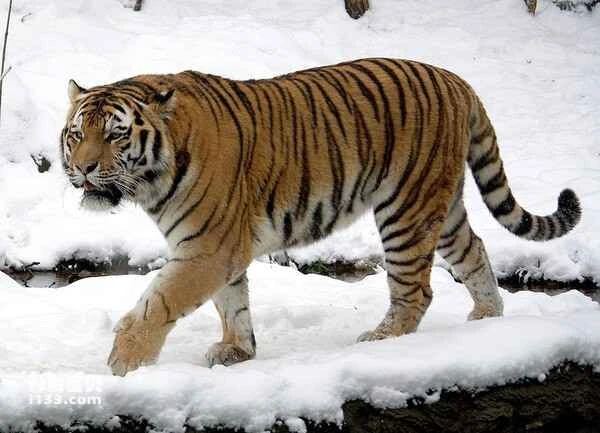
These characteristics make the Siberian tiger a top predator in the forest, showcasing its unique survival skills and striking physical features. Although they generally avoid conflict with humans, they demonstrate powerful hunting instincts and survival abilities in the wild. Today, the Siberian tiger is a rare species, but its population is gradually recovering under human protection, adding valuable biodiversity to the entire ecosystem.
2. The world's smallest feline (Symplocos rubrotinctum)
The embroidered cat, belonging to the genus *Cercopithecus* in the subfamily Felinae of the family Felidae in the order Carnivora, is considered one of the smallest felines in the world. Adult embroidered cats are only about 45 cm long, with a tail approximately 17 cm long, and weigh between 1 and 2 kg. Their primary habitat is the forests of Gujarat, Maharashtra, and parts of arid Indian-administered Kashmir in western India. Besides the Indian subspecies, a slightly different subspecies exists in Sri Lanka. Wild embroidered cats are extremely timid, and their presence is becoming increasingly rare. Human understanding of their ecology, reproductive patterns, and social relationships is very limited.
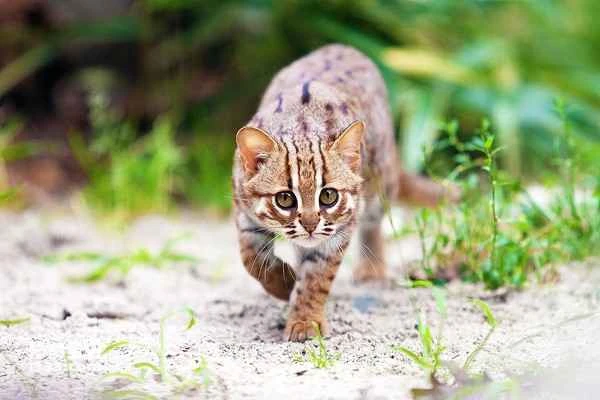
These unique characteristics of the embroidered cat highlight the rarity and mystery of this tiny feline. Their extreme alertness and elusiveness make them an enigmatic presence in the feline world. Ecological research and conservation of these precious species are therefore particularly urgent in order to better understand and protect these endangered creatures.
3. The fastest cat in the world (cheetah)
The cheetah, also known as the Indian leopard, is a unique species within the genus *Apanteles* of the cat family. It is the fastest land animal, capable of reaching an astonishing speed of 115 kilometers per hour. The cheetah has exceptionally long legs, a slender body, and an unusually flexible spine that bends easily, like a giant spring. This allows it to exert force with both its forelimbs and hind limbs while running, causing its body to undulate dramatically. Furthermore, its broad tail helps maintain balance during sharp turns, preventing it from falling. This unique body structure enables the cheetah to achieve extremely high running speeds.
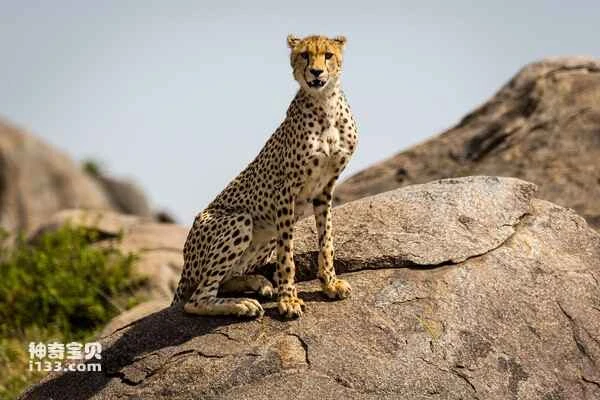
The cheetah's unique physiological characteristics make it the king of speed, showcasing one of the most amazing running abilities in nature. Its exceptional running skills not only help it capture prey but also allow it to swiftly traverse grasslands and open areas to evade potential threats. A deeper understanding of the cheetah's anatomy and running style allows us to better appreciate the wonders of nature and the unique role the cheetah plays as the king of speed in the ecosystem.
4. The cat with the strongest bite force in the world (jaguar)
The jaguar, also known as the common jaguar, is the third largest living cat species. It possesses an astonishing bite force, reaching up to 1250 pounds, making it the cat with the strongest bite. While its spots resemble those of a leopard, its overall appearance is closer to that of a tiger. Among cats, the jaguar is the third largest after the lion and tiger. These animals inhabit areas with abundant water and, like tigers, enjoy swimming. Jaguars are solitary predators, ambush hunters, and highly flexible and strategic in selecting prey. As apex predators and keystone species in ecosystems, jaguars play a crucial role in maintaining ecological balance and regulating prey populations.
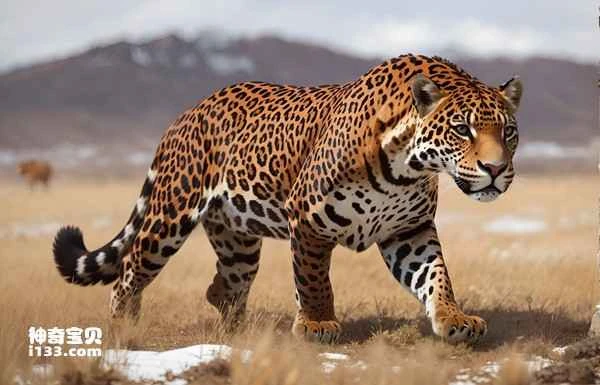
The jaguar's unique characteristics and behaviors highlight its importance and distinctive position in the wild. As a key component of the ecosystem, they are vital for maintaining ecological balance and biodiversity. By gaining a deeper understanding of the jaguar's ecological role, we can better appreciate this species' enormous contributions to the ecosystem and humanity's responsibility for its protection and survival.
5. The most team-oriented feline in the world (lion).
Lions, commonly known as lions, were called "Suanni" in ancient China. Lions are social animals and the most capable group hunters among felines, virtually unmatched by other African felines. When hunting, lion prides are always cautious, approaching their prey stealthily, making full use of any available cover to conceal themselves until the prey is within thirty meters, at which point they suddenly pounce. Lionesses often hunt in a group, with members spreading out to form a fan shape around the prey, then approaching from multiple directions, waiting for the opportune moment to strike when the herd panics and flees.
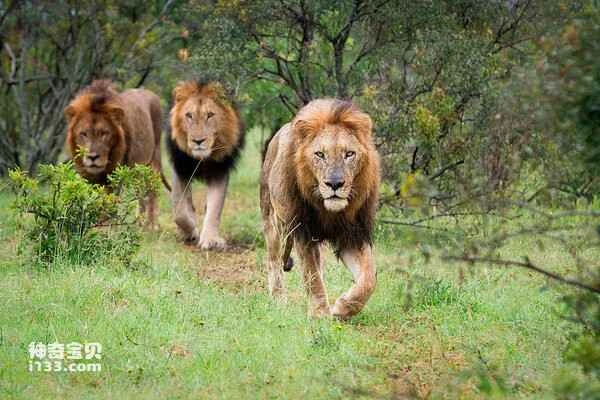
Lions, as exemplars of teamwork, demonstrate exceptional hunting strategies and cooperative abilities. Their group hunting methods are remarkably sophisticated, showcasing a high degree of sociality and collective intelligence. In-depth research into the unique hunting behaviors and lifestyles of lions allows us to better understand the vital role of this species in nature and its contributions to ecosystems and biodiversity.
6. The snow leopard, the cat species that lives at the highest altitude in the world.
The snow leopard, an important large feline predator and flagship species, gets its name from its frequent inhabitants between the snow line and snowfields. This feline is capable of living in the world's highest altitude regions, with tracks found on the snow-covered slopes of Mount Everest at an altitude of 5400 meters. Known for its nocturnal nature, the snow leopard prefers to rest during the day and hunt at dusk and dawn. Agile, alert, and possessing exceptional flexibility, they leap across rugged terrain, even plunging off cliffs 3 to 4 meters high.
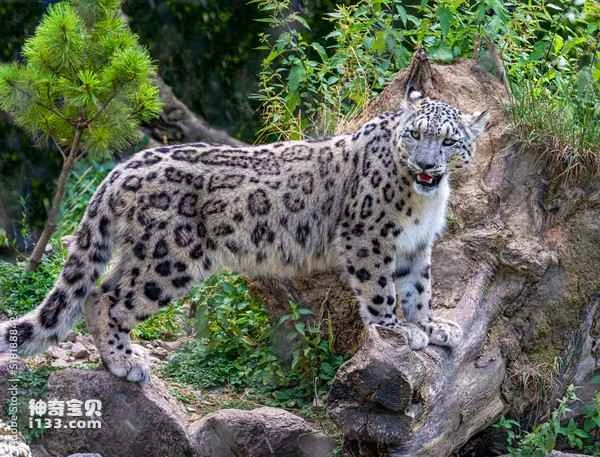
Snow leopards typically rarely appear during the day, sometimes choosing to bask in the sun on bare rocks in high mountains. This behavior and lifestyle make the snow leopard one of the most mysterious and spectacular animals in the high-altitude regions. A deeper understanding of the snow leopard's ecology can help us better protect this endangered species and ensure their survival and reproduction in their wild habitats.
7. The slowest cat in the world (Palm cat)
The Pallas's cat is a stocky, short-bodied feline, similar in size to a domestic cat and weighing between 2 and 3 kilograms. It is one of the slowest running felines in the world. Compared to other felines, the Pallas's cat has several unique characteristics. It has short legs, a relatively heavy rump, and thick, long fur, making it appear particularly stocky and bushy. The Pallas's cat's fur changes seasonally, appearing darker and less spotted in winter. Furthermore, the Pallas's cat has low-set ears and a facial feature resembling that of an owl.
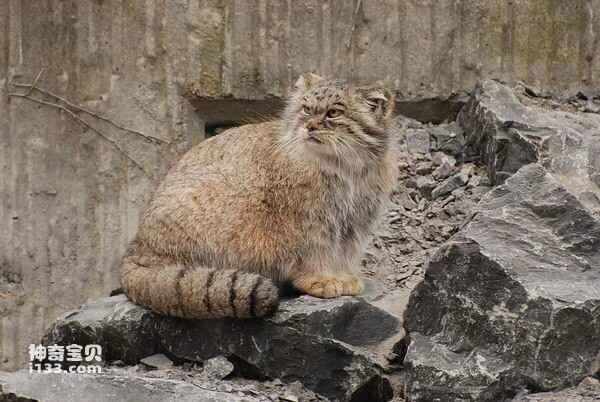
Pallas's cats are nocturnal animals, primarily active at dusk and dawn, typically hunting during these times. When food is scarce in winter, they may also forage during the day, sometimes even migrating to areas near villages in search of food. Although these felines are relatively slow runners, their unique appearance and lifestyle have established a distinctive image, showcasing the diversity and adaptability of life in nature.
8. The world's best tree-climbing feline (clouded leopard)
The clouded leopard belongs to the cat family of mammals. It is an excellent climber, using its long, thick tail to maintain balance, making it one of the most adept tree climbers among felines. They have short, thick, and agile limbs, and their tails are almost as long as their bodies and exceptionally thick. The clouded leopard has a slightly rounded head, a prominent snout, and unusually large claws. Its body is golden yellow, covered with rich, dark, cloud-like markings, hence its name "clouded leopard."
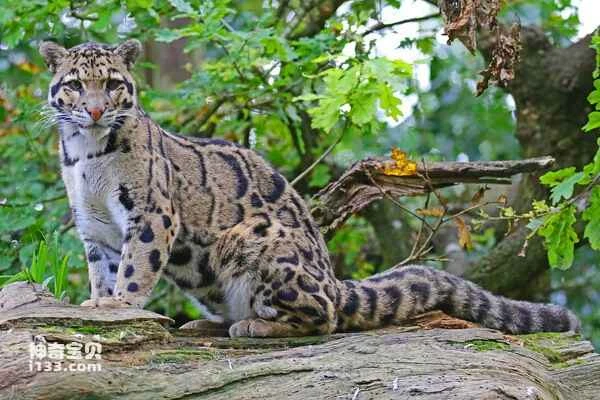
The clouded leopard's short, stocky limbs help lower its center of gravity, while its sharp claws ensure it grips branches tightly when leaping between trees. Furthermore, its long, thick tail is a crucial balancing tool, aiding in its agile movement through the forest. These unique physiological characteristics and adaptations allow the clouded leopard to traverse the canopy freely, showcasing its exceptional climbing abilities and survival skills.
9. The world's highest-jumping feline (caracal)
The caracal is a well-proportioned, muscular cat with powerful limbs. Relying on its robust body, it can leap vertically to an astonishing height of 3.7 meters, making it one of the most adept jumpers among felines. The caracal's main diet consists of rodents and hares, and it occasionally attacks gazelles, small antelopes, or young ostriches. However, the caracal is best known for its bird-catching skills; it can capture birds in flight, sometimes catching more than two at a time.
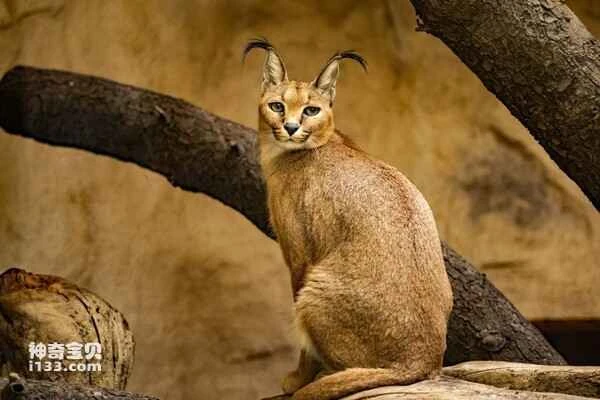
The caracal's exceptional jumping and climbing abilities enable it to efficiently capture prey, especially hyraxes. Its unique skills and physiological characteristics highlight its image as a highly efficient hunter, showcasing its distinctive position and survival strategy in the natural world.
10. The world's best swimming feline (fishing cat)
The fishing cat is a medium-sized feline, renowned as a master swimmer among felines, adept at swimming and using its tail for directional control. This feline has a broad head, a long muzzle, small, rounded ears, and a black back speckled with striking white spots. Its claws and toes are webbed, preventing them from fully retracting; instead, they remain extended forward—a feature unlike most other felines. Furthermore, its toes are partially webbed, further enhancing its ability to move in water.
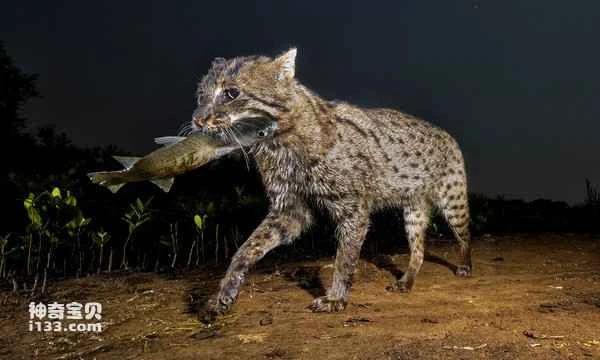
The fishing cat displays its fierce nature, daring to attack animals much larger than itself. This trait showcases the fishing cat's unique adaptability and survival skills as a feline species in nature. Its proficiency in swimming and unique body structure make it an excellent hunter in the water, demonstrating the wonders of natural selection and evolution.