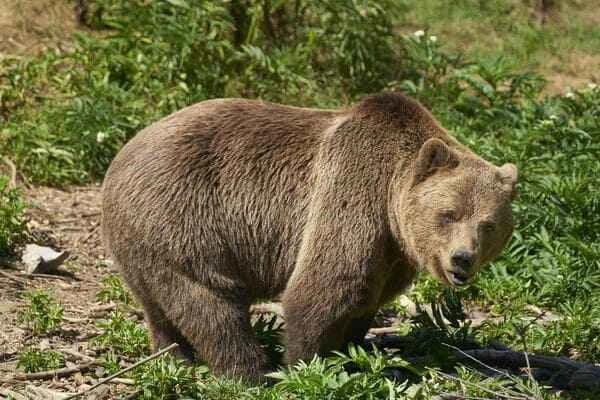
The question of how many animals there are in the world has sparked curiosity about the Earth's biodiversity. While the exact number is difficult to determine due to the constant discovery of new species and the extinction of others, scientists have made important estimates. From terrestrial mammals to deep-sea creatures and the world's countless insects, the animal kingdom is vast and diverse. This article delves into the estimated numbers, animal classification, and factors that influence population sizes.
Scope of understanding: What is the definition of an animal?
Before answering the question of how many animals there are in the world , it is crucial to understand the composition of "animal" from a biological perspective. Animals belong to the animal kingdom and are multicellular organisms with the following characteristics:
They are heterotrophic, which means they rely on consuming organic matter to obtain energy.
They are able to move autonomously at a certain stage of their life cycle.
Most animals reproduce sexually, but some reproduce asexually.
They have specialized sensory organs that help them navigate their environment.
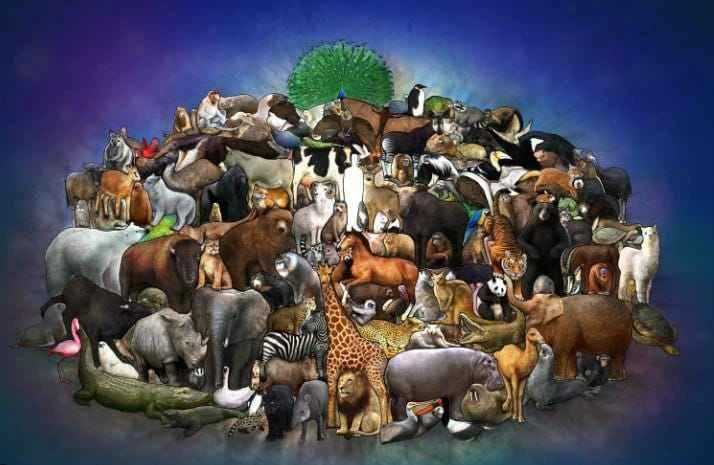
The diversity of the animal kingdom ranges from tiny insects and microorganisms to large mammals and reptiles. Given this diversity, estimating animal populations is a complex task.
Estimated number of animal species
To explore how many animals there are in the world , scientists typically begin by estimating the number of species. The currently known number of animal species is approximately 8.7 million , but it's important to note that this is just an estimate. Below is a breakdown of the major categories:
1. Insects
Insects dominate the animal kingdom in terms of species diversity and quantity. Approximately 900,000 insect species have been identified, but estimates suggest the number could be as high as 30 million . Beetles, butterflies, ants, and bees contribute significantly to this vast group.
2. Mammals
Compared to insects, mammals are a more extensively studied group. There are approximately 6,400 species of mammals, including rodents, primates, marine mammals, and large terrestrial animals such as elephants.
3. Birds
There are approximately 10,000 species of birds worldwide, inhabiting a wide variety of habitats, from rainforests and grasslands to mountains and polar regions. Birds are highly mobile and can migrate great distances.
4. Reptiles
Reptiles, including snakes, lizards, turtles, and crocodiles, number approximately 11,000 species. These cold-blooded animals thrive in warm climates but can be found on every continent except Antarctica.
5. Amphibians
Amphibians, such as frogs, toads, and salamanders, number approximately 8,000 species. Living both on land and in water, amphibians are often considered an indicator of environmental health due to their sensitivity to pollution and habitat destruction.
6. Fish
There are an estimated 34,000 species of fish, found in both freshwater and saltwater environments. Fish are the most diverse group of vertebrates, adapted to a wide range of aquatic ecosystems.
7. Other invertebrates
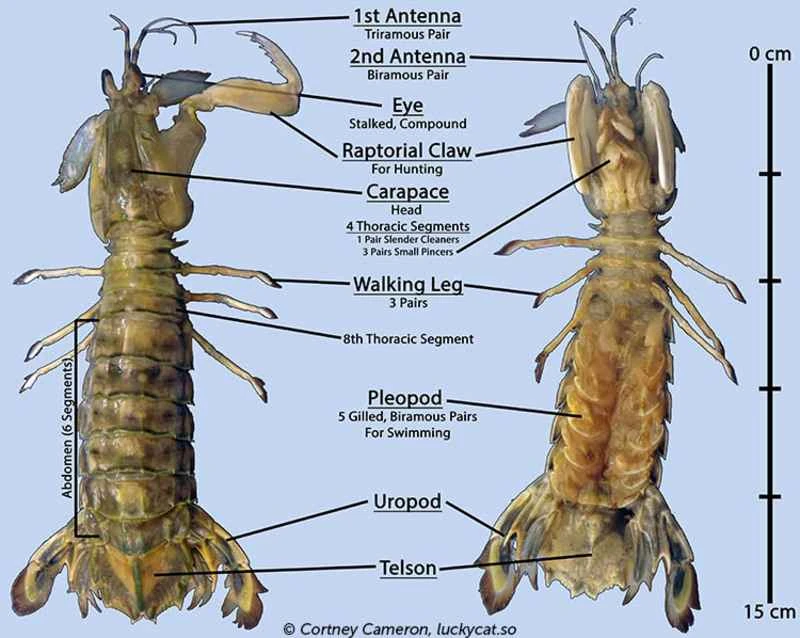
Besides insects, other invertebrates, such as spiders, mollusks (like snails and squid), and crustaceans (like crabs and lobsters), comprise millions of species. The number of invertebrate species is difficult to estimate because many are small, difficult to spot, or live in inaccessible environments.
Total animal population
While we have a relatively good understanding of the number of existing species, estimating the total number of individual animals in the world is far more challenging. Individual animal populations, especially insects, reach staggering levels. Here are some estimates:
insect
There are an estimated 10 quadrillion (10,000,000,000,000,000,000) insects on Earth at any given time.
There are 20 quadrillion ants in the world, making them one of the most numerous animals on Earth.
mammal
Although there are fewer species of mammals, their numbers are still enormous. For example, the number of rodents is believed to be in the billions .
Humans, as mammals, are part of a family of 7.8 billion small animals, while other species such as whales and elephants are far fewer in number due to their size and habitat limitations.
birds
It is estimated that there are approximately 50 billion birds worldwide. Some species, such as the house sparrow or the European myna, number in the hundreds of millions.
fish
The number of fish in oceans and freshwater bodies is difficult to quantify, but some estimates suggest that there are more than 3.5 trillion fish in the world.
Amphibians and reptiles
The number of amphibians and reptiles varies from millions to billions , depending on the species. Frogs and toads are abundant in tropical rainforests, while reptiles such as lizards and snakes thrive in deserts and temperate regions.
Factors affecting animal populations
Several factors influence the number of animals in the world . These factors include:
1. Habitat loss
Deforestation, urbanization, and industrialization are the main causes of habitat destruction, especially in rainforests and wetlands. As habitats are destroyed, animals living in these areas either adapt, migrate, or face extinction.
2. Climate Change
Global warming is altering animal habitats, especially those of species sensitive to temperature changes, such as amphibians and polar animals. Rising sea levels and changing weather patterns are impacting the migration, reproduction, and food sources of many species.
3. Human activities
Humans play a crucial role in shaping animal populations through hunting, pollution, and agriculture. For example, overfishing has drastically reduced fish populations, while illegal poaching threatens species such as elephants and rhinos.
4. Protection work
Despite the challenges, conservation programs have helped restore populations of some species. For example, conservation efforts for endangered species such as pandas, tigers, and whales have resulted in slow recovery in some areas.
New Discovery: The Growing List of Species
Another reason why it's difficult to give a precise answer to how many animals there are in the world is that new species are discovered every year. Scientists estimate that 86% of terrestrial animals and 91% of marine species remain undiscovered. Tropical rainforests and deep-sea ecosystems, in particular, harbor a vast number of undiscovered species.
New discovery example:
In 2021, researchers discovered 224 new species in the Greater Mekong region, including reptiles, amphibians, and mammals.
New species such as jellyfish, worms, and fish are constantly being discovered in the deep sea.
Extinction: Reduction in numbers
As new species are discovered, many animals are also going extinct at an alarming rate. Species extinction has been accelerating over the past few decades due to habitat loss, climate change, and human activities.
It is estimated that 150 to 200 species go extinct every day, highlighting the fragility of the world's ecosystems.
Animals such as the Javan rhinoceros, vaquita, and Amur leopard are endangered, with fewer than 100 remaining.
Conclusion: How many kinds of animals are there in the world?
In conclusion, estimating the number of animal species in the world requires considering both the number of species and the number of individuals. While the exact figures remain elusive, the richness and diversity of the animal kingdom are undeniable. With over 8.7 million species and countless individuals scattered across every corner of the earth, it forms a vital part of the planet's ecosystems. However, ongoing environmental change and human activities underscore the necessity of intensified conservation efforts to protect this incredible biodiversity for future generations.