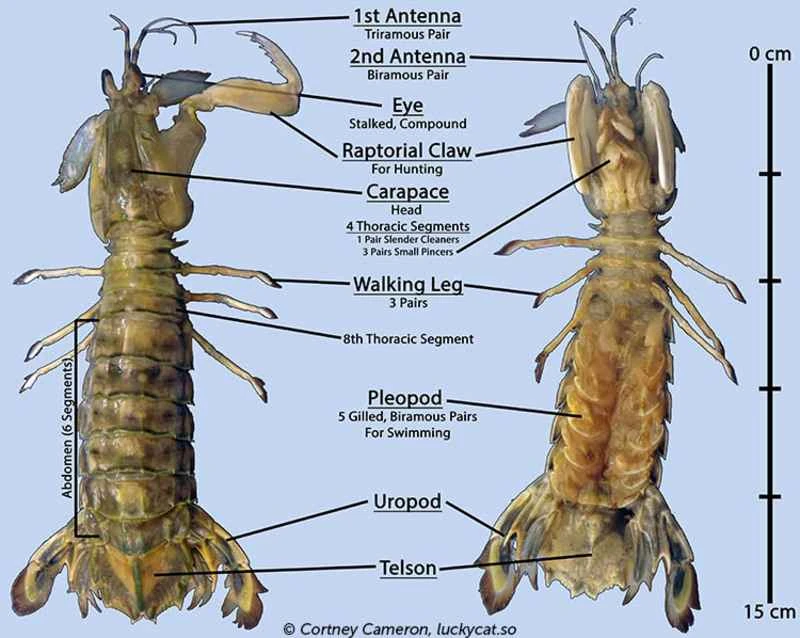
Mantis shrimp, scientifically known as *Schizothorax gravidarum*, is also called mantis shrimp, mantis crawler, or prawn. It's a popular seafood due to its delicious taste and low price. The best time to eat it is from April to June when the meat is at its plumpest. So, how many types of mantis shrimp are there? Here's a list of ten common types: *Schizothorax wu's mantis shrimp*, *Schizothorax longifolia*, *Schizothorax spinosus*, *Schizothorax spicata*, *Schizothorax scabra ... and *Schizothorax scabra*. Let's take a look at the types of mantis shrimp and related information.
1. Wu's mantis shrimp (light green/maximum length 15.5cm)
Habitat: Indo-West Pacific
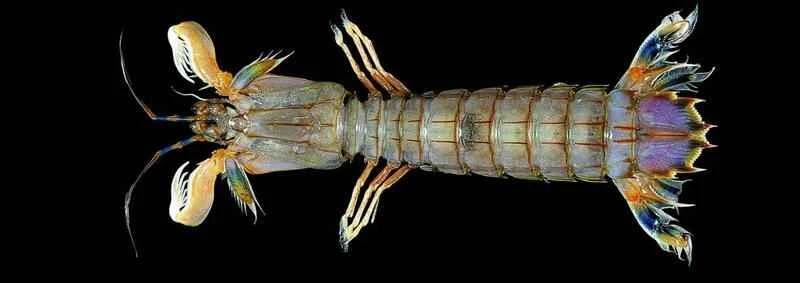
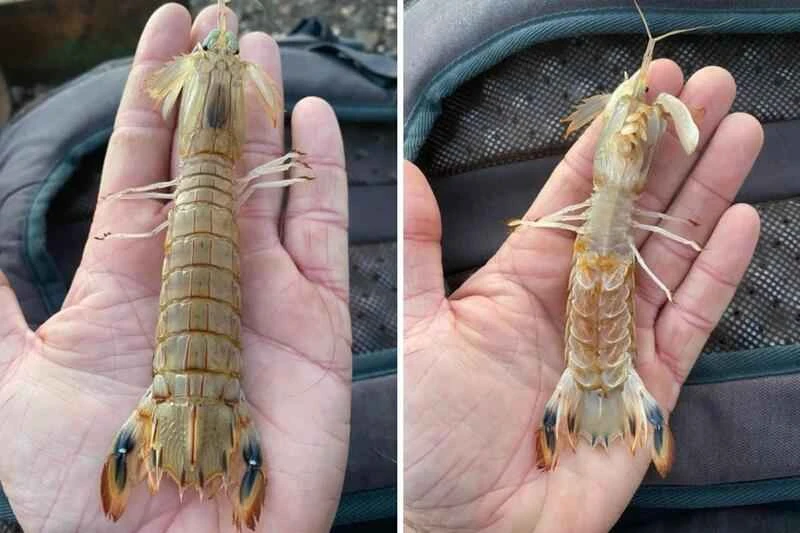
The mantis shrimp *Schefflera wussaurus* is one of the most common mantis shrimp species, belonging to the medium to large size. Its body is light green with a reddish-brown ridge, a chestnut-colored central dorsal peduncle with a yellow posterior edge, pink basal spines, and blue exopods and endopods of the telson. It is semi-cylindrical, flattened vertically, and mature individuals reach approximately 120 mm in length, with some reaching up to 155 mm.
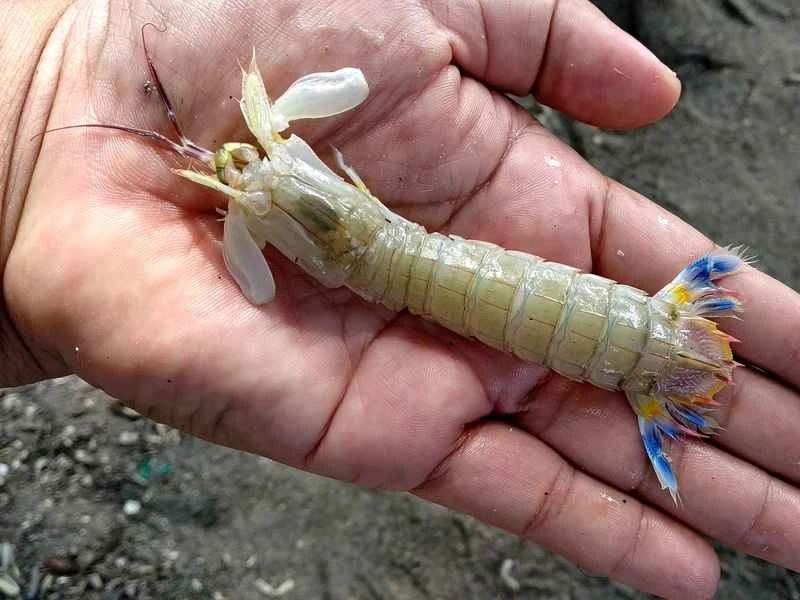
The Wu's mantis shrimp is widely distributed in the Indo-West Pacific Ocean, mainly inhabiting waters with a depth of 5 to 50 meters. It has a wide range of habitat depths and adaptability to temperature and salinity. Under natural conditions, the larval metamorphosis process takes about 4 to 5 months, and it takes another 10 to 12 months to reach sexual maturity. The breeding season is from April to August each year.
2. Long-mouthed mantis shrimp (grayish-green/maximum length 16.5cm)
Habitat: Indo-West Pacific
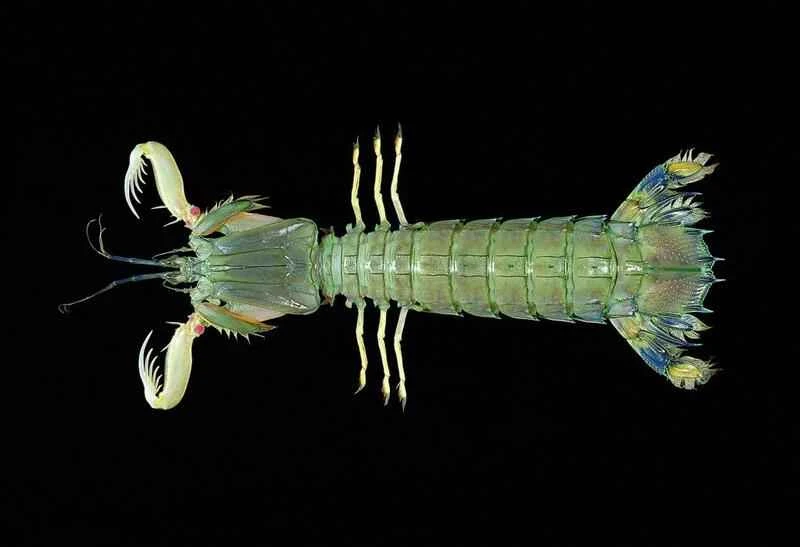
The long-forked mantis shrimp is a relatively popular species of mantis shrimp. It is understood that the long-forked mantis shrimp often coexists with the Wu's mantis shrimp, and is mainly distributed in the Indo-West Pacific Ocean, commonly found in the surrounding waters of Indonesia, Malaysia, and Vietnam. The substrate is primarily muddy or sandy, and the shrimp is not particularly selective. This mantis shrimp has a grayish-green back, with all ridges, grooves, and posterior margins of the segments being brownish-green. The central ridge and lateral margins of the caudal peduncle are dark green, the basal spines at the ends of the inner and outer forks of the telson are red, and the telson of the exopod is yellow. It has relatively slender, bipedal legs and can reach a body length of 165 mm, making it a relatively large mantis shrimp.
3. Spiny mantis shrimp (light brownish-blue/maximum length 30cm)
Habitat: Southeast Asian waters
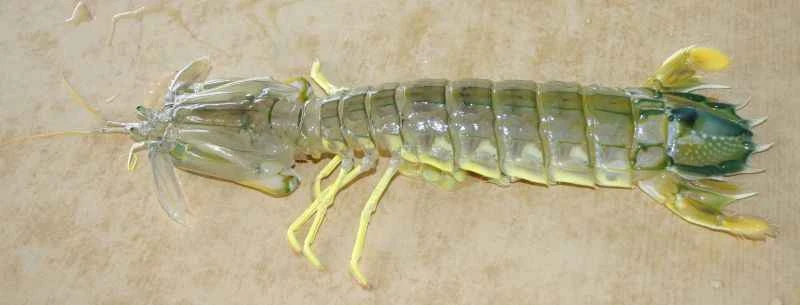
The spiny mantis shrimp, as its name suggests, is large and fierce, and its price is even higher. Spiny mantis shrimp typically grow to over 20 centimeters, with larger ones reaching 30 centimeters. Their market price is comparable to that of lobsters, making them a promising species for aquaculture. Its back is light brownish-blue, with dark brown ridges and posterior margins of the segments. The subcentral ridge of the sixth abdominal segment is dark green, and there is a pair of dark spots on either side of the central ridge of the caudal peduncle. The basal spine of the caudal peduncle is green, the inner edges of the telson are dark brown, and the outer telson is yellowish-brown. The spiny mantis shrimp is distributed south of Sagami Bay in Japan, extending through Taiwan to Hong Kong, the South China Sea islands, the Philippines, the Malay Archipelago, Vietnam, the Indian Ocean, South Africa, and Australia.
4. Spiky Mantis Shrimp (dark brown patches/spines on the sides)
Habitat: Japan/China/East Africa
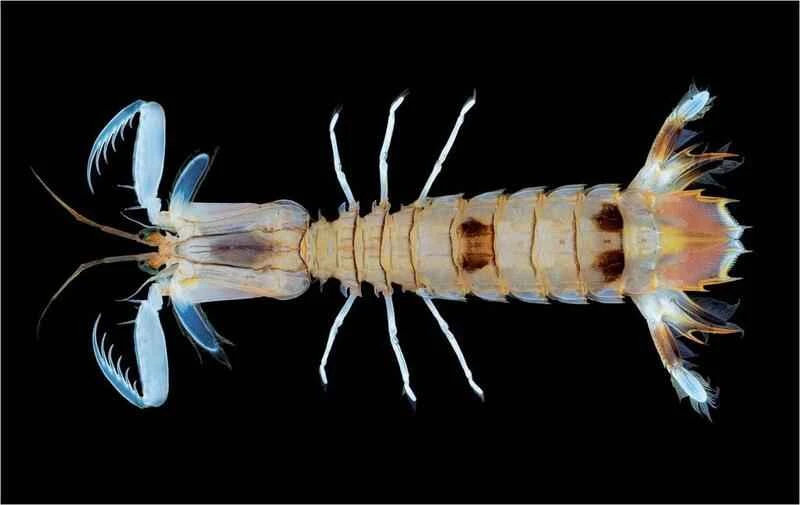
The spiny mantis shrimp, also known as the king mantis shrimp or spiky mantis shrimp, is a common species of mantis shrimp. This mantis shrimp has a narrow anterior carapace with spines at its lateral angles and a rounded posterior margin. Its predatory toes have sharp spines on the inside. It has distinct dark brown patches on the central abdominal segment and the fifth abdominal segment, and can reach a length of 20 cm. The spiny mantis shrimp mainly inhabits sandy or muddy seabeds at depths of 50–360 meters, and is distributed in Japan, Taiwan, and along the coast of East Africa. Aquaculture techniques are well-established. Due to its large size, steaming or blanching results in a dry flavor; it is better prepared with salt and pepper, or with garlic and vermicelli, and then split open. Braised in oil is also a good option.
5. Spotted mantis shrimp (shell with black and white stripes / longest length 40cm)
Habitat: Tropical seas worldwide
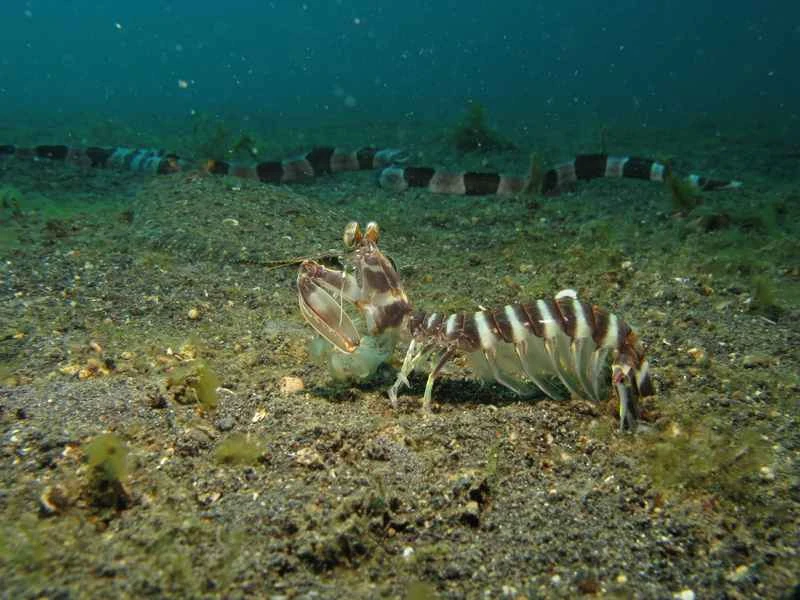
The zebra mantis shrimp is a "plus" version of the mantis shrimp, reaching up to 40cm in length. Also known as the tiger mantis shrimp, its black and milky white body color resembles the stripes of a zebra or a piano keyboard. Adult shrimp are about the same length as an adult's arm and are exceptionally fierce. They are usually sold individually in large beverage bottles by vendors, creating a unique sight in seafood markets.

The spotted mantis shrimp is distributed in tropical seas around the world, including the Pacific Ocean, the Indian Ocean, the Taiwan Strait, and the South China Sea. Similar species include the grooved-headed mantis shrimp and the thirteen-toothed mantis shrimp.
6. Mantis shrimp with a broken spine (light olive green/maximum length 16cm)
Habitat: East of the Persian Gulf/Australia

The mantis shrimp *Triplophysa malaccensis* is one of the ten major species of mantis shrimp, ranging in size from medium to large, reaching up to 160 mm in length. Its back is light olive-green, the carapace groove is dark green, the ridge is deep red, the posterior margin of the segments is dark green, the ridge is green, the central ridge of the caudal peduncle has a brown spot, the basal spine tip is red, the exopods of the telson are yellow, and the central ridge of the carapace is clearly interrupted by the forked cleft. *Triplophysa malaccensis* is mainly distributed from the Persian Gulf eastward to Vietnam, Hong Kong, Taiwan, mainland China, and Australia. April and May are the best season for eating mantis shrimp. After June, spawning ends, and with the fishing moratorium, it becomes difficult to find plump and delicious mantis shrimp in the summer.
7. Black-spotted mantis shrimp (with black spots on the tail, grows quickly/high yield)
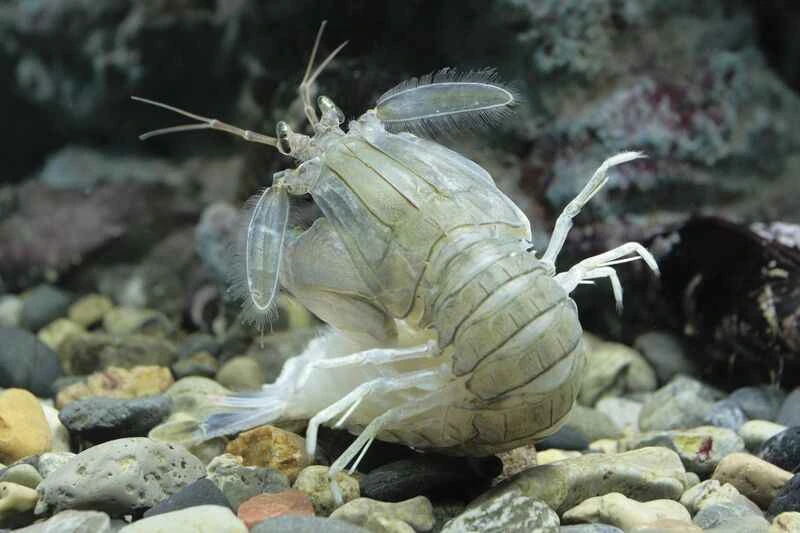
The black-spotted mantis shrimp is one of the ten most popular mantis shrimp species, named for the black spot on its tail. Compared to common mantis shrimp, it grows faster and is larger. Its growth rate is affected by environmental conditions such as water temperature, salinity, pH, and dissolved oxygen. This type of mantis shrimp prefers to live in soft muddy pond bottoms, building burrows typically in a U-shape, while it chooses a Y-shape for warmth during winter. It is understood that due to its large size, rapid growth, and high yield, this type of mantis shrimp has become a top choice for many farmers and is currently a common species in the mantis shrimp market. Moreover, its price is generally relatively inexpensive, making it very popular with consumers.
8. Peacock Mantis Shrimp (brightly colored)
Habitat: Indian Ocean/Pacific Ocean
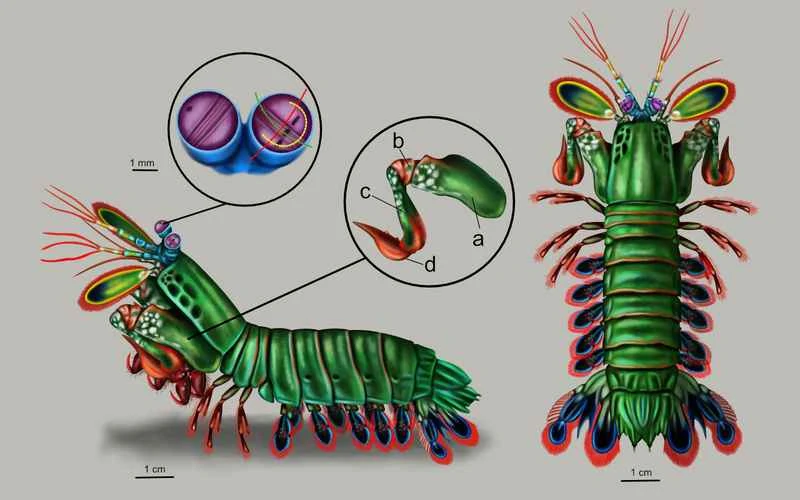
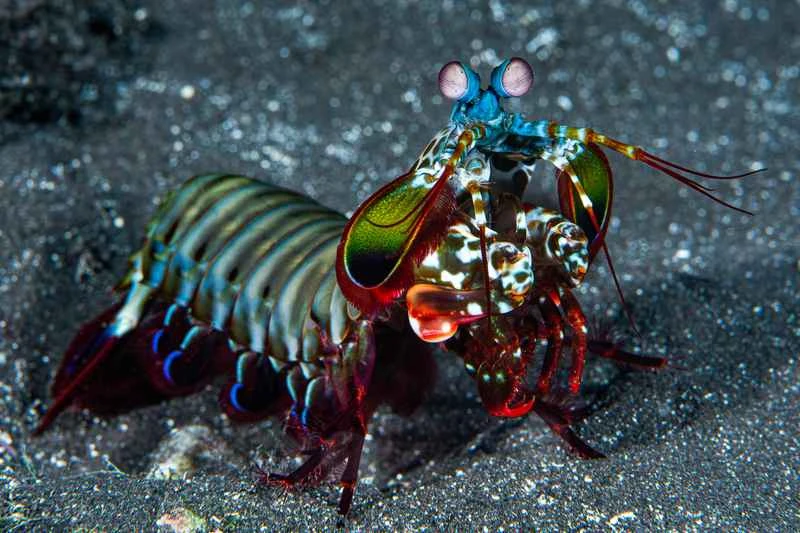
The peacock mantis shrimp, also known as the cicada-toothed mantis shrimp or the rainbow mantis shrimp, is a star species among mantis shrimp, becoming an internet sensation due to its gorgeous appearance and skills. Among all mantis shrimp, the peacock mantis shrimp has the most vibrant body color, reaching up to 20 centimeters in length. Its body is usually dark green or bluish-green, with orange-red antennae scales. The front part of the cephalothorax has a coffee-colored honeycomb-like pattern with white edges, and its three pairs of thoracic legs and predatory claws are red, making its appearance as beautiful as a peacock.

Peacock mantis shrimp are distributed in the tropical waters of the Indian and Pacific Oceans, including the South China Sea and the waters around Taiwan. They often inhabit crevices or caves in reefs, or hide behind rocks and corals to wait for prey to come to them.
9. Stephenson's mantis shrimp (with sharp serrated spines, endemic to Australia)

The Stephenson mantis shrimp is a large mantis shrimp, typically around 20 centimeters long, native to the Gulf of Carpentaria between Arnhem Land and the Cape York Peninsula in northern Australia. It is known for its lightning-fast reflexes, long and sharp serrated spines, and is difficult to deal with peacefully. Its unique "T"-shaped eyes provide excellent depth perception, allowing it to locate and capture prey. Once caught in its spiny claws, prey has virtually no chance of escape. The Stephenson mantis shrimp is endemic to Australian waters and has not been found anywhere else in the world.
10. Japanese mantis shrimp (male pink/female pink with dark green accents)
Habitat: Indo-Pacific
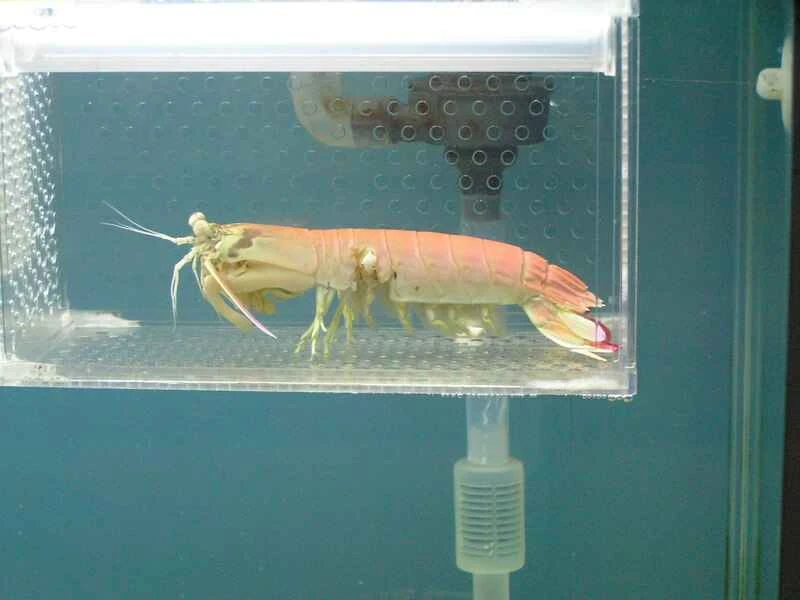
The Japanese mantis shrimp, also known as the rainbow mantis shrimp, is mainly distributed from the Indo-Pacific region to the western Pacific Ocean, from the western Indian Ocean to Australia and Japan. It can also be found in Taiwan and Hong Kong, but in very small numbers. It inhabits muddy or sandy bottoms at depths of over 70 meters, often digging burrows in the gravel and pebbles on the seabed. The Japanese mantis shrimp has brown patches on the anterior part of its cephalothorax. Its body color is sexually dimorphic; the male's dorsal carapace is mainly pinkish-orange or reddish-brown, while the female's posterior dorsal carapace is bluish-green. Therefore, it is often kept as an ornamental shrimp.
The list of the top ten mantis shrimp species is based on the characteristics and quality of common mantis shrimp, taking into account public awareness and other relevant information, and combining other relevant rankings/lists on the internet to make a comprehensive ranking recommendation. The list is for reference only. If you have any questions, please feel free to comment/discuss at the end.
More famous mantis shrimp:
Mantis shrimp, East Asian mantis shrimp, mantis shrimp with proximal spine, Japanese mantis shrimp, Manning mantis shrimp, spineless mantis shrimp, and spiny mantis shrimp.