When discussing stinging insects, killer bees and wasps are often considered two of the most dangerous, but they differ significantly in behavior, toxicity, and threat to humans. Besides killer bees and wasps, other honeybee species also play important roles in nature. We will now explore in detail the species, toxicity, distribution, conservation status, and potential harm to humans and the environment of these insects.
Types of bees
Honeybees are diverse, but here we will primarily discuss killer bees, European honeybees, bumblebees, and solitary honeybees. Each type of bee differs in behavior, ecological role, and potential threat to humans.
Killer bees (Africanized honeybees)
Scientific name: Apis mellifera scutellata
Origin: Native to Africa, it was hybridized with European honeybees in Brazil in the 1950s.
Distribution: Mainly distributed in Central America, South America, and the southern United States.
Behavior: Highly defensive, extremely vulnerable to attack, especially in groups.
Toxicity: The toxicity is comparable to that of European honeybees, but it is more dangerous due to its swarm attack characteristics.
Conservation status: Not endangered, often controlled to reduce threats to humans and livestock.
Environmental role: Limited pollination effect, but due to its strong aggression, its effect is not as good as other bees.
European honeybee (common honeybee)
Scientific name: Apis mellifera
Origin: Originally from Europe, it was introduced to various parts of the world due to agricultural needs.
Distribution: Temperate regions worldwide.
Behavior: Generally docile, only stings when threatened; will die after stinging.
Toxicity: Moderate toxicity, usually harmless to those without allergies.
Protection level: Threatened, affected by colony collapse syndrome, pesticides and habitat loss.
Environmental role: an important pollinator, maintaining the growth of crops and natural flowers.
Bumblebee
Scientific name: Bombus spp.
Origin: Widely distributed globally, including North America, Europe, and Asia.
Distribution: Various habitats including farmland and forests.
Behavior: Usually docile, but will sting if the nest is threatened.
Toxicity: Low toxicity; it generally does not sting unless provoked.
Conservation status: Endangered in some areas due to habitat loss and pesticide use.
Environmental role: an excellent pollinator, especially suitable for pollinating local plants.
Solitary bees (such as mud wasps and leafcutter bees)
Scientific names include Osmia (mud wasp) and Megachile (leafcutter wasp).
Origin: Many species are distributed in different regions of the world.
Distribution: Gardens, forests, and urban areas.
Behavior: Non-aggressive, usually does not sting.
Toxicity: Extremely low toxicity, rarely stings.
Conservation level: Some species are threatened due to habitat destruction.
Environmental role: An important pollinator, contributing to the pollination of wildflowers and crops.
Types of wasps
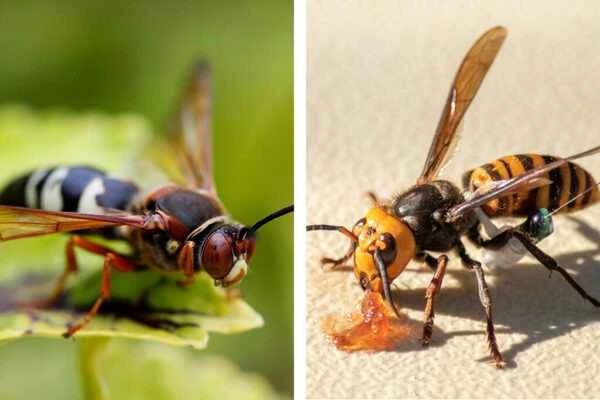
There are many species of wasps, mainly including yellow jacket wasps, hornets and paper wasps, which differ in their behavior and the threat they pose to humans.
Yellow Jacket Bee
Scientific names: Vespula and Dolichovespula Species
Distribution: Common in North America, Europe and Asia.
Behavior: Highly defensive; will sting repeatedly if threatened.
Toxicity: Highly toxic; stings cause severe pain and may lead to serious allergic reactions.
Conservation status: Not endangered, commonly found in suburbs and rural areas.
Environmental role: natural enemies, helping to control pest populations.
wasp
Scientific name: Vespa spp.
Distribution: Mainly distributed in Asia, but European wasps are also found in Europe and North America.
Behavior: Extremely aggressive when threatened, may sting multiple times.
Toxicity: Extremely toxic; due to its chemical composition, a wasp sting is particularly painful.
Conservation status: Not endangered, but some non-native species are invasive in new areas.
Environmental role: an effective pest controller, but if their numbers are too high, they may affect bee populations.
Paper Bee
Scientific name: Polistes spp.
Distribution: Mainly distributed in warm climates around the world.
Behavior: Relatively mild; will sting only when threatened.
Toxicity: Moderately toxic; stings are less painful than those caused by wasps.
Conservation status: Not endangered, commonly found around human-built structures.
Environmental role: It preys on caterpillars and other pests, helping to maintain the ecological balance of the garden.
A detailed comparison of bees and wasps
| feature | Killer bees | European honeybee | Bumblebee | Solitary bees | Yellow Jacket Bee | wasp | Paper Bee |
|---|---|---|---|---|---|---|---|
| toxicity | medium | medium | Low | Extremely low | high | Extremely high | medium |
| Sting frequency | One sting, death following the sting. | One sting, death following the sting. | Can sting once or multiple times | It rarely stings people | Stinging people multiple times | Can sting multiple times | Can sting multiple times |
| Distribution area | Americas, Southern United States | worldwide | worldwide | worldwide | North America, Europe, Asia | Asia, Europe, North America | worldwide |
| Behavior | Highly defensive, easy to attack in groups | docile, only stings when threatened. | docile, only stinging when the nest is threatened. | Non-aggressive, docile | Strong attack near nest | Aggressive when threatened | docile, only stings when threatened |
| Protection level | Not endangered | Threatened | endangered in some areas | Some species are endangered | Not endangered | Not endangered | Not endangered |
| Environmental effects | Limited pollination effect | Important pollinators | excellent pollinators | Important pollinators | Pest control | Pest control | Pest control |
| Threat to humanity | High, dangerous due to group attacks | Low, unless allergic | Low toxicity | Extremely low, rarely stings. | From mid to high altitudes, especially near the nest | High, toxic, and extremely painful | Moderate stinging, only stings when disturbed. |
Which is more dangerous?
In summary:
Killer bees: They are most dangerous due to their swarm attack behavior, which can pose a serious threat to humans.
European honeybees: docile and pose little threat to humans, but are vital to the environment.
Bumblebees and solitary honeybees: usually harmless, they are key pollinators.
Yellow jacket wasps and hornets: They are highly venomous and aggressive when near their nests, posing a significant threat to humans.
Paper bees: relatively mild, only stinging when threatened.
Understanding these differences helps us respect their ecological role while avoiding unnecessary contact and bites.