Chickens are one of the most common poultry in the world, but have you ever wondered about their origins? This article will take you through the history and origins of chickens, exploring their wild ancestors and how they became the adorable farm animals we know today.
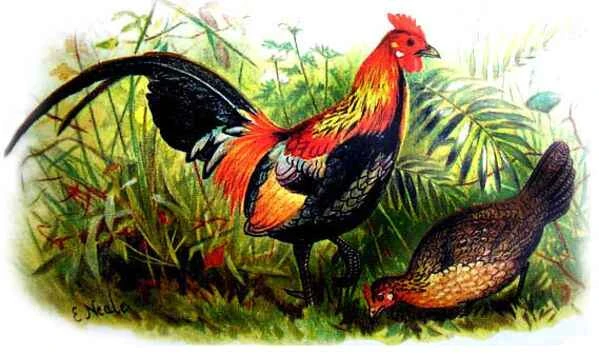
Wild ancestors of chickens
The ancestor of chickens is the red bush grouse ( Gallus gallus ), a bird native to Southeast Asia, particularly in modern-day India, Thailand, and Vietnam. The red bush grouse is a brightly colored bird with vibrant plumage and a distinctive call, well-suited to thriving in forest environments.
Domestication Timeline
Chicken domestication likely began around 8,000 years ago. Early humans found the red bush chicken easy to catch and raise, making it a valuable food source. They provided not only meat but also eggs, which were an important part of the human diet at the time.
Researchers believe that chickens were initially raised for their meat and eggs, but they also played an important role in religious and cultural practices. As humans began to settle down and form agricultural societies, the use of chickens gradually became widespread.
Chicken varieties
There are many breeds of chickens, each with its own unique characteristics, including size, color, temperament, and purpose (such as egg production or meat production). Below is a detailed overview of some popular chicken breeds, presented in a table for easy comparison.
| Variety Name | describe | Egg production | Meat production | character | Remark |
|---|---|---|---|---|---|
| Lehorn Chicken | Known for its outstanding egg-laying ability, it has white feathers. | High (280-300 per year) | medium | Lively and friendly | Commonly used in commercial egg production. |
| Rhode Island Red Chicken | It is cold-resistant and suitable for both laying eggs and eating meat; its feathers are reddish-brown. | High (250-300 per year) | good | gentle, friendly | Suitable for backyard farming and family farms. |
| Plymouth Rock Chicken | A popular dual-purpose variety with striped feathers. | Medium (200-250 per year) | good | Friendly and easy to handle | Suitable for raising with children, it is perfect for family farms. |
| Silkie Chicken | With their unique appearance and fluffy feathers, they are often kept as pets. | Low (100-120 per year) | Low | gentle, friendly | Known for his gentle nature and unique appearance. |
| Cornell Chicken | Primarily used for meat production, it has a short and stocky build. | Low | Very high | mild | Commonly used in commercial meat production. |
| Black-feathered Obbinton Chicken | Friendly and an excellent egg-laying animal, with black, blue, or chocolate-colored plumage. | High (200-250 per year) | good | Gentle, quiet | Suitable for beginners; ideal for egg and meat production. |
| Australian Red Chicken | An Australian breed known for its high egg production and cold hardiness. | High (250-300 per year) | good | Friendly and adaptable | Black feathers are very popular on backyard farms. |
| Corning Chicken | Large, feathered-footed birds, suitable for pets and displays. | Medium (150-200 per year) | medium | gentle, friendly | Suitable for family breeding and as an ornamental bird. |
| Bama Chicken | It is relatively large, has feathers on its legs, and has a gentle temperament. | Medium (150-200 per year) | high | gentle, friendly | Suitable for meat production and cold climates. |
| Hamburger Chicken | Beautiful markings, good egg production capacity, and relatively small size. | Medium (150-200 per year) | Low | Lively, sensitive | It is known for its unique feather patterns. |
This table highlights only a portion of the many chicken breeds available today. Each breed has its advantages and disadvantages, so choosing the right breed is crucial and depends on your specific needs—whether you're looking for excellent laying hens, broilers, or simply friendly pets. Understanding the characteristics of different chicken breeds can help you establish the ideal flock for your backyard or farm.
How did chickens spread to all parts of the world?
Once chickens were domesticated, they began to spread to other regions. Here's how this process unfolded:
Trade and Exploration : Chickens moved with merchants and explorers. Spreading from Southeast Asia to other parts of Asia, the Middle East, and eventually Europe, chickens gradually adapted to different environments and ways of raising them.
Cultural exchange : Different cultures began to raise chickens based on specific characteristics (such as size, egg production capacity, and temperament). This led to the development of the various chicken breeds we see today.
Colonization : During the era of exploration and colonization, chickens were introduced to places such as the Americas, Africa, and Australia. They quickly became a major food source in these new lands.
The Importance of Chickens Today
Today, chickens are raised globally for meat and eggs. They have become an important part of agriculture, providing nutrition and economic opportunities for many. In addition to their practical uses, chickens are increasingly popular as pets and for backyard farming, with people appreciating their friendly nature and the enjoyment they bring.
Chicken breeds
There are thousands of chicken breeds today, some of the most popular being:
Lehorn chickens are known for their excellent egg production.
Rhode Island Red Chicken : Cold-resistant, suitable for both meat and egg production.
Silkie chicken : A unique breed with fluffy feathers, often kept as a pet.
Annual chicken slaughter numbers in various countries
To gain a comprehensive understanding of chicken slaughter statistics in various countries, it's essential to recognize that these figures can vary significantly from year to year. Below is an overview of estimated annual slaughter numbers for some major chicken-producing countries:
| nation | Estimated number of animals slaughtered annually (millions) |
|---|---|
| USA | Approximately 9 billion |
| China | Approximately 14 billion |
| Brazil | Approximately 5.7 billion |
| India | Approximately 1 billion |
| Indonesia | Approximately 1.2 billion |
| Mexico | Approximately 1.6 billion |
| Russia | Approximately 1 billion |
| Japan | Approximately 1.2 billion |
| Türkiye | Approximately 900 million |
| Vietnam | Approximately 1.5 billion |
Key points
United States : The United States is one of the largest producers of chicken, with approximately 9 billion chickens slaughtered each year, mainly for meat consumption.
China : China leads the world in chicken production, slaughtering approximately 14 billion chickens annually to supply both domestic and international markets.
Brazil : Brazil is a major exporter of chicken, slaughtering approximately 5.7 billion chickens annually.
India : As chicken becomes an increasingly popular source of protein, the number of chickens slaughtered in India has been rising year by year, reaching approximately 1 billion.
Southeast Asia : Countries like Indonesia and Vietnam are also major players in chicken production, slaughtering around 1 billion chickens annually.
These figures highlight the scale of global chicken production and consumption. They reflect the demand for chicken as a protein source and agricultural practices in various countries. As diets evolve globally, these statistics are likely to change, with some countries potentially increasing production while others may fluctuate due to market trends and consumer preferences. Understanding these dynamics can provide valuable insights into global food supply and agricultural practices.
Chickens originated from the red bush chickens of Southeast Asia and underwent thousands of years of domestication. Their global spread is a fascinating story of trade, exploration, and cultural exchange. Today, chickens are an important part of our food system and continue to be loved by people around the world. Whether you raise chickens for eggs, meat, or companionship, you are part of this long history that began with these extraordinary birds in the jungles of Southeast Asia.