The Blue-gray Gnatcatcher (scientific name: *Polioptila caerulea*), also known as the Blue-gray Flycatcher, is a small, active songbird belonging to the family Polioptilidae. Despite its small size, this bird is beloved for its lively behavior, striking appearance, and important role in the ecosystem. This article will provide detailed information on the Blue-gray Gnatcatcher's physical characteristics, behavioral habits, habitat, breeding practices, and conservation status.
What kind of bird is the mosquito-eating grey reed warbler?
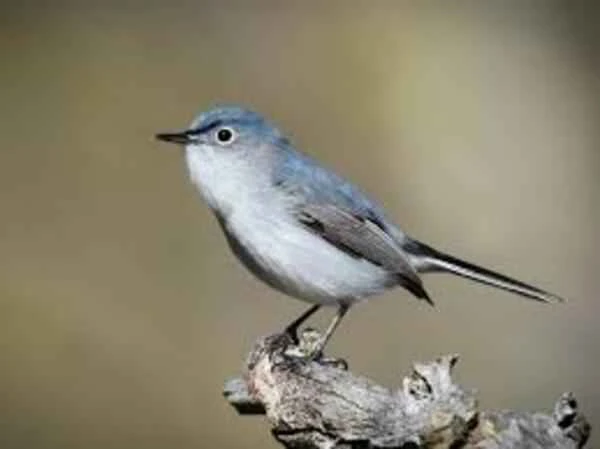
The Mosquito-Eating Reed Warbler is a small bird belonging to the Reed Warbler family. It is easily recognizable by its bright blue-grey plumage, long tail, and lively foraging behavior. They are often seen flitting among the branches, searching for insects and spiders to feed on.
Main features:
Size : The Mosquito-eating Grey Reed Warbler is very small, with a body length of about 11-13 cm (4.5 to 5 inches).
Color : Its back and head are a soft bluish-grey, while its underbelly is lighter. The tail is long and darker, and is usually curled upwards.
Behavior : These birds are very active, usually foraging in flocks, and are agile, often hopping and flitting among the trees.
Species of Mosquito-eating Grey Reed Warbler: Detailed Overview
The Mosquito-Eating Grey Reed Warbler ( Polioptila caerulea ) is generally considered a monospecies, but several different varieties exist within its range, distinguishable by their geographic distribution and subtle differences in physical characteristics. While there is no definitive subspecies classification, some significant differences can be identified based on regional populations.
The following is a detailed overview of the Mosquito-eating Grey Reed Warbler and its possible subspecies, including the main differences between them.
Overview of mosquito-eating grey reed warbler species and subspecies
| Subspecies/population | scientific name | Geographical distribution | physical characteristics | Behavior/Notes |
|---|---|---|---|---|
| Type subspecies | Polioptila caerulea caerulea | Eastern and central United States to Mexico | Blue-grey back and head, light-colored belly, dark tail, active foraging behavior. | They are most common in the eastern and central United States and are highly migratory. |
| Mexican subspecies | Polioptila caerulea mexicana | Mexico (mainly in the southern region) | Its body color is slightly darker, its tail is darker, and the black of its tail feathers is more prominent. | Commonly found in arid environments, they migrated to Central America. |
| California subspecies | Polioptila caerulea californica | California and surrounding areas, USA | Compared to other populations, they are smaller and lighter in color. | The resident population in California is non-migratory in some areas. |
1. Type subspecies: Polioptila caerulea caerulea
Geographical distribution : This is the most common subspecies of the Mosquito-eating Grey Reed Warbler, distributed in the eastern and central United States, extending to parts of Mexico.
Physical characteristics : This subspecies has a typical bluish-grey back and head, a lighter belly, a long and dark tail, a small body size, and is active, adapted for fast flight and foraging.
Behavior and Notes : This subspecies is a migratory bird that migrates south each autumn, winters in southern or Central America, and returns north to breed in the spring. They typically inhabit forests, forest edges, and thickets.
2. Mexican subspecies: Polioptila caerulea mexicana
Geographical distribution : This subspecies is mainly distributed in southern Mexico, and can also be found in parts of Central America.
Physical characteristics : The Mexican subspecies has a slightly darker coat color than the type subspecies, especially in the tail area, where the black tail feathers are more prominent.
Behavior and Notes : This subspecies primarily inhabits arid and shrub-dense areas. Compared to other populations, they migrate shorter distances, typically migrating to Central America for the winter. They are adapted to a relatively arid environment.
3. California subspecies: Polioptila caerulea californica
Geographical distribution : The California subspecies is mainly distributed in California and its surrounding areas, and occasionally appears in Arizona and Nevada.
Physical characteristics : This subspecies is slightly smaller than the other subspecies, with lighter body color and relatively shorter tail feathers, and is adapted to a drier and more desolate environment.
Behavior and Notes : The California subspecies of the Mosquito Reed Warbler is often resident, especially in parts of Southern California, and some groups are non-migratory. These birds are adapted to the semi-arid environment of California.
Key differences between subspecies
Although these subspecies are similar in behavior and diet, differences in their geographical distribution and some physical characteristics help ornithologists distinguish them.
Coloration differences : The Mexican subspecies typically has darker tail feathers than the type subspecies, while the California subspecies is lighter in color and smaller in size.
Size differences : The California subspecies is smaller and is usually adapted to a drier environment, so it appears more compact compared to other subspecies.
Migration behavior : The type subspecies is the most migratory, crossing long distances every year, while some individuals of the California subspecies choose to stay and spend the winter there.
Although the Mosquito Reed Warbler is often considered a monospecies, different populations within its distribution range exhibit significant territorial variations. Understanding these different subspecies allows us to better comprehend not only their adaptations but also their lifestyles and ecological roles in diverse environments. From the forests of the East to the wastelands of California, the Mosquito Reed Warbler has a place in the diverse environments of North America and is an important bird for observation and research.
Habitat and Distribution
The mosquito-eating grey reed warbler is mainly distributed in North America, from the southern United States to Central America. They usually inhabit forests, forest edges, and scrublands, especially near water sources.
Preferred habitat:
Forests and forest edges : Mosquito-eating Grey Reed Warblers prefer to inhabit deciduous forests, but can also be found in pine forests and mixed forests. They are often found in areas with dense shrubs and small trees, which are convenient for foraging.
Migration : The Mosquito-Eating Grey Reed Warbler is a migratory bird. They migrate to the southern United States or Central America in the fall to spend the winter, and return north to breed in the spring.
Diet and foraging habits
As its name suggests, the Mosquito-eating Grey Reed Warbler primarily feeds on insects, especially small flying insects such as mosquitoes. However, they also eat various other small insects, spiders, and some berries when insects are scarce in winter.
Foraging behavior:
Active foraging : Mosquito-eating reed warblers are very active when foraging. They fly quickly among the branches, often hanging upside down on branches or hovering in the air in search of food. They are small and agile, able to catch insects from tiny crevices or leaves.
Insect-based diet : They are insectivorous birds, whose main diet consists of small invertebrates such as flies, ants, and beetles. When insects are scarce in winter, they will also eat berries and seeds.
Reproduction and Nest Building
The breeding season for the Mosquito Reed Warbler is typically in the spring. These birds are known for their elaborately constructed nests, which are usually built by the female.
Nest building behavior:
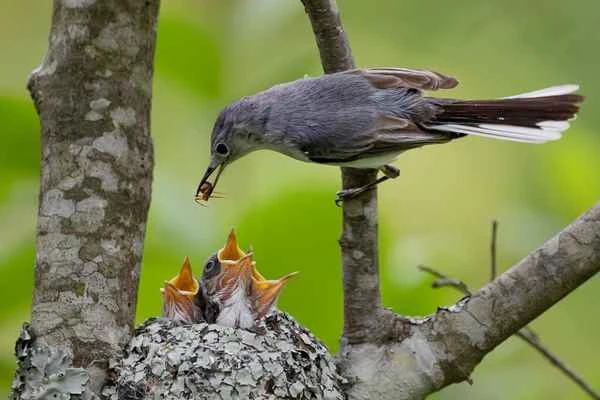
Nest : The mosquito-eating grey reed warbler's nest is cup-shaped and mainly constructed from twigs, moss, spider silk, and other plant materials. Nests are typically built in low branches of bushes or trees, usually in dense, sheltered areas.
Eggs : Females typically lay 3 to 4 eggs, which are light-colored and speckled. Both males and females provide food for the chicks, although the female is primarily responsible for incubation.
Social structure and behavior
Mosquito-eating reed warblers are commonly found in small groups, especially during migration or outside the breeding season. They are very active and social, usually communicating through a variety of calls and songs.
Group behavior:
Foraging in groups : In winter, mosquito-eating reed warblers often form loose groups to forage together. The groups usually consist of males and females, who search for food together in the trees.
Calls : Their calls are high-pitched and sharp, including various chirps and whistles. During the breeding season, their songs are a series of high-pitched notes that sound crisp and rhythmic.
Preserve the status quo
Currently, the Mosquito-eating Grey Reed Warbler is not listed as an endangered or threatened species, but its population may be affected by environmental changes. Habitat loss, especially deforestation and urban development, could threaten its habitat. However, the Mosquito-eating Grey Reed Warbler remains relatively common within its distribution range and is not currently under direct threat.
threaten:
Habitat destruction : Deforestation, urban expansion, and agricultural development can reduce the habitats of trees and shrubs that they need, affecting their foraging and reproduction.
Climate change : Climate change may affect the supply of food such as insects, thereby affecting the migration patterns and survival of the mosquito-eating reed warbler.
Mosquito-eating Grey Reed Warbler: Natural Enemies and Ecological Role
The Mosquito-Eating Grey Reed Warbler ( Polioptila caerulea ) plays an important role in the ecosystem, particularly in controlling insect populations and plant pollination. Like all species, it has natural enemies that affect its survival. The following will explore the Mosquito-Eating Grey Reed Warbler's natural enemies and their roles in the ecological environment.
Mosquito-eating reed warbler's natural enemies
As a small and agile bird, the Mosquito Reed Warbler has a variety of natural predators, including birds and ground animals. Although it has the ability to escape danger by flying, it faces many threats at all stages of its life, especially when nesting and when the young are vulnerable.
Birds of prey (predatory birds)
Falcons : Highly predatory birds of prey, such as the Cooper's Hawk ( Accipiter cooperii ) and the Sharp-tailed Hawk ( Accipiter striatus ), are the main predators of the Mosquito-eating Reed Warbler. These falcons possess excellent hunting abilities, capable of catching small birds in flight or while roosting.
Eagles : Although uncommon, some species of eagles can pose a threat, especially when the Mosquito Reed Warbler inhabits higher trees or open areas.
Owls : Owls, especially nocturnal birds such as the barn owl ( Tyto alba ), may prey on mosquito-eating reed warblers at night. Owls have excellent vision in low light conditions, making it easy for them to spot small birds perched in trees.
snakes
Some snakes, particularly arboreal and terrestrial snakes such as the Eastern Mouse Snake ( Pantherophis alleghaniensis ) and the Spotted Snake ( Thamnophis sirtalis ), pose a threat to the Mosquito Reed Warbler, especially when they are nesting or perched on the ground. Snakes may attack their eggs, chicks, and even adults.
Small mammals
Squirrels : Although squirrels are not usually predators, they sometimes invade birds’ nests and steal eggs or chicks.
Raccoons : In forested areas, raccoons may forage for eggs and chicks in bird nests.
Other birds
Crows : Crows are opportunistic predators and may attack smaller birds or steal eggs from nests. Due to their intelligence and cooperative group work, crows often pose a significant threat to smaller species such as the Mosquito Reed Warbler.
European Starling : The European Starling ( Sturnus vulgaris ) is known for its aggressive competition, often taking over the habitat of the Mosquito Reed Warbler and seizing its nests.
Predatory insects
Although insects themselves are not direct natural enemies, certain predatory insects, such as mantises or dragonflies , can pose a threat to young birds, especially when they are still in the nest.
Ecological role of mosquito-eating grey reed warbler
The mosquito-eating grey reed warbler plays an important ecological role in its habitat, particularly in insect control and plant pollination. Here are some of its key roles in the ecosystem:
1. Insect control
Food Source : The Mosquito-Eating Grey Reed Warbler primarily feeds on insects, especially small flying insects such as mosquitoes, moths, beetles, and spiders. By preying on these insects, it helps control pest populations in its habitat. In areas with high human activity, insects such as mosquitoes and flies can become troublesome pests, and the Mosquito-Eating Grey Reed Warbler plays a natural role in suppressing pest populations.
Insect predation : The foraging habits of the mosquito-eating grey reed warbler help maintain a healthy balance in the local ecosystem by reducing the number of herbivorous insects, thereby helping to prevent pests from over-producing and damaging plants or having a negative impact on other species.
2. Plant pollination
Although the mosquito-eating reed warbler's primary diet consists of insects, it may also participate in plant pollination to some extent. While searching for insects, it may inadvertently transfer pollen from one flower to another, especially when flowers are densely packed in its foraging area.
This pollination process is not as significant as that of bees or butterflies, but it still affects the reproductive cycles of some plants and helps maintain biodiversity in the environment.
3. Seed dispersal
Besides their insectivorous diet, the Mosquito-eating Grey Reed Warbler sometimes also eats small fruits, berries, or seeds. By consuming these plant-based foods, it may help disperse seeds and promote the expansion of plant populations. As the bird moves between different areas, it may carry seeds to other places, aiding in the spread of plant species.
4. Nesting behavior and habitat structure
Mosquito-eating reed warblers typically nest in bushes and trees, inhabiting forested areas or forest edges. Their presence can influence the structure of plant communities. The nests, constructed from materials such as twigs, grass, and spider webs, provide micro-habitats for small invertebrates.
Furthermore, the activities and behaviors of the mosquito-eating grey reed warbler help shape the ecological interactions of its habitat, influencing which plant and animal species can thrive in the area.
5. Indicator species
Because the Mosquito Reed Warbler is highly sensitive to habitat changes, it is often considered an indicator species . Its population decline may foreshadow imbalances in local ecosystems, such as habitat loss or environmental degradation. Therefore, the Mosquito Reed Warbler is an important species for ornithologists and ecologists to monitor the health of bird populations and natural habitats.
The mosquito-eating reed warbler is an important species in the ecosystem, possessing natural predators and playing a vital role in its habitat. Despite threats from birds of prey, snakes, and other predators, it continues to play a significant role in controlling insect populations, promoting plant pollination, and seed dispersal. As an indicator species, it also provides ecologists with invaluable information about habitat health. Understanding its ecological role and the challenges it faces can help us better protect its natural habitat.
Interesting facts about mosquito-eating grey reed warblers
Energetic : The Mosquito-Eating Grey Reed Warbler is very active and rarely stops moving. They are constantly hopping or flying between branches, so although they are difficult to observe, their calls are easy to hear.
Migration patterns : These birds are small but long-distance migrating songbirds that migrate between breeding and non-breeding seasons, spanning thousands of miles.
Agility : They can hover in the air and are very agile, weaving between branches, making them one of the most agile birds in North America.
How to observe the mosquito-eating grey reed warbler
If you wish to observe the mosquito-eating grey reed warbler, you can refer to the following techniques:
Watch out for movement : These birds rarely stop, so keep an eye out for their rapid movements through trees or bushes. They often hop or hover quickly while searching for food.
Listen to its call : The call of the Mosquito-Eating Grey Reed Warbler is sharp and high-pitched, making it easy to identify.
Habitat : Find their habitats, such as forest edges, bushland and areas near water sources.
Despite their small size, the Mosquito Reed Warbler plays a vital role in the ecosystem, particularly in controlling insect populations. Their active foraging habits, striking appearance, and migratory behavior make them a bird worth observing. While not currently facing serious threats, protecting their habitat remains crucial to ensure these vibrant birds can thrive. Whether you're a birdwatcher or simply interested in wildlife, the Mosquito Reed Warbler is a species worth learning about and appreciating.