Cuttlefish, also known as squid or cuttlefish, is a common marine mollusc. However, not all cuttlefish are called cuttlefish . The Qing Dynasty Kangxi edition of the *Fuqing County Gazetteer* explains cuttlefish as follows: "Commonly, larger cuttlefish are called cuttlefish." The Qing Dynasty Qianlong edition of the *Jinjiang County Gazetteer* also records the difference between the two: "Cuttlefish have round tails, while cuttlefish have pointed tails." From this, we can conclude that the ancients defined cuttlefish as larger than ordinary cuttlefish with a pointed tail.
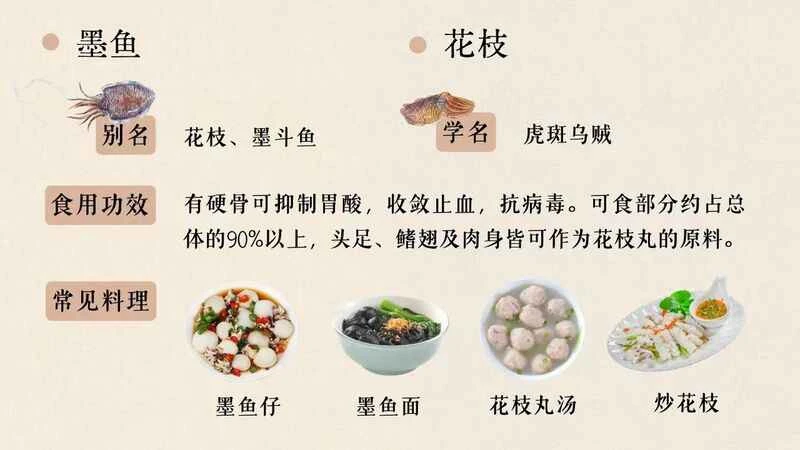
The squid that people often eat at night markets is actually the Chinese cuttlefish, also known as squid or squid. The name "squid" can be traced back to the "Illustrated Materia Medica" written by Su Song in the Song Dynasty: "A kind of squid, similar to cuttlefish, but without bones." This is also the earliest documented record of squid.
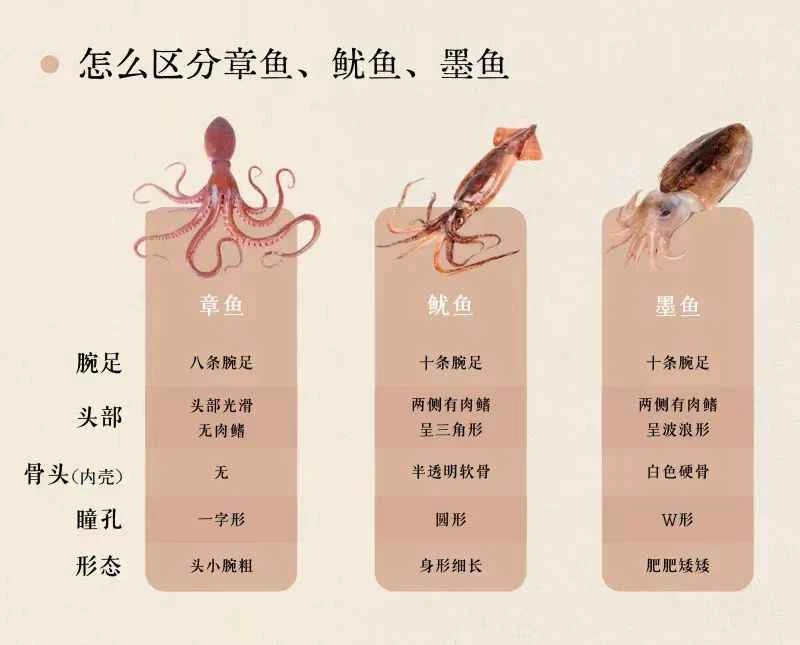
From a biological classification perspective, squid belong to the order Squidioniformes, while cuttlefish belong to the order Sepiformes (also known as Cuttlefish). Squidioniformes is a distant relative of Sepiformes, and both belong to the superorder Decapodiformes.
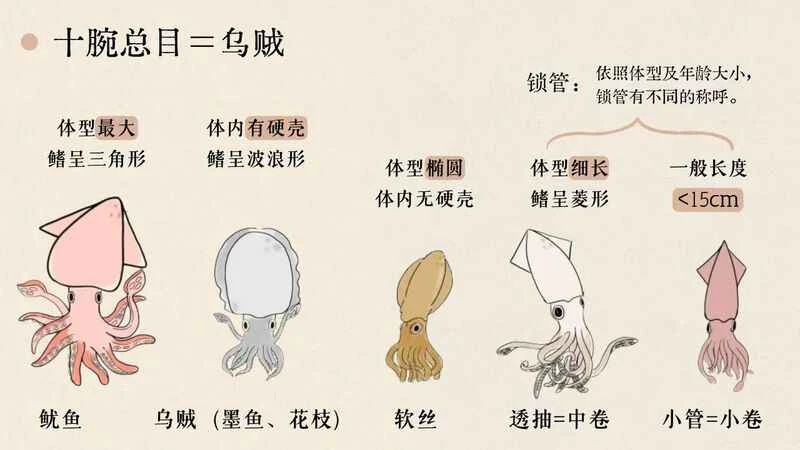
Cuttlefish are typically yellow or light brown with black stripes. When encountering predators, they squirt ink to escape danger and are found in all the world's oceans. So, what kinds of cuttlefish are there? Today, we've compiled a list of the top ten cuttlefish species, including the bell-shaped cuttlefish, golden cuttlefish, white-spotted cuttlefish, tiger cuttlefish, pseudo-clawed cuttlefish, slender-armed cuttlefish, needle-like cuttlefish, fluorescent cuttlefish, piglet cuttlefish, and flame cuttlefish. Let's learn about these common cuttlefish species and related information!
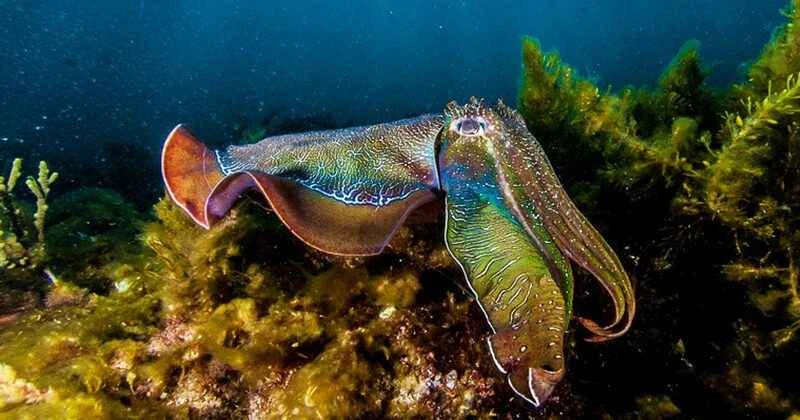
1. Umbrella squid
Features: Huge size, can change color
Habitat: Coastal South Australia
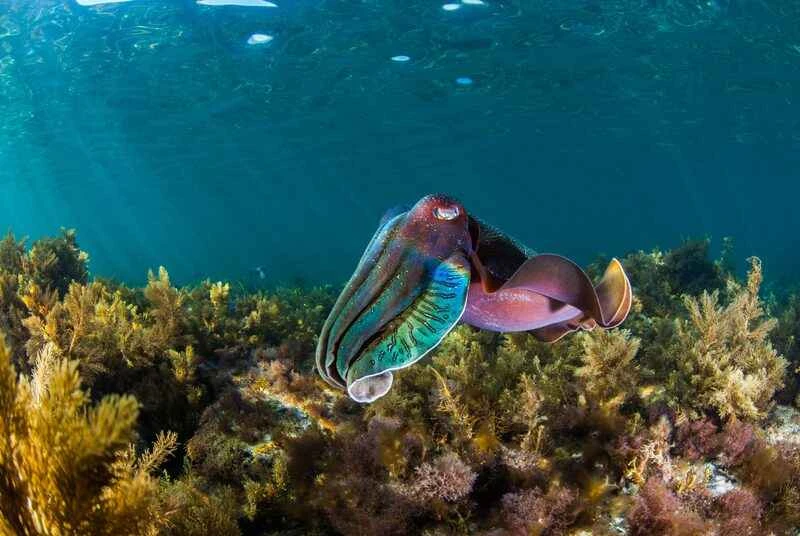
The giant finless squid, also known as the Australian giant squid, is the largest species in the squid family. Its tentacles can reach 50 centimeters in length, its total length exceeds 100 centimeters, and its weight usually exceeds 10 kilograms. A remarkable characteristic of the giant finless squid is its ability to change color instantly using pigment cells, usually exhibiting bright fluorescent colors, especially during the spawning season when its body color is exceptionally vibrant.
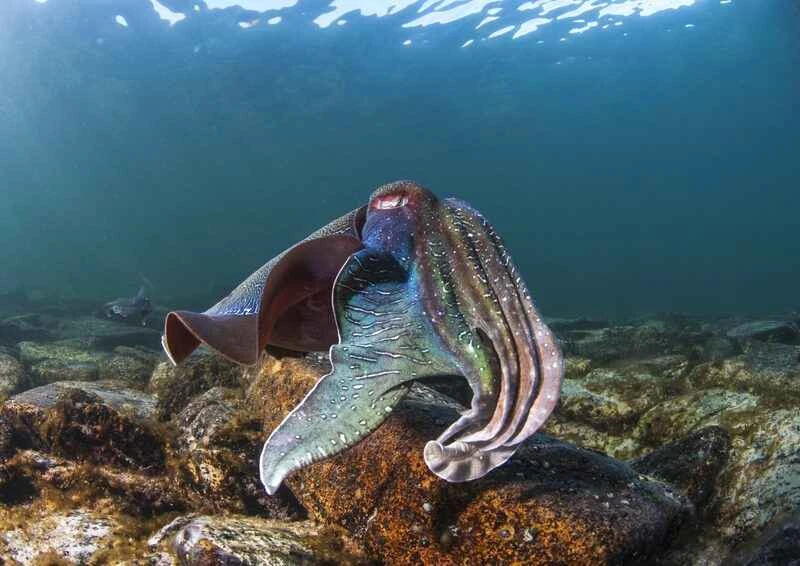
This squid inhabits Australia and its surrounding waters, including Tasmania, typically hiding in caves or rock crevices and spending most of its time resting. During the mating season, they become active, and many individuals die after laying their eggs. Their carcasses appear on the beach, marking the end of the spawning season.
2. Golden Squid
Characteristics: Medium-sized squid with a golden sheen on its body.
Habitat: Russia/Japan/North Korea
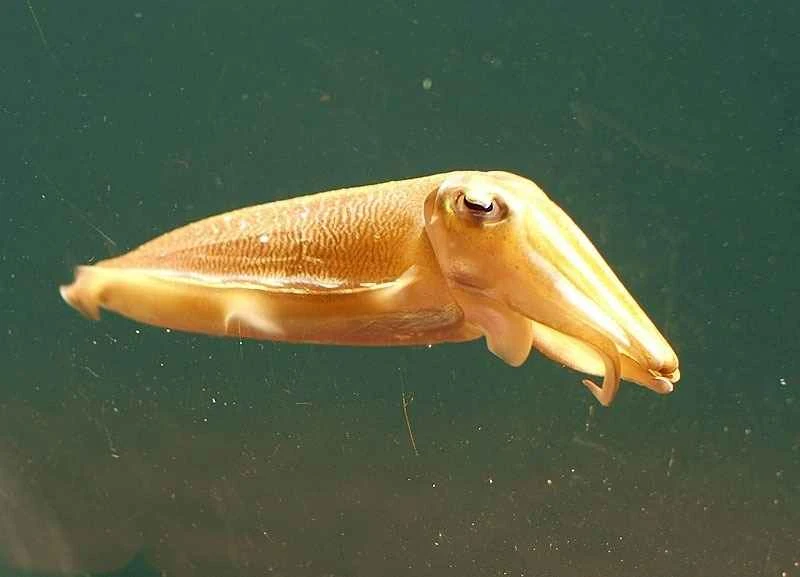
The golden cuttlefish is a species of cuttlefish with high economic value, ranking among the top cuttlefish species in terms of annual production globally. It is widely distributed in the waters of the Russian Far East, the Honshu, Shikoku, and Kyushu regions of Japan, the west and south coasts of North Korea, and even in Philippine waters. Along the Chinese coast, especially in the Yellow Sea and Bohai Sea, the golden cuttlefish is abundant.
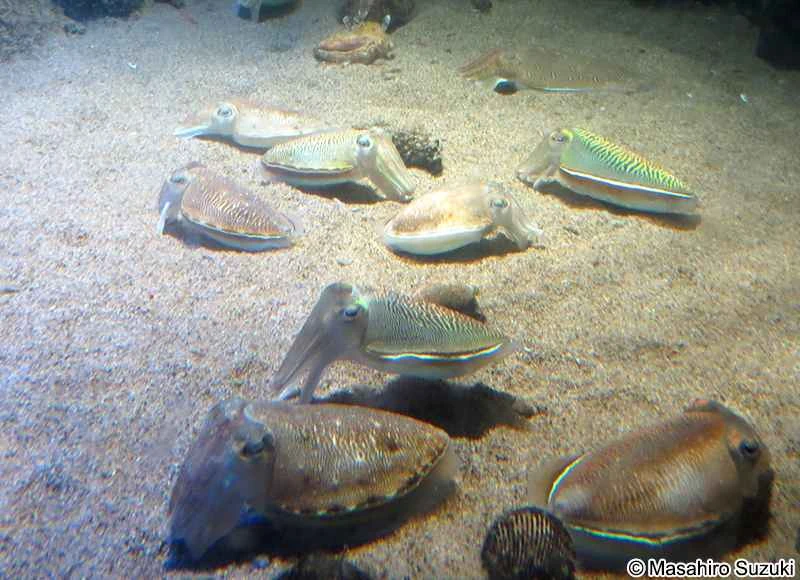
The golden cuttlefish is a medium-sized cuttlefish with an oval body that is slightly flattened dorsoventrally. It possesses an ink sac containing a black liquid, giving it a yellowish-brown appearance with fine brownish-purple and white spots on its surface. Male golden cuttlefish have wavy stripes on their backs, which shimmer with a golden sheen in sunlight.
3. White-spotted squid
Characteristics: Yellowish-brown body with fine white spots
Habitat: Northwest Pacific Ocean
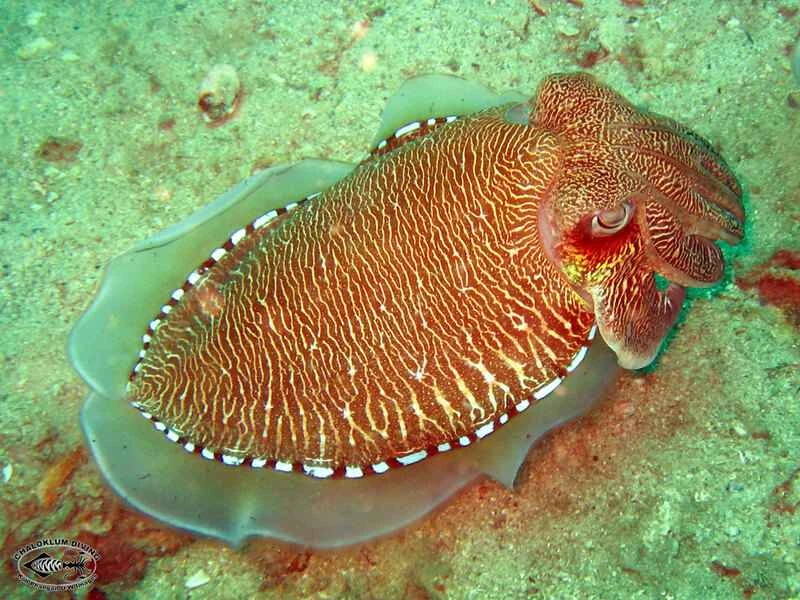
The white-spotted squid is one of the top ten cuttlefish species, characterized by numerous grayish-white spots of varying sizes along the center of its back. This squid has an oval-shaped body, a yellowish-brown back with small white spots, and a long, elliptical shape. The granules on the back are larger, while the abdomen is convex in front and concave in the back. A groove runs along the center of the transverse stripes, ending in a relatively thick bony spur. It can reach a maximum mantle length of 0.5 meters and a weight of 10 kilograms.
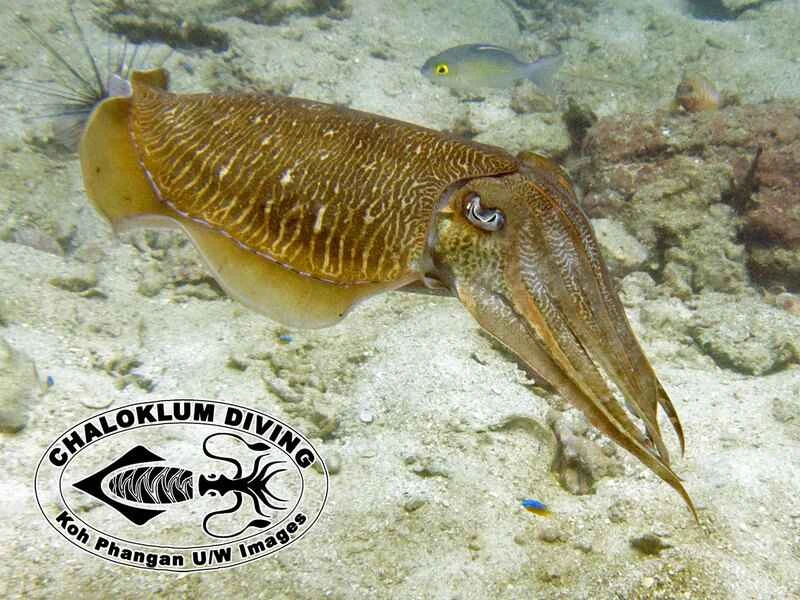
The white-spotted squid is mainly distributed along the northwestern Pacific coast, including the South China Sea, southern Japan, the Ryukyu Islands, the Philippine Islands, the Malay Archipelago, and the east coast of India. In spring, they congregate in shallow waters several meters to tens of meters deep to breed, while in autumn they overwinter at depths of about 100 meters along the inner edge of the continental shelf. The fishing season is mainly from November to April, with the best fishing period from January to March.
4. Tiger Squid
Features: Tiger stripes on its back
Habitat: South China Sea/Indian Ocean/Gulf of Aden
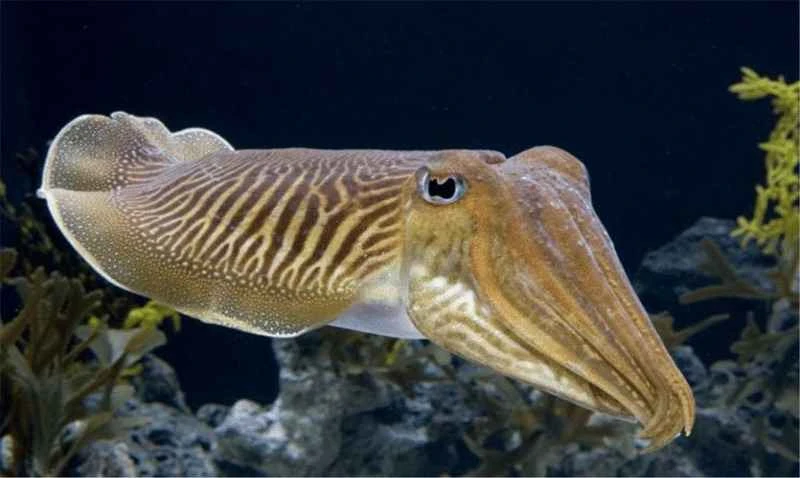
The tiger squid is very similar to the white-spotted squid, with its most distinctive feature being the stripes on its back. The male tiger squid has dense horizontal stripes covering its mantle and the back of its head, resembling tiger stripes. Females also have similar stripes, a shield-shaped mantle, sickle-shaped tentacles, and an oval internal shell. The largest known adult mantle length is 430 mm for females and 330 mm for males, with a maximum weight reaching 5 kg.
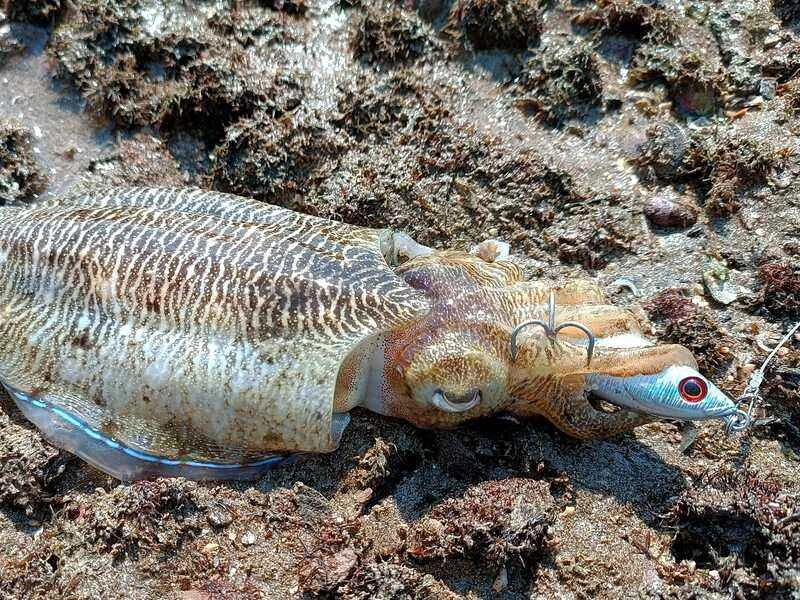
Tiger squid are mainly distributed in the coastal waters of the Northwest Pacific and the North Indian Ocean, with major fishing areas including the South China Sea, the Indian Ocean coast, and the Gulf of Aden. They typically inhabit waters at depths of about 100 meters during the winter, while congregating in shallower waters in the spring for mating and spawning, and exhibit a strong phototaxis.
5. Pseudo-squid
Features: Eye-shaped spots on the back
Habitat: Southwestern Japan/China/Philippines
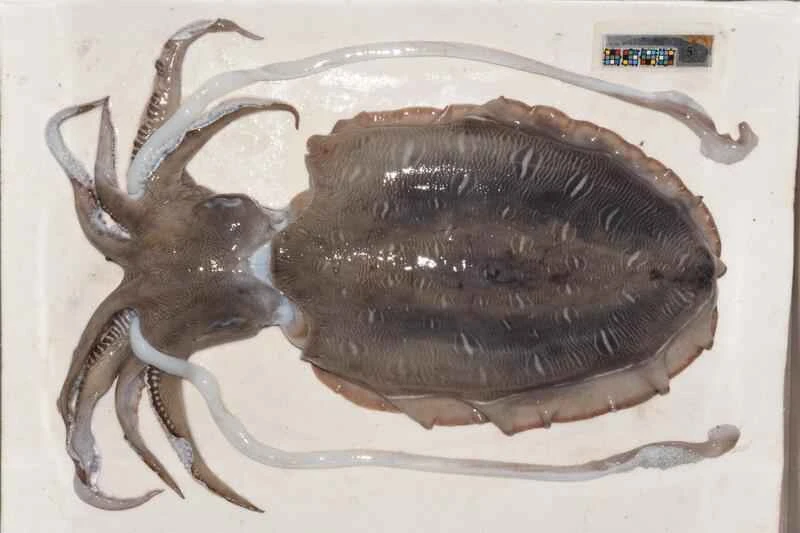
The Pseudo-order squid is a common species of squid, named for its prominent eye-like white spots on its back. This squid is mainly distributed in the Indian and western Pacific Oceans, specifically in the southern part of the Boso Peninsula in southwestern Japan, from southern Honshu, the coast of Korea to the East China Sea, Taiwan, the South China Sea, the Philippine Sea, Vietnam, and Borneo. They often inhabit areas alongside the white-spotted squid and the tiger squid.
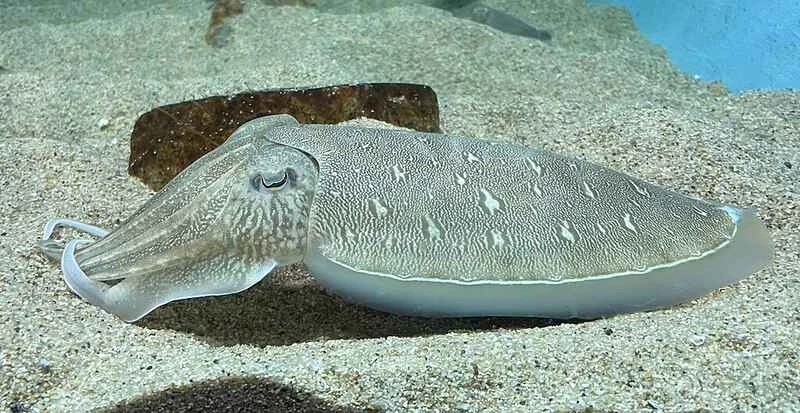
The fleshy fins of the *Sepia speciosa* are relatively wide, located on both sides, and are connected to the entire margin of the carcass at the posterior end, separating at the rear. The lengths of its sessile arms vary slightly, and the suckers are arranged in four rows, with the suckers on each arm being approximately the same size. The internal shell is oval-shaped, with concentric rings of calcareous granules on the dorsal side; the longitudinal ribs are not prominent, and there is a robust bony spicule at the posterior end of the shell. Currently, the largest known adult carcass length can reach 400 mm.
6. Squid with thin arms
Features: Small and symmetrical / flat shape
Habitat: Tropical/Subtropical/Temperate waters
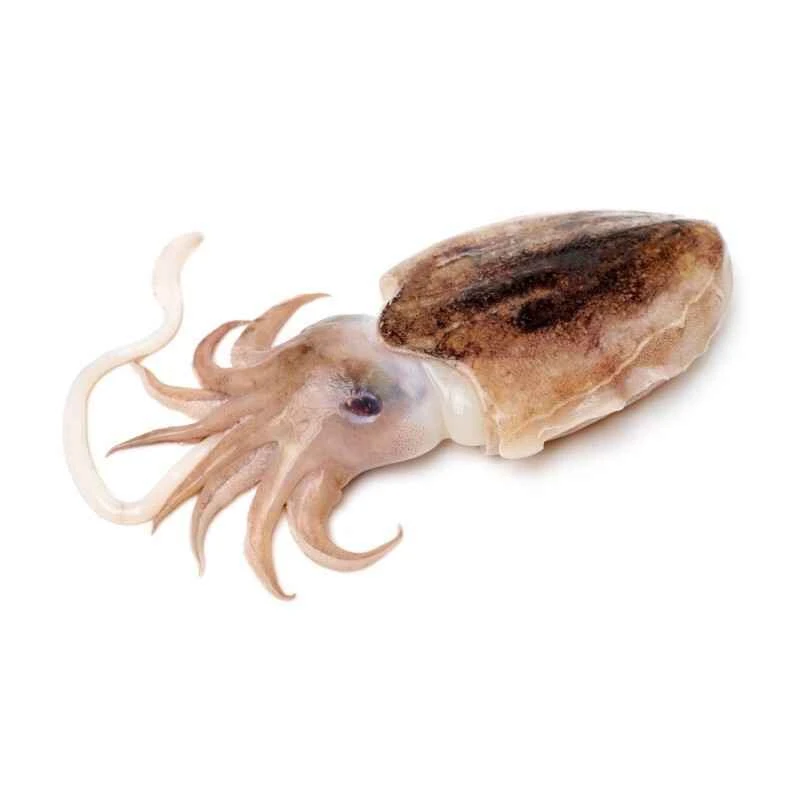
The slender-armed squid is a small squid, measuring only about 1 centimeter in length. Despite its tiny size, the slender-armed squid has an internal structure as complete as other squid species. Its exterior is covered by a wrinkled skin called the mantle, inside which is the mantle cavity, and the fin that wraps around the rear of its body resembles a long, narrow lace skirt. Its head is equipped with a pair of complex and well-developed eyes, similar to human eyes, and it also has 10 arms.
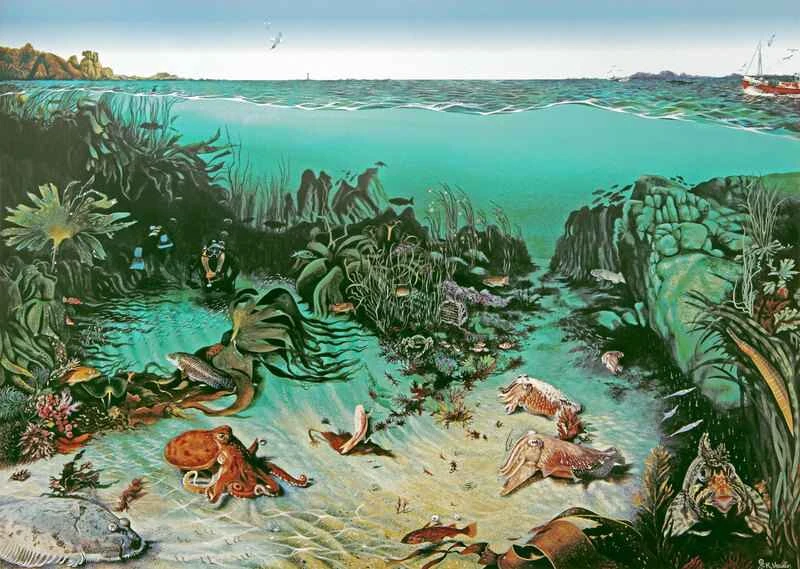
The slender-armed squid's body surface is adorned with numerous chromophores, resulting in a wide variety of colors, primarily brown, black, yellow, and red. They are widely distributed in tropical, subtropical, and temperate oceans, and thanks to their rocket-like swimming speed, the slender-armed squid is a true swimming expert.
7. Needle squid
Features: Sexual dimorphism/prominent internal shell spicules
Habitat: Northern Japan
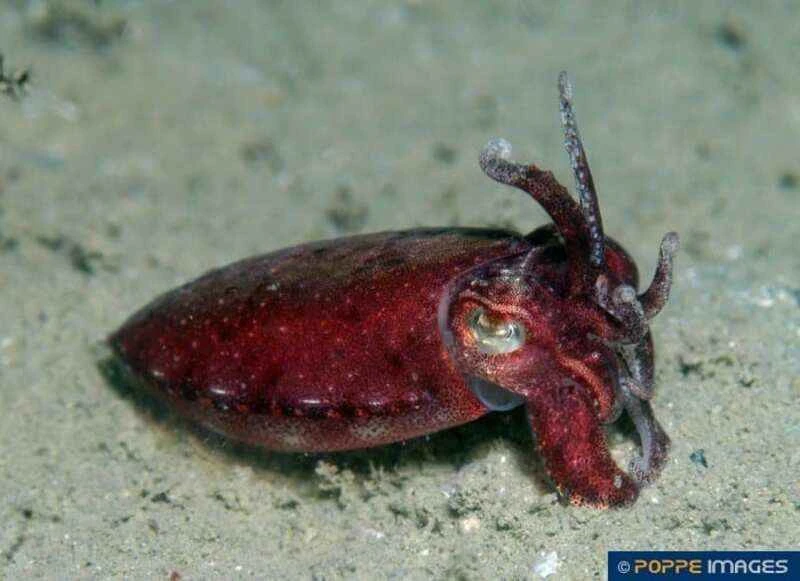
What other common types of squid are there? The needle squid is a relatively unique type of squid, mainly distributed in northern Japan, and can also be found in coastal areas north of Zhejiang in my country. Needle squid typically inhabit nearshore waters and exhibit some gregarious behavior, but their swimming ability is relatively weak. Every year in mid-April, they migrate towards the coast for spawning.
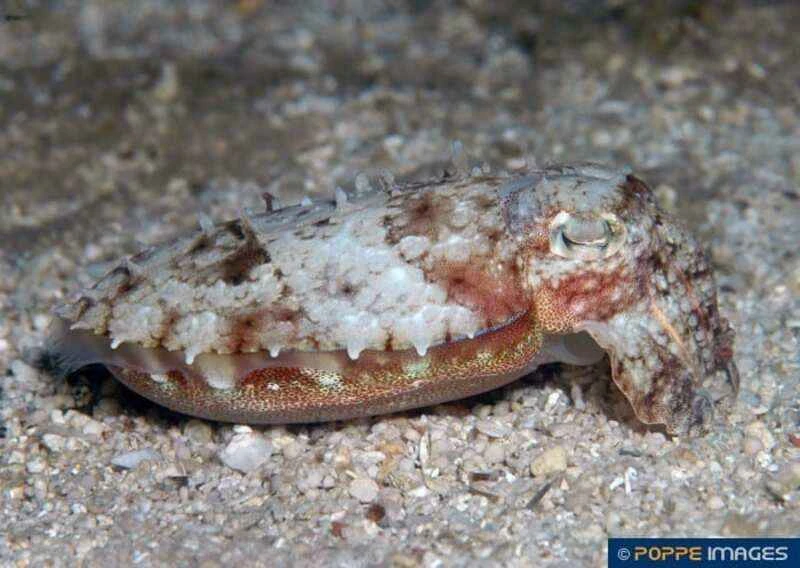
This type of squid is relatively small, with prominent sharp bony spines at the rear of its internal shell. There is a clear difference in size between males and females. Males have slender, conical bodies with arms arranged in a 2-4-1-3 pattern, where the second pair of arms is more than twice the length of the others. Their internal shells are also longer, approximately six times their width. Females, on the other hand, are more plump and rounded, with a short, nearly oval body. Their arms are also arranged in a 2-1-4-3 pattern, with minimal difference in length between the arms. Their internal shells are relatively shorter, approximately four times their width.
8. Fluorescent Squid
Features: Small size / glows
Habitat: Toyama Bay, Japan
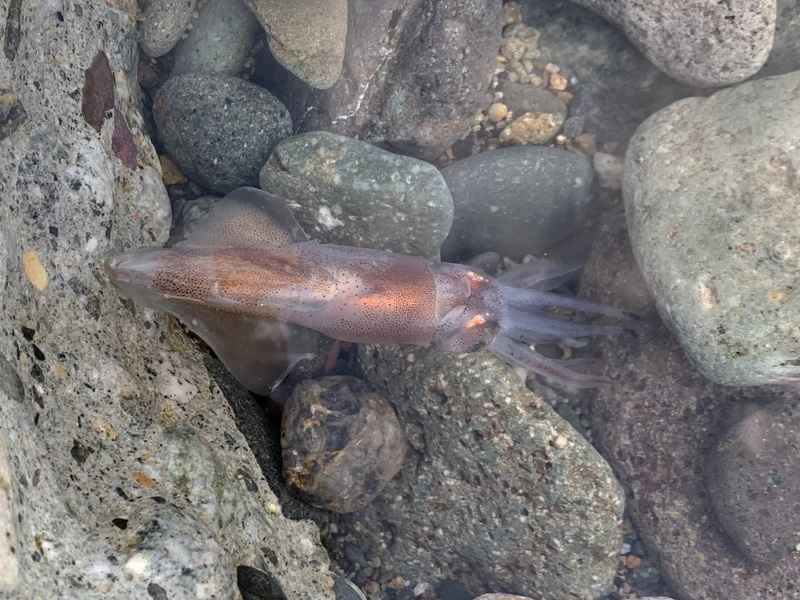
The fluorescent squid, also known as the firefly squid, is a type of squid that can emit light. It typically measures only 7 centimeters in length and possesses complex epidermal and ocular light-emitting organs. These organs are mainly distributed in the mantle, head, eyes, and arms, with the eyes and lower abdomen showing particularly strong light. The fluorescent squid emits a cool light, usually a shimmering blue, through a radioactive complex it synthesizes, in the presence of oxygen, magnesium ions, and luciferase.
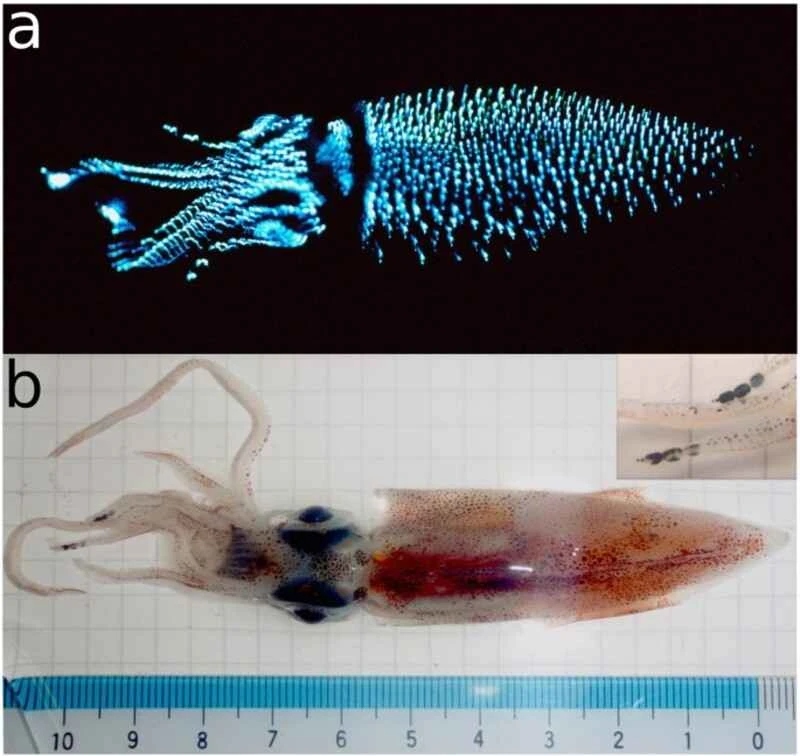
In the deep waters of Toyama Bay, Japan, a large number of bioluminescent squid inhabit depths of approximately 300 to 400 meters. Every spring, female squid mate with males in the deep sea and then rise to the surface to lay their eggs, which is the best time to observe bioluminescent squid.
9. Piglet Squid
Features: Transparent or translucent
Habitat: Surface to mid-water layers of open oceans worldwide
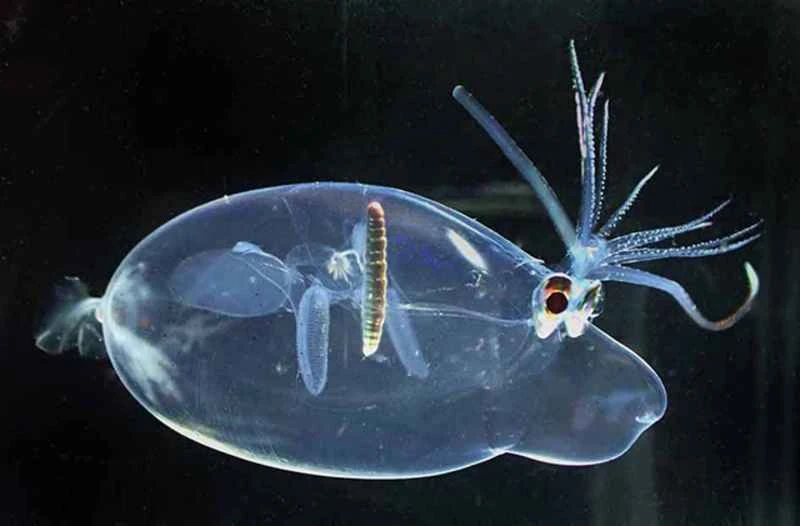
The pig squid is a transparent squid, small and exquisite in size. Its characteristics include being completely transparent or semi-transparent, small and round, with its body varying between transparent and semi-transparent depending on the state of its pigment cells. Its head has patterned pigment deposits resembling pig nostrils, and its tentacles are raised—the opposite of the drooping tentacles of common squid. Its average length is only 10cm, with a maximum of no more than 30cm.
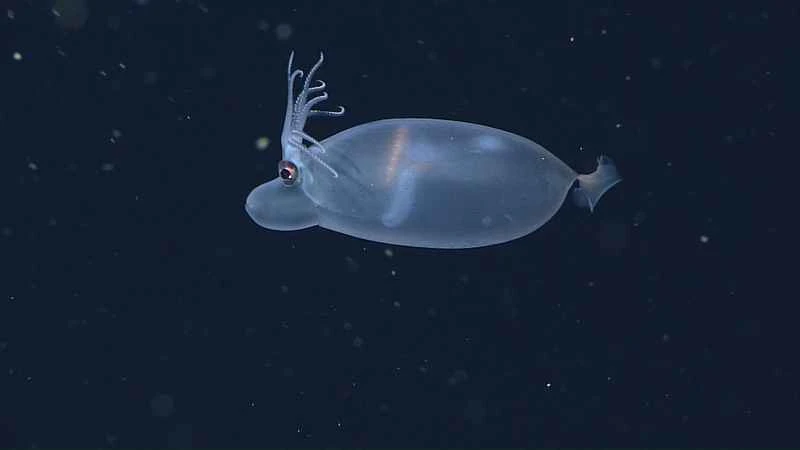
The hog squid lives in the mesosphere, 100-200 meters below the surface, and feeds mainly on small marine animals. They also have pigment cells on their backs that can adjust their body color. The combination of transparency and color-changing allows them to "hide" well on the seabed.
10. Flame Squid
Characteristics: Fiery red body surface / poisonous
Habitat: Indonesia/New Guinea/Malaysia
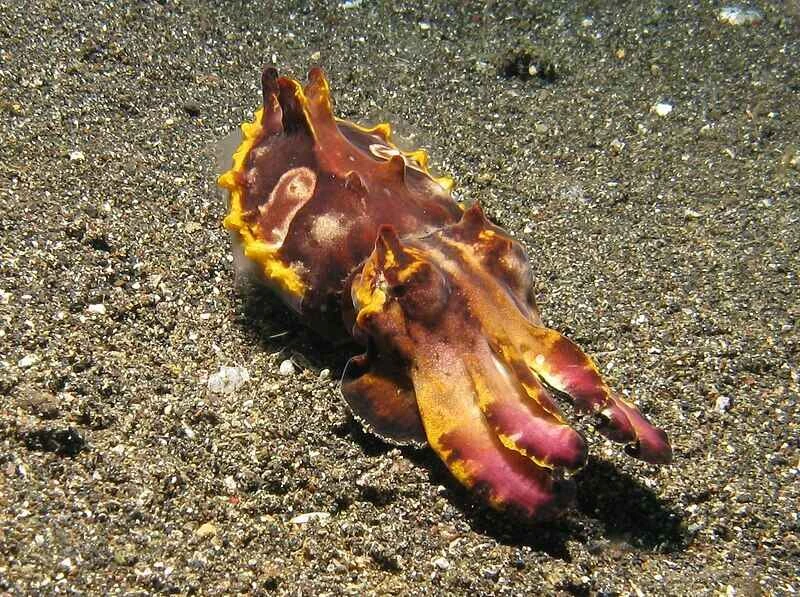
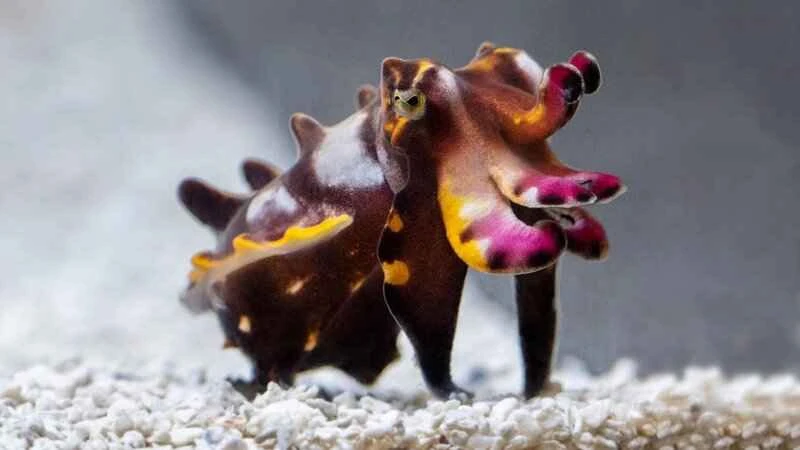
The flame squid is a poisonous squid. Although it has no edible value, it is quite popular in the aquarium market due to its beautiful appearance. Its body is mainly bright red, brown, and yellow, and it looks like a burning flame when it swims. The flame squid has an oval-shaped mantle, and its arms are relatively short, thick, and flat, resembling blades. The dorsal and ventral sides of the mantle, as well as the area above the head and eyes, are covered with many protruding fin-like structures.
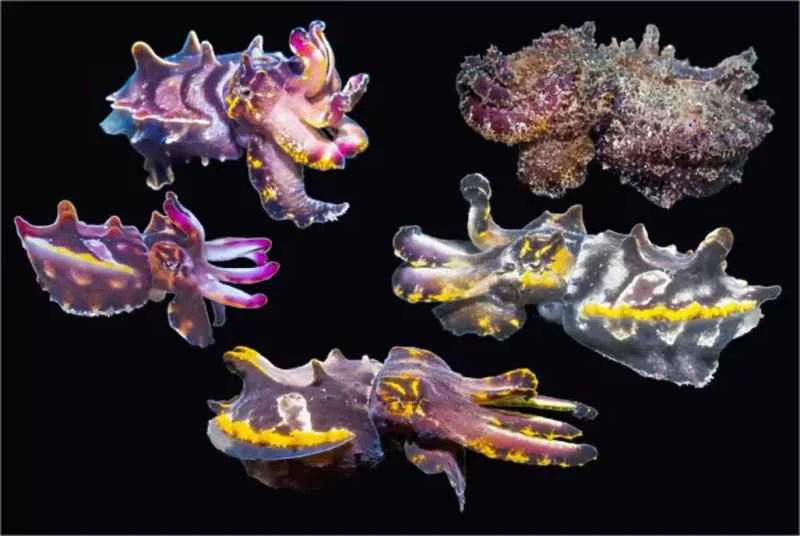
This type of squid is mainly distributed in the tropical waters of Indonesia, New Guinea, Malaysia, and northern Australia. The flame squid is the only known squid that can walk on the seabed using its tentacles and fins, and it is also the only known venomous squid. Its bright colors are actually a warning sign, alerting it to potential threats.
The ranking of the top ten squid species is based on the characteristics and quality of common squid, taking into account the public awareness of squid species and other relevant information, and combining other relevant rankings/lists on the Internet to make a comprehensive ranking recommendation. The list is for reference only. If you have any questions, please feel free to comment/discuss at the end.