Key Points Quick Read
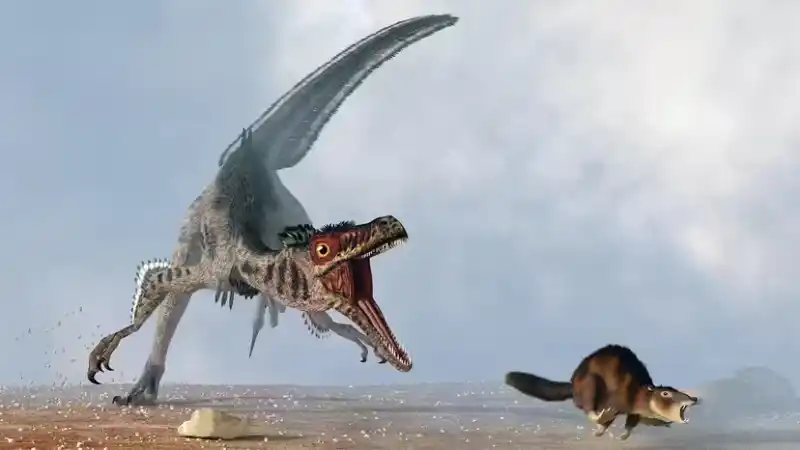
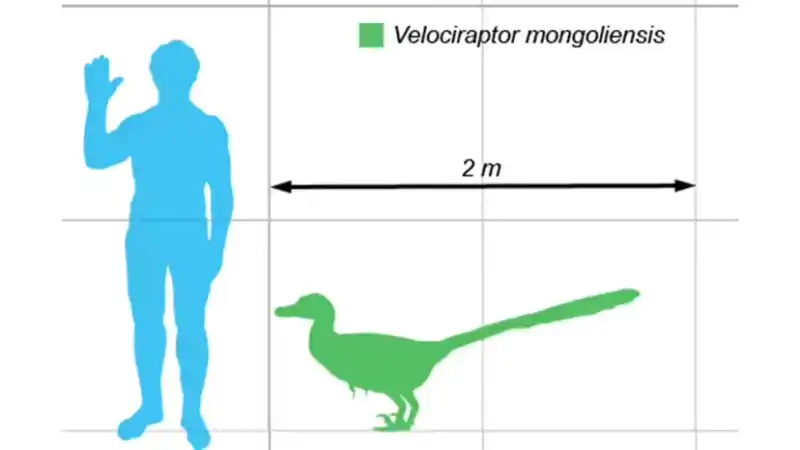
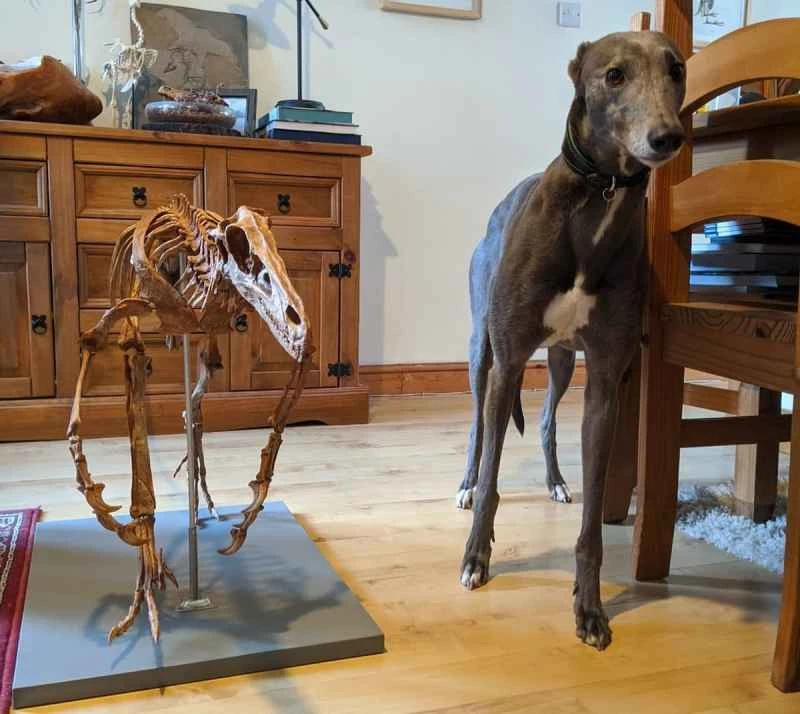
Velociraptors were small, roughly the size of a wild turkey ; each foot had a large, sickle-shaped claw on the second toe, used for stabbing and grasping prey.
It had feathers and its appearance was more similar to that of modern birds than a huge, featherless "dinosaur."
With keen senses, they would both actively hunt and opportunistically scavenge , and their diet likely ranged from small dinosaurs to pterosaur remains.
The connection between the name and the two "adventurous" scientists
In the 1920s and 30s, American explorer Roy Chapman Andrews (often compared to Indiana Jones) led an expedition deep into the Gobi Desert of Mongolia, where he collected fossils of a small, long-snouted theropod with grasping forelimbs. In 1924, paleontologist Henry F. Osborn named it Velociraptor mongoliensis (Mongolian Velociraptor).
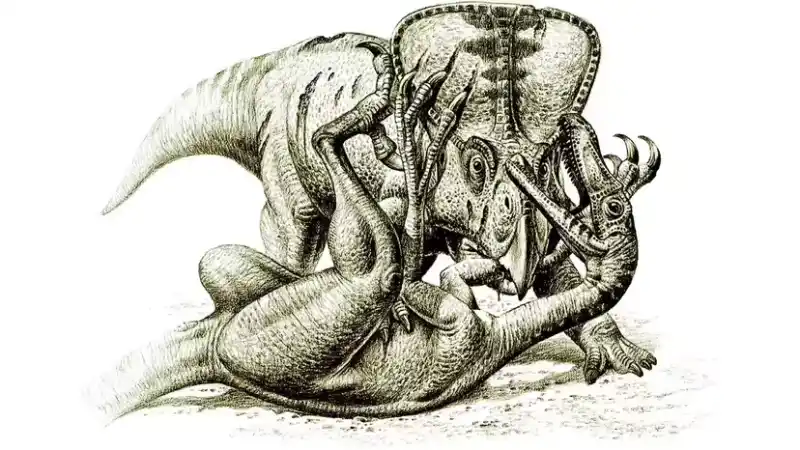
Another important figure is Polish paleontologist Zofia Kielan-Jaworowska . In 1971, the Polish-Montenegro joint expedition she led discovered the famous " fighting dinosaur " fossil—a velociraptor and a protoceratops locked in a life-or-death struggle, instantly buried by a sudden sand dune collapse, freezing the moment of their prehistoric battle.
How different are the "movie version of the Bird of Prey" from the real Velociraptor?
The "birds of prey" in movies and TV shows (such as Jurassic Park) are often based on the size and temperament of Deinonychus, a close relative of the Deinonychus genus , but the name "Velociraptor" is borrowed. The two are not in the same genus .
Body size comparison (approximate range)
| index | Velociraptor | Deinonychus |
|---|---|---|
| full length | Approximately 1.85–2.65 m | Approximately 3.3 m |
| Hip height | Approximately 0.7 m | Approximately 1.0–1.2 m (higher) |
| weight | ~ 38 kg | ~ 70–80+ kg |
| distributed | Mongolia and China (Late Cretaceous, 74-70 million years ago) | North America (Early Cretaceous to 115 million years ago) |
The "human-sized raptor" depicted in movies and TV shows is clearly closer to the size of a Deinonychus; the real Velociraptor was smaller and more "bird-like" .
Anatomy and Function: An Integrated "Toolkit" of Claws, Tail, and Feathers
Second toe with a sickle claw (capable of dorsiflexion/forward swing) : Anatomical studies show that this toe can dorsiflex at a high angle and swing down rapidly. Bionic models and mechanical experiments suggest that this large claw is adept at piercing flesh and applying pressure to hold its prey , rather than simply "tearing" it apart.
The coccyx is reinforced with a "rod-like" structure : the bony strips within the vertebral body enhance the stability and orientation of the tail, but it is not completely "rigid"; slight bending was also found to be preserved, indicating that it is both stable and has a certain degree of flexibility .
Feather evidence : Tiny bony nodules (feather tubercles) on the surface of the forearm bone of the Mongolian specimen suggest that dried feathers were attached to the forelimbs. Although flightless, the feathers may have been used for display, insulation, or balance .
Senses and Behavior: Small Size, Great Sensitivity
Imaging studies of the cranial cavity and inner ear show that Velociraptor possessed:
Good balance and broad-spectrum auditory sensitivity ;
A well-developed vestibular-ocular reflex may facilitate stable vision while moving.
Ecologically, Velociraptors were likely active predators , but they would quickly switch to scavenging to increase energy gains when suitable prey was scarce.
Diet and the chain of evidence
Direct evidence : Late Cretaceous pterosaur bone fragments were preserved in the thoracic and abdominal cavities of some individuals, which are generally interpreted as having been obtained through foraging .
The fossil depicts a "fighting dinosaur" : a Velociraptor's left hand is holding down the skull of a protoceratops, its right arm is bitten by the jaws, and its sickle-like claws are pressed against the opponent's neck ; the two were most likely buried instantly by a sand avalanche during their struggle . This specimen provides strong evidence for the Velociraptor's active hunting capabilities .
Niche and Distribution Timeline
Time : Velociraptors lived in the Late Cretaceous (approximately 74-70 million years ago), later than Deinonychus .
Space : The fossils mainly come from arid sedimentary environments in the Gobi Desert of Mongolia and China . The strata and sedimentary facies show that they were well-suited to open, arid, or semi-arid landforms .
Common Misconceptions | Quick Myth-Busters
"The velociraptors were as tall as they are in the movies."
The actual individual has a hip height of less than 1 meter , making it more like a combination of a large bird of prey and a wild turkey ."Without feathers" :
The forearm peduncle tubercle directly supports its feathers ; feathers are not uncommon in non-avian theropods."The sickle claw is a knife that tears open the belly" :
It is more likely a multi-functional "hook" that can penetrate, grip, and suppress , using the user's weight to pin down the prey."Only hunts large animals" :
Their size dictates that they target small or medium-sized prey ; opportunistic scavenging reduces the cost of failed foraging.
Velociraptor Made Easy (A "Search Card" for Readers)
Scientific name : Velociraptor mongoliensis , etc.
Taxonomy : Theropods → Maniraptors (Drogoraptoridae)
Size : Overall length approximately 1.85–2.65 m; hip height ~0.7 m; weight ~38 kg
Distinguishing features : second toe with a sickle-shaped claw, a reinforced but flexible tail, and "bird-like" forearm feathers.
Period of existence : Late Cretaceous (c. 74–70 Ma)
Distribution : Mongolia, China
Ecology : Active predation + opportunistic scavenging; keen senses and agile movements
FAQ
Q1: How did Velociraptors primarily subdue their prey?
A: Using the second toe's sickle claw to pierce and grip, the forelimbs press down and the torso applies pressure to fix it , and then the mouthparts bite to cause a fatal injury; it is more accurate to say " suppression + bite to kill " rather than "severing".
Q2: What does it eat?
A: Primarily small to medium-sized vertebrates , they scavenge for remains when their environment is limited. Fossil records even show pterosaur bone fragments entering their stomach area.
Q3: Does it hunt in packs?
A: There is currently a lack of direct evidence to confirm "coordinated group hunting." "Fighting dinosaurs" support their ability to hunt independently ; whether loose synagogue exists still requires further evidence.
summary
The real Velociraptor was not the towering beast depicted on screen, but rather a small, feathered, and highly efficient predator/scavenger with tool-like claws . It represents a sophisticated yet deadly branch of the avian ancestral lineage : small in size, well-designed, and employing versatile strategies —that's what makes the Velociraptor truly "cool."