There are six species of seals inhabiting the area south of the Antarctic Convergence: the sawtooth seal, elephant seal, leopard seal, Weddell seal, Ross seal, and sea lion. The elephant seal is the largest, while the sawtooth seal is the most numerous. Of these six species, the sawtooth seal, leopard seal, Weddell seal, and Ross seal are endemic to the Antarctic region. Antarctic seals are mainly distributed along the Antarctic continental coast, in ice floes, and in the waters surrounding certain islands.

1. Elephant seal
The elephant seal, also known as the elephant seal or walrus, is the largest seal species. Males are 4–6 meters long and weigh 2–3.5 tons; females are smaller than males, weighing about half as much. This large size makes them easily distinguishable. Their population is estimated at 700,000.
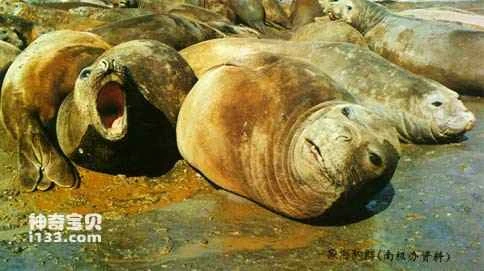
The elephant seal gets its name from a distinctive, elastic muscle above its lip, resembling an elephant's trunk. Normally, this muscle hangs softly, but when angry or fighting, it bulges out and extends considerably, sometimes reaching 50 centimeters in length. The elephant seal's fur is grayish-yellow, sometimes grayish-white, with slight variations in color depending on age and season. Elephant seals are ugly in appearance and clumsy in movement. They feed on krill and squid, live in groups, and breed on land, giving birth to one pup at a time.
2. Leopard Seal
Leopard seals are 3-4 meters long, with females being larger and heavier, weighing approximately 300-500 kilograms, while males weigh only about 200 kilograms. Leopard seals are spotted all over their bodies, resembling leopards. They are fierce, agile, fast swimmers, with sharp teeth and a keen sense of smell, adept at attacking prey, often ambushing penguin colonies. Their diet is relatively broad, including krill, fish, cephalopods, penguins, birds, and small saw-toothed seals. Known as the "pirate of the sea," they are feared and avoided by other seal species. The leopard seal population is only 220,000. They mate in the water and breed on the ice, giving birth to one pup per litter.
3. Sawtooth Seal
The sawtooth seal, also known as the crab-eating seal, is about 2.5 meters long and weighs over 200 kilograms, with females being larger than males. Its coat color ranges from silver-gray to dark gray, sometimes with a pale red hue, and its back is darker than its belly. The sawtooth seal has rows of sharp, serrated teeth in its mouth, arranged in an alternating pattern, resembling a saw, hence its name. It feeds on krill; calling it a crab-eating seal is a misconception, as crabs are extremely scarce in Antarctica, insufficient for its diet. 85% of sawtooth seals bear scars, inflicted by attacks from killer whales, some from competition for mates.
Female sawtooth seals reach sexual maturity at two years of age, with a gestation period of nine months. They reproduce on sea ice, giving birth to one pup per year. During the warmer season, sawtooth seals form breeding families: a female seal leads several pups, sometimes with a male seal joining temporarily, and they inhabit the sea ice. In other seasons, they live individually on the edges of the ice floes. Small groups of thirty to forty individuals are sometimes seen, but large groups are rare.
The serrated seal is the most numerous species of Antarctic seal, with approximately 30 million individuals, accounting for over 90% of the total Antarctic seal population. It is also the most numerous seal species in the world, representing 85% of the global seal population. It is also said to be the most numerous large mammal in the world today.
4. Weddell Seal
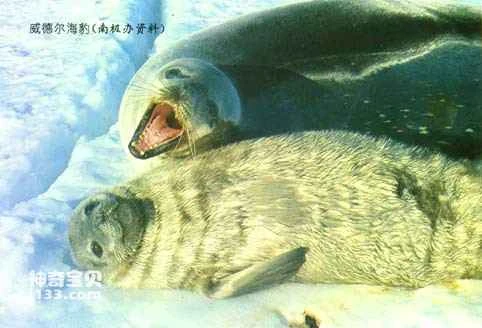
The Weddell seal is about 3 meters long and weighs over 300 kilograms, with females slightly larger than males. Its back is black, the rest of its body is light gray, and it has white spots on its sides. Their population is estimated at 750,000. They breed on the ice, giving birth to one pup at a time. Their milk is high in fat, making the pups exceptionally plump and adorable. Weddell seals inhabit sea ice areas and can survive the long, dark winters under the ice. They use their sharp teeth to gnaw through the ice, burrowing to breathe or emerging from the ice. They live alone and are rarely seen in groups. Females mostly inhabit the ice surface, while males are mostly in the water, where they mate. Weddell seals are excellent long-distance and deep-diving divers, feeding on fish, squid, and krill.
5. Ross Seals
Ross seals inhabit ice floes inaccessible to humans, and little is known about them. They are about 2 meters long, with females larger than males. They have small heads and large eyes, hence the name "big-eyed seal." Their population is estimated at 250,000 to 500,000. They prefer to live and roost alone, rarely appearing in groups, and feed on deep-sea squid.
6. Sea lion
Sea lions, also known as fur seals, sea wolves, or sea bears, are about 2 meters long and weigh around 150 kilograms, with a population of 900,000. Their fur is greyish-yellow, fine, and luxurious. A distinctive feature is their long flippers; they use their flippers and tail for support, enabling them to stand and walk on land, albeit slowly. Sea lions primarily inhabit the waters surrounding Antarctic islands, mating in the water and giving birth on beaches. Their diet is relatively simple, mainly consisting of krill.
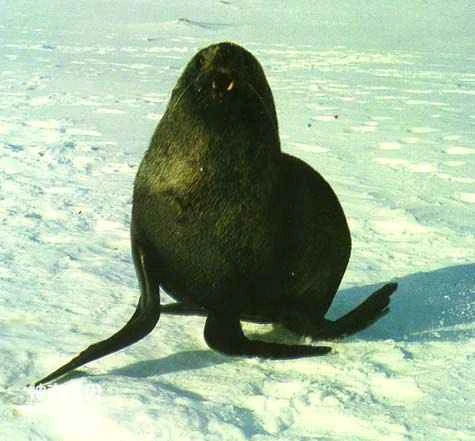
Based on the sea lion's habit of exclusively feeding on krill, scientists attached automatic electronic recorders to its body to monitor its swimming speed and activity range, thereby inferring the distance, size, and dynamic changes of the krill swarm.
Sea lions, with their luxurious fur, have long been a target for hunting. Thanks to the international community's protective measures, they have been spared from extinction, and their numbers have only slowly recovered in recent years.